

Why Local SEO Traffic Does Not Automatically Turn Into Revenue
A contractor starts ranking higher in local search.
Website traffic increases.
Phone calls pick up.
Quote requests arrive more consistently.
Yet when the owner reviews booked jobs at the end of the month, revenue looks almost unchanged.
This situation is more common than most businesses expect.
Many local service companies assume that more traffic should naturally create more revenue. In reality, SEO only controls the first part of the process. Once a lead submits a form, calls the office, or requests a quote, the outcome depends on how that lead is handled.
We regularly see businesses generating enough inbound demand to grow while still losing opportunities through slow responses, inconsistent follow-up, unworked CRM records, and missed conversations.
Understanding where that breakdown happens helps explain why local SEO traffic can increase without producing the revenue increase owners expect.
Key Takeaways: Why Local SEO Traffic Is Not Converting
- More traffic does not automatically create more booked jobs.
- Most SEO conversion loss happens after the lead enters the business.
- Follow-up consistency has a larger impact than many owners realize.
- Some SEO traffic is still researching and requires longer decision windows.
- Missed calls, stale inquiries, and slow response times reduce conversion rates.
- Businesses often improve revenue faster by fixing lead handling than by increasing traffic volume.
Traffic Is Only the Beginning of the Revenue Process
One of the most common misunderstandings around SEO is treating traffic growth as a direct measure of business growth.
Traffic creates opportunity.
Revenue requires execution.
A visitor who lands on your website has not become a customer. Even a quote request or contact form submission is only the beginning of the sales process.
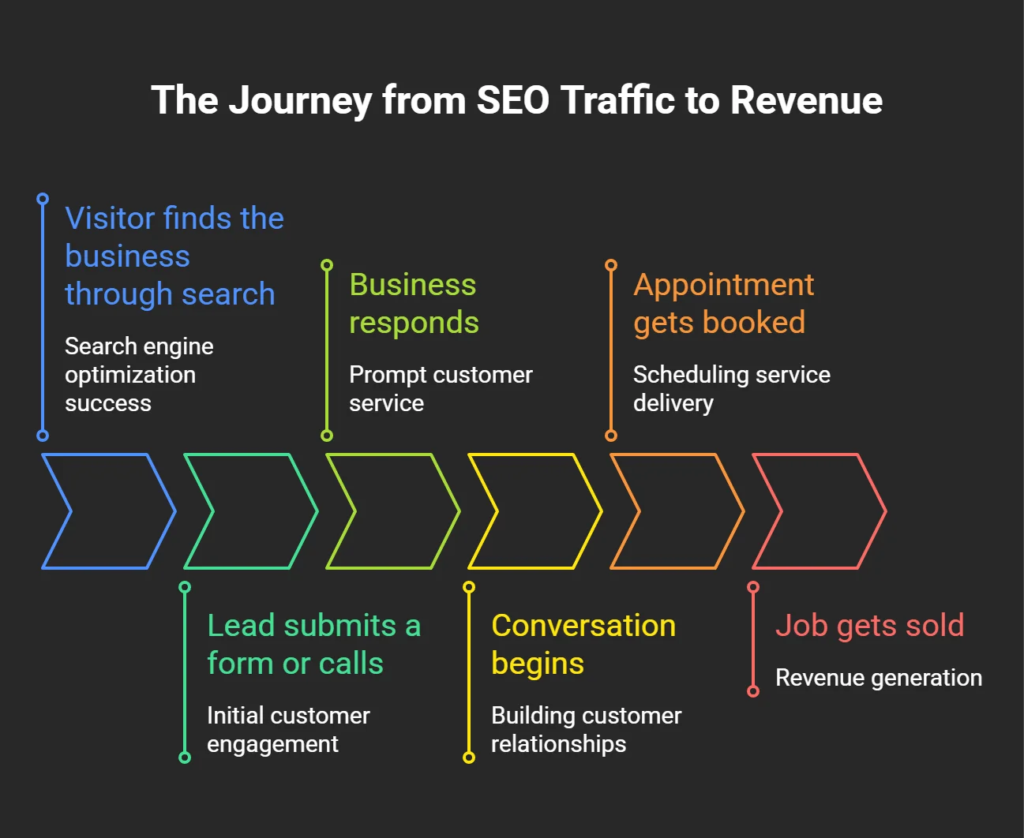
For local service businesses, the journey usually looks like this:
- Visitor finds the business through search
- Lead submits a form or calls
- Business responds
- Conversation begins
- Appointment gets booked
- Job gets sold
Each stage has its own failure points.
A roofing company can double website traffic and still experience flat revenue if quote requests receive inconsistent follow-up. A dental office can increase appointment inquiries while seeing no increase in completed bookings because callbacks happen too slowly.
The SEO campaign may be generating the opportunity.
The business still needs a process that turns opportunity into revenue.
Most SEO Leads Are Lost During Follow-Up
The largest breakdown usually happens after the inquiry arrives.
A lead fills out a form.
A missed call appears in the system.
A quote request gets submitted.
Then follow-up becomes inconsistent.
We see the same pattern repeatedly across service businesses:
- One contact attempt is made
- A second attempt may happen
- Communication stops
The lead is never formally closed.
The conversation simply ends.
This is especially common when staff are balancing:
- New inquiries
- Customer service requests
- Scheduling
- Estimates
- Job-site responsibilities
New leads receive attention because they feel urgent. Older opportunities receive less attention because they are no longer visible.
Many SEO leads disappear not because they were poor-quality prospects, but because nobody stayed in contact long enough to reach a decision.
When businesses tell us their SEO traffic is not converting, this is often the first place we investigate.
Some SEO Traffic Is Still in Research Mode
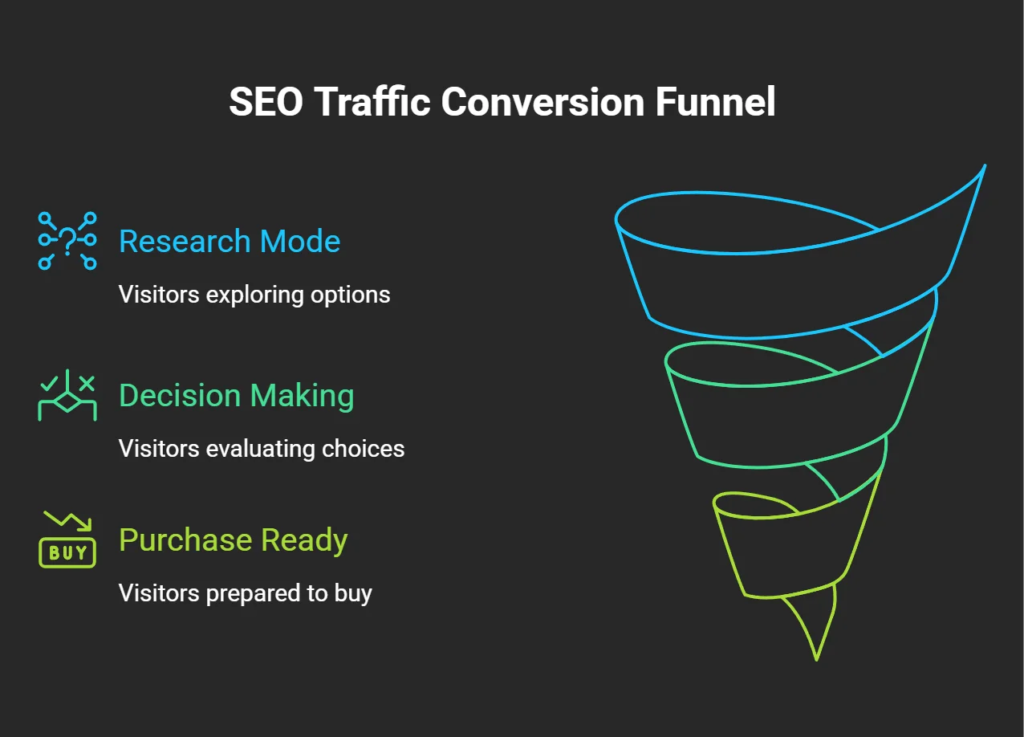
Not every search visitor is ready to buy immediately.
Many people search weeks before they are ready to move forward.
A homeowner may research roofing costs before requesting estimates.
A potential med spa client may compare treatment options before scheduling.
A business owner may explore legal services before contacting an attorney.
These visitors can still become customers.
They simply operate on a longer timeline.
This creates a challenge for local businesses because analytics often groups all traffic together. High-intent visitors and research-stage visitors both appear as website traffic even though they behave differently.
When owners see increased traffic but lower-than-expected revenue, part of the explanation may be that a portion of those visitors are still evaluating options.
The solution is rarely to dismiss the traffic.
The solution is maintaining enough follow-up and visibility to remain part of the decision process when timing changes.
Leads Enter the System but Never Move Through It
Many businesses have no shortage of leads.
They have a shortage of lead management.
A common scenario looks like this:
- Contact form gets submitted
- Lead enters the CRM
- Initial response happens
- No clear next step exists
The lead remains in the system but stops receiving attention.
Over time, this creates a growing collection of:
- Old quote requests
- Missed calls
- Unbooked consultations
- Inactive inquiries
- Stalled opportunities
Owners reviewing CRM data often assume these leads have already been worked.
In reality, many received very little follow-up after the initial interaction.
This creates the illusion that SEO is producing weak results when the actual problem is that leads are entering the pipeline faster than they are being managed.
A lead sitting untouched in a CRM is not helping revenue regardless of how it was generated.
Response Time Has a Direct Impact on SEO Conversions
Response speed plays a larger role than many businesses realize.
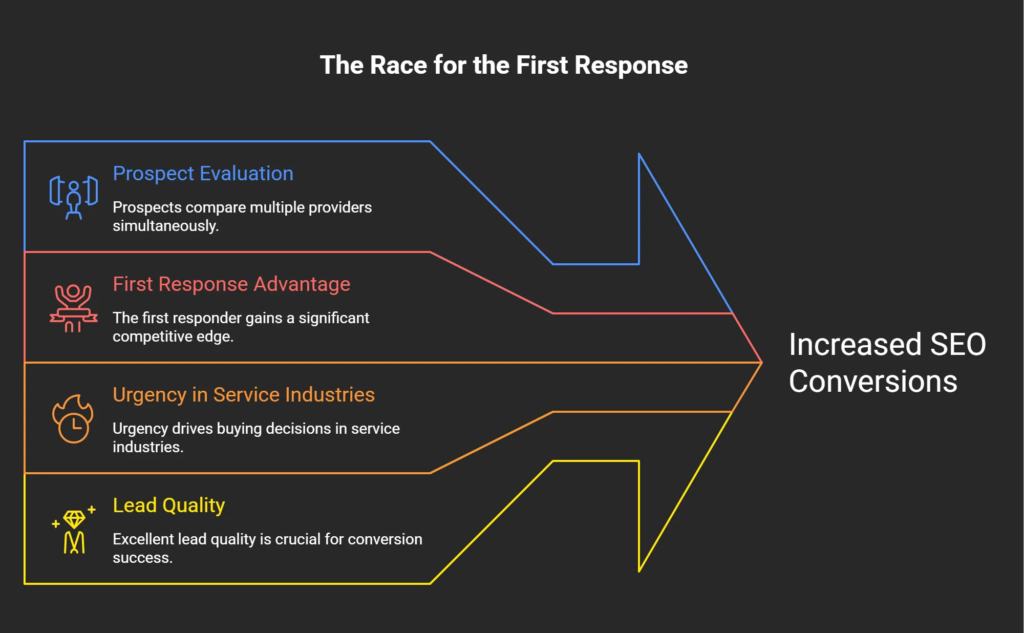
A prospect searching for a service is usually evaluating multiple providers at the same time.
They submit a form.
They call another company.
They request another estimate.
The business that responds first gains an immediate advantage.
Even delays of a few hours can change outcomes.
We frequently see situations where:
- Calls go to voicemail
- Form submissions sit in inboxes
- Quote requests wait until the end of the day
By the time follow-up occurs, the prospect may already be speaking with a competitor.
This is especially common in service industries where urgency influences buying behavior, including roofing, HVAC, plumbing, restoration, and many health-related services.
The quality of the SEO lead may be excellent.
The opportunity still disappears if contact happens too late.
How We Evaluate SEO Conversion Problems at TTRAN
When a business tells us their SEO traffic is not producing enough revenue, we rarely start by reviewing rankings.
We start by reviewing what happens after the inquiry arrives.
Questions we typically examine include:
- How quickly are leads contacted?
- How many follow-up attempts occur?
- What happens to missed calls?
- How many old inquiries remain untouched?
- Where do leads stop moving through the pipeline?
These answers usually reveal more than traffic reports.
In many cases, the SEO campaign is already generating opportunities. Revenue growth is being limited by follow-up gaps, inconsistent response behavior, or inactive CRM records.
Our focus is connecting traffic generation with lead handling so that inquiries continue moving toward appointments instead of stalling after the first interaction.
That perspective often changes how businesses evaluate SEO performance because it connects rankings and traffic to actual operational outcomes.
Local SEO can generate visibility, website traffic, calls, and quote requests.
Revenue depends on what happens next.
Businesses frequently lose opportunities through slow responses, inconsistent follow-up, inactive CRM records, and leads that never receive enough attention to reach a decision.
When traffic increases but booked jobs remain flat, the most valuable question is often not “How do we get more visitors?”
It is “What happens to the leads we already generate?”
If your business is seeing strong traffic but inconsistent conversion, our approach to AI automation and lead follow-up systems focuses on helping service businesses create a more reliable path from inquiry to appointment.