

AI SMS Lead Reactivation for Local Service Businesses
You paid for the lead, had the first conversation, sent the estimate, and then the follow-up stopped.
That happens constantly in local service businesses. Roofing companies lose track of older estimates during busy seasons. Dental offices miss callbacks while handling active patients. Contractors, med spas, law firms, HVAC companies, and other appointment-based businesses often focus so heavily on new inquiries that older leads quietly disappear inside the CRM.
The issue is not always lead generation. In many cases, it is inconsistent follow-up.
That creates a practical question for business owners: are those old leads actually dead, or were they simply never worked long enough to convert?
AI SMS lead reactivation helps businesses reconnect with past inquiries through automated text follow-up. This article explains how these systems work, what types of businesses benefit most, where automation actually helps, and what realistic expectations should look like before rolling out a reactivation campaign.
Key Takeaways: Is AI SMS Lead Reactivation Worth It?
- AI SMS lead reactivation works best for local service businesses with old leads, unsold quotes, missed calls, or inactive CRM records.
- Old leads often still contain buying intent because many customers delay decisions instead of rejecting the business entirely.
- SMS works well for reactivation because it gives past prospects a simple, low-pressure way to respond.
- Automation can handle repetitive outreach, but staff still need clear processes for appointments, estimates, and sales conversations.
- Businesses usually benefit more from fixing lead follow-up before spending more money on new lead generation.
- AI SMS is most useful when the business already has lead flow but lacks consistent long-term follow-up.
What AI SMS Lead Reactivation Actually Means
AI SMS lead reactivation is a follow-up process that reconnects businesses with old leads, unsold quotes, missed calls, and inactive prospects through automated text messaging.
The goal is simple: recover opportunities that already cost money to generate.
Many local businesses already have potential revenue sitting inside their CRM without realizing it. Estimate requests go quiet after the first call. Missed calls never get another touch. Sales reps move toward newer leads while older inquiries slowly disappear into the background.
In many cases, the lead was never truly dead. The follow-up just stopped.
A roofing company may have hundreds of homeowners who requested estimates but never moved forward. A med spa may have consultation requests that disappeared after one missed callback. A law office may have intake forms from prospects who never scheduled a second conversation.
Those leads already showed intent once.
Lead reactivation focuses on reopening those conversations instead of immediately buying more traffic.
What Counts as a Lead Reactivation Process?
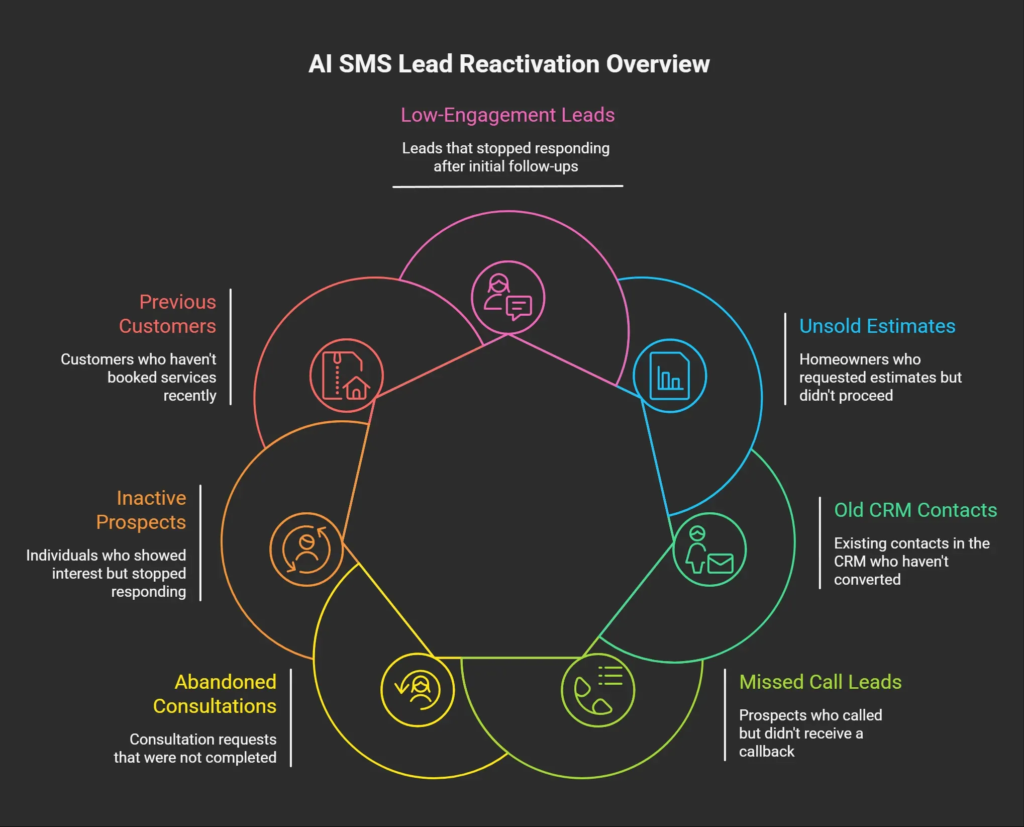
A lead reactivation process targets older contacts that previously showed interest but never became customers.
That may include:
- unsold estimates
- old CRM contacts
- missed call leads
- abandoned consultation requests
- inactive prospects
- previous customers who stopped booking
- leads that stopped responding after one or two follow-ups
The outreach usually happens through text messaging because it creates less friction than phone calls and gets seen faster than email.
The important distinction is that reactivation focuses on existing opportunities, not cold outreach to strangers.
Older leads already recognize the business name. They already searched for the service or contacted the company at some point. The business is not starting from zero.
AI SMS lead reactivation helps businesses recover value from leads they already paid to acquire.
Why SMS Works Well for Reactivation
SMS works because it gives old leads a simple way to respond without committing to a live phone conversation immediately.
Many older leads ignore unknown phone numbers or do not want to jump into a sales call unexpectedly during the day. Texting gives them a quick, low-pressure way to reply when convenient.
A short message asking whether someone still needs a roofing estimate often gets more engagement than another voicemail. The same applies to remodeling quotes, HVAC service requests, legal consultations, and many other local service conversations.
SMS also fits operational reality inside busy businesses.
Office staff are handling scheduling, incoming calls, customer issues, and active appointments throughout the day. Manually revisiting months of old CRM records usually falls behind first.
Automation helps keep those conversations moving without depending entirely on memory or spare time.
Why Lead Reactivation Becomes Necessary
Lead reactivation becomes necessary when a business has old inquiries, missed calls, or unsold quotes that were never followed up with consistently.
This usually happens for practical reasons. New leads arrive. Staff get busy. Estimates get sent. A prospect does not answer once, and the follow-up task gets buried under current work.
A few weeks later, nobody remembers the conversation.
That does not always mean the lead was bad. It often means the lead was never worked long enough to know whether the opportunity was truly lost.
This is common in local service businesses with estimates, consultations, inspections, or multi-step sales processes. Contractors, med spas, dental offices, law firms, HVAC companies, and similar businesses often have customers who take days, weeks, or months to make a decision.
Reactivation gives the business a way to revisit those older opportunities in an organized way.
Instead of assuming every old lead is dead, the business can ask a simple question: who is still interested enough to respond?
If you want the full breakdown of where these leads are usually lost, it helps to first understand where local businesses lose leads before deciding how to recover them.
How AI SMS Lead Reactivation Systems Typically Work
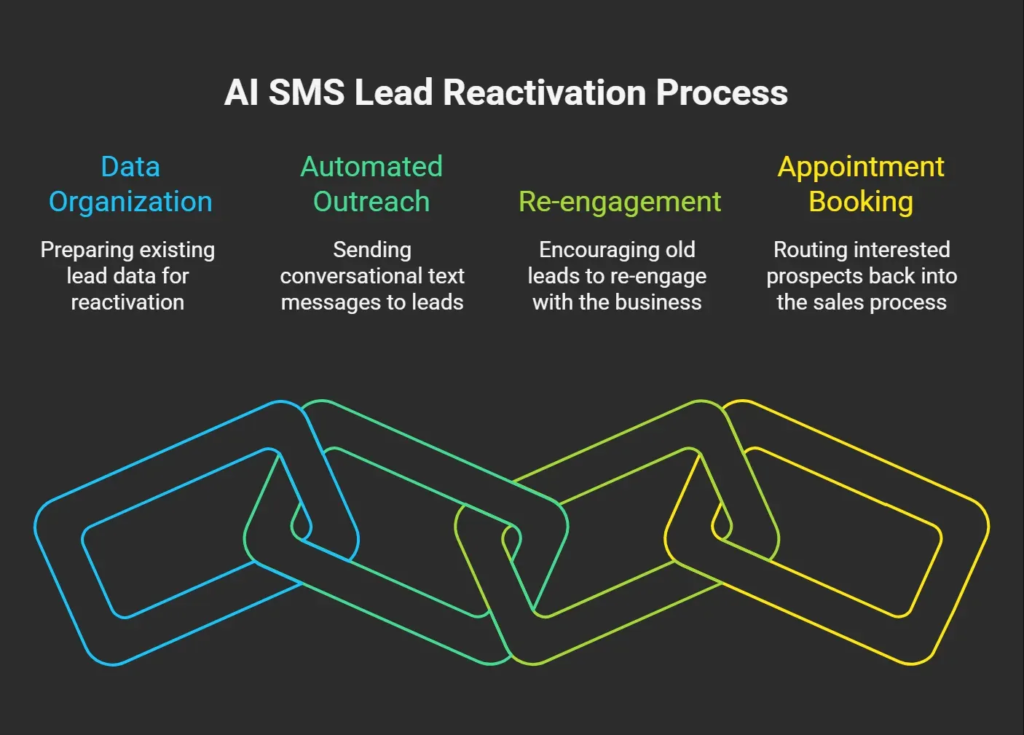
AI SMS lead reactivation systems automate follow-up with older leads that would otherwise sit untouched inside a CRM. The system identifies inactive opportunities, starts conversations through text messaging, and routes interested prospects back into the appointment process.
The setup is usually simpler than many business owners expect.
Most local businesses already have the core ingredient: existing lead data. That may include estimate requests, old consultation inquiries, missed calls, form submissions, or past prospects stored in a CRM.
The issue is not always lack of leads. The issue is that nobody has time to revisit all of them consistently.
AI SMS systems automate the repetitive follow-up work that many businesses struggle to maintain manually.
Uploading or Connecting Existing Lead Data
Most reactivation campaigns begin by organizing existing lead records.
That may involve:
- exporting old CRM contacts
- connecting directly to a CRM
- filtering older inquiries
- separating unsold estimates
- identifying leads that stopped responding
- organizing missed call records
The goal is to find people who previously showed interest but never fully converted.
This does not require perfect CRM data. Many local businesses have messy databases with incomplete notes, inconsistent tags, or outdated records. That is normal.
What matters more is whether the business has a meaningful number of prior inquiries that never received long-term follow-up.
A remodeling company may have years of old estimates sitting untouched. A med spa may have consultation requests that disappeared after one missed callback. A law firm may have intake submissions from prospects who never booked a second conversation.
Those records still represent prior intent.
Automated SMS Outreach
Once the lead data is organized, the system begins outreach through text messaging.
The messages are usually short and conversational. The purpose is to restart communication, not pressure someone into buying immediately.
A simple message asking whether a homeowner is still interested in a previous estimate often works better than a long sales pitch. The same applies to dental consultations, HVAC service requests, remodeling quotes, and legal inquiries.
Older leads may respond because timing has changed.
Someone who ignored a roofing estimate six months ago may be ready after another storm season. A homeowner who postponed a remodeling project may now have the budget available. A prospect who stopped responding earlier may have simply been busy at the time.
Texting gives those people an easier way to re-engage without answering an unexpected sales call.
Qualification and Appointment Booking
Once leads begin responding, the system helps identify which conversations are worth moving forward.
Some leads no longer need the service. Others ask questions, request updated pricing, or express interest in scheduling another conversation.
The system helps organize those responses so interested leads can move back into the sales process.
AI automation can help with:
- basic replies
- lead sorting
- appointment coordination
- appointment reminders
- identifying buying intent
This reduces the amount of manual follow-up required from office staff or sales teams.
The purpose is not to replace human conversations. The purpose is to reduce the repetitive outreach that prevents teams from following up consistently at scale.
Human Handoff Still Matters
Most local service businesses still need people involved once a lead is interested again.
A roofing company still needs someone to inspect the property and build the estimate. A law firm still needs consultations. A med spa still needs staff to answer treatment questions. A remodeling company still needs project discussions and quoting.
AI SMS works best as a follow-up and appointment recovery layer.
It helps restart stalled conversations, confirm interest, and move qualified leads toward the right person on the team.
Once the conversation becomes detailed, the lead should move back to the business.
That is an important distinction for owners who worry automation will make the business feel impersonal. In most cases, the system is improving consistency at the earliest stage of follow-up, where opportunities are most often lost.
What Types of Businesses Benefit Most From Lead Reactivation?
Lead reactivation works best for businesses that generate steady inquiries but struggle to maintain long-term follow-up.
This is especially common in local service businesses with quote requests, consultations, inspections, or multi-step sales processes.
A business does not need thousands of leads for reactivation to make sense. What matters more is whether the company regularly generates inquiries that do not receive consistent follow-up over time.
Businesses with partially worked leads often have more recoverable revenue than they realize.
Businesses With Longer Sales Cycles Usually Benefit More
Some services naturally involve delayed decision-making.
Homeowners may wait months before committing to a remodeling project. Someone interested in cosmetic dental work may postpone treatment until finances improve. A property owner gathering roofing estimates may compare multiple bids before making a decision.
Those delays create opportunities for leads to go quiet without losing interest completely.
Reactivation is often useful for businesses such as:
- roofing companies
- remodelers
- HVAC companies
- solar companies
- med spas
- law firms
- dental offices
- real estate services
- other consultation-based businesses
In these industries, timing can reopen opportunities.
A lead that ignored an estimate six months ago may become ready after financing approval, an insurance payout, a life event, or a seasonal need.
Without follow-up, those opportunities are easy to lose.
Businesses With Large Numbers of Old Leads Often Have the Biggest Opportunity
Many local businesses build large databases without creating a long-term follow-up process.
Over time, old records accumulate:
- unsold estimates
- missed calls
- inactive prospects
- abandoned consultation requests
- form submissions with no second touch
- leads marked “not interested” after minimal follow-up
This happens because teams naturally prioritize incoming work first.
Office staff focus on active scheduling. Sales reps work newer inquiries. Older leads move further down the priority list until nobody revisits them.
The larger the database becomes, the harder it is to maintain manual follow-up.
This is where automation becomes practical. Instead of relying on staff members to remember months-old opportunities, the system follows up automatically and surfaces interested replies back to the team.
A business that has been generating leads for several years may have more reactivation potential than expected.
Businesses With Inconsistent Follow-Up Usually Benefit Faster
Lead reactivation is often most valuable where follow-up breaks down operationally.
Common signs include:
- estimates sent without another touchpoint
- missed calls receiving only one callback attempt
- leads contacted once and forgotten
- sales teams overwhelmed during busy seasons
- older CRM records never revisited
- office staff lacking time for manual outreach
These issues are common even in successful businesses.
The company may already be spending money on ads, SEO, referral programs, or lead vendors while existing leads continue slipping through the cracks.
That creates a simple problem: the business keeps paying to replace opportunities it never fully worked.
Consistent follow-up usually needs to be fixed before more lead generation can perform well.
Businesses With Very Low Lead Volume May Not Need Reactivation Yet
Not every business is ready for lead reactivation.
A company generating only a few inquiries each month may need more lead flow first. The same applies to businesses without any organized lead records or businesses that already handle every inquiry consistently.
Reactivation becomes more useful when:
- lead volume increases
- old opportunities accumulate
- follow-up becomes inconsistent
- CRM records become harder to manage manually
The strongest fit is usually a business that already has lead flow but lacks the systems to work those leads over time.
That is where automation solves a real operational gap instead of adding complexity.
Why Old Leads Are Often More Valuable Than New Leads
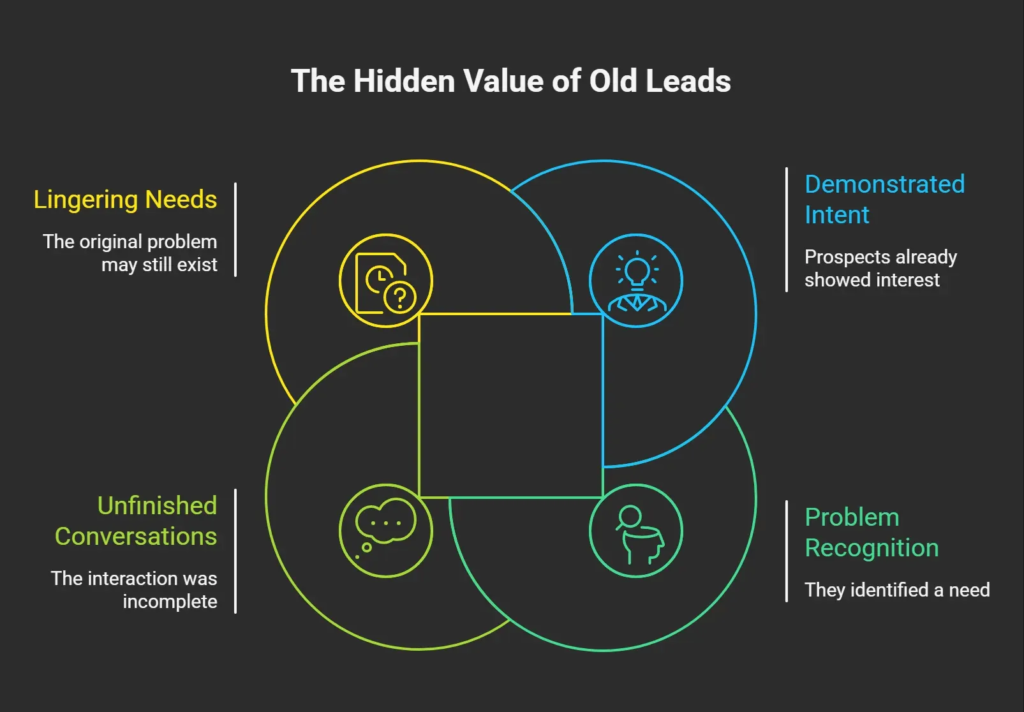
Old leads are often more useful than businesses assume because those prospects already showed intent once.
They searched for the service, contacted the business, requested information, asked for a quote, or booked a consultation.
That changes the starting point.
A new lead may know nothing about the business. An older lead already recognized a problem and took action at some point. Even if the conversation stalled, the original interest often came from a real need.
Many old leads are not dead leads. They are unfinished conversations.
A homeowner may have delayed a remodeling project because of budget concerns. A property owner comparing roofing estimates may not have been ready yet. Someone researching cosmetic dental work may have postponed treatment until later in the year.
The original problem may still exist even if the follow-up stopped.
Existing Leads Already Carry Buying Intent
Lead generation is expensive because it is difficult to get attention from someone who has never interacted with the business before.
Old leads already crossed that barrier.
At some point, they may have:
- filled out a form
- requested a quote
- answered an ad
- called the business
- booked a consultation
- asked questions about pricing or services
That previous action matters because it usually means the lead was considering a purchase decision.
The business already paid to generate that opportunity once.
For high-ticket services, this matters even more. A contractor paying heavily for home improvement leads may already have months or years of prior estimates sitting untouched. A med spa may keep buying consultation traffic while older inquiries sit inactive inside the CRM.
The old database often contains opportunities that were never fully worked.
Reactivation Can Improve Revenue Before More Advertising Does
Many businesses respond to slow sales by increasing lead generation first.
They buy more ads, increase marketing budgets, purchase lead lists, or sign up for more lead vendors. Sometimes that helps, but it also puts more pressure on the same follow-up process.
If the business already struggles to manage current leads, adding more leads often increases waste.
Reactivation shifts the focus from acquisition to recovery.
Instead of immediately replacing lost opportunities with more ad spend, the business works to recover value from leads it already paid for.
This does not mean businesses should stop generating new leads. Most growing businesses still need consistent lead flow.
The issue is sequencing.
If old leads, missed calls, and unsold estimates are already slipping through the cracks, the business should usually fix follow-up before pushing harder on acquisition.
What AI SMS Systems Can and Cannot Do
AI SMS systems are most effective when they improve follow-up and appointment coordination. They are not a replacement for strong sales processes, good customer service, or basic operational organization.
Many business owners hear “AI automation” and assume one of two extremes. Either the system handles everything perfectly, or it creates robotic conversations that damage trust.
Most real systems sit in the middle.
The automation handles repetitive communication tasks that businesses often struggle to maintain on their own.
AI automation works best when it removes follow-up bottlenecks, not when it tries to replace the entire sales process.
What AI SMS Systems Handle Well
AI SMS systems are well suited for repetitive communication that follows predictable patterns.
That often includes:
- re-engaging older leads
- sending follow-up messages
- responding to common questions
- confirming appointment interest
- routing qualified leads
- sending reminders
- handling basic scheduling coordination
- restarting stalled conversations
These tasks matter, but they are time-consuming when handled manually at scale.
A business with hundreds or thousands of older leads cannot rely on office staff to revisit every contact by hand. Daily operations take priority. New inquiries arrive. Customer issues appear. Older follow-up gets delayed again.
Automation helps create consistency where manual follow-up breaks down first.
A roofing company may struggle to revisit old estimates during storm season because the sales team is overloaded. A med spa may miss consultation follow-up because front desk staff are focused on active appointments. A law office may not have time to repeatedly contact intake leads that stopped responding weeks earlier.
The system keeps outreach moving even when the team is busy.
AI Still Needs Clear Boundaries
AI systems perform best when conversations stay straightforward.
Simple interactions are usually manageable:
- “Are you still interested?”
- “Would you like to schedule another estimate?”
- “What day works best?”
- “Do you still need service?”
More complex conversations still require people.
A remodeling company discussing scope changes needs experienced sales staff. A law firm handling legal concerns needs consultations. A dental office discussing treatment options needs human communication.
Automation is strongest during the early follow-up stage, where opportunities are often lost due to inconsistency instead of complexity.
This distinction matters because unrealistic expectations create disappointment.
AI will not automatically close sales, fix poor internal communication, or repair broken operations without staff involvement.
AI Does Not Fix Weak Sales Processes
Automation improves consistency, but it cannot repair the whole sales process by itself.
If a business responds slowly after appointments are booked, leads may still lose interest. If estimates are inaccurate, automation will not fix pricing problems. If sales reps fail to follow through after appointments are set, opportunities can still collapse later.
The same applies to disorganized CRM data.
If lead records are duplicated, incomplete, or missing basic information, automation becomes harder to manage. Businesses with cleaner lead data usually launch follow-up campaigns more smoothly because the pipeline is easier to understand.
Lead follow-up problems are often operational problems.
Common issues include:
- unclear lead ownership
- slow response times
- weak appointment handoff
- no tracking after estimates are sent
- old opportunities losing visibility
Automation can stabilize those areas, but the business still needs clear internal processes for scheduling, sales conversations, quoting, and customer communication.
AI follow-up systems improve consistency. They do not replace accountability inside the business.
The Best Systems Combine Automation With Human Oversight
Businesses usually get the best results when automation supports the team.
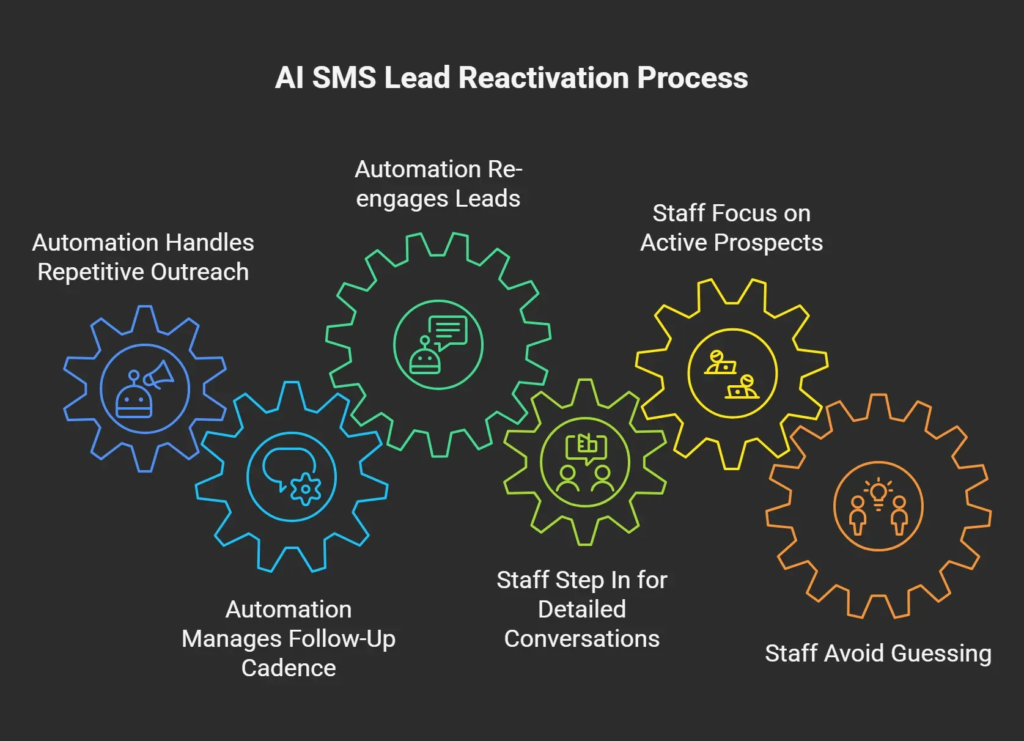
The automation handles repetitive outreach, follow-up cadence, and lead re-engagement. Staff members step in when conversations become detailed, higher-value, or relationship-driven.
That creates a cleaner workload.
Instead of manually chasing every inactive lead one by one, the team focuses on prospects who are actively responding again.
For many local service businesses, that shift alone is useful. Staff stop spending time guessing which old leads are worth pursuing and spend more time on conversations that have already restarted.
Common Concerns Businesses Have About AI SMS Reactivation
Business owners are often interested in improving follow-up, but skeptical about automation.
That skepticism makes sense.
Many companies have seen software demos that looked impressive but created extra work once implemented. The concern is usually not whether follow-up matters. Most owners already know missed follow-up costs money.
The real questions are more practical:
- Will this work in daily operations?
- Will the messages feel robotic?
- Will leads get annoyed?
- Are old leads still worth contacting?
- Will this create more work for the team?
Those are business questions, not technology questions.
Most businesses do not reject automation because they dislike technology. They reject systems that feel unrealistic or disruptive to daily operations.
“Will This Feel Robotic?”
This is one of the most common concerns with AI SMS systems.
Many owners picture stiff, scripted messages that immediately sound automated. That usually comes from seeing poorly built chatbot experiences where every reply feels generic.
Effective reactivation messages are usually simple.
A short text asking whether someone is still interested in a previous estimate often works better than a long scripted sequence. The goal is to restart a conversation naturally, not imitate a human perfectly.
Most leads are not expecting long conversations through text. They want a quick way to respond.
That is especially true for local service businesses where the next step is often scheduling a call, confirming interest, requesting another estimate, booking an appointment, or asking a basic question.
The automation mainly improves consistency during the early outreach stage where many businesses currently struggle to follow up at all.
“Will Leads Get Annoyed by Follow-Up Texts?”
Poor follow-up annoys people. Relevant follow-up usually does not.
There is a difference between aggressive automated messaging and simple re-engagement.
Occasional check-ins, appointment coordination, missed call follow-up, and estimate reminders usually feel different from spam because they are tied to a previous inquiry.
Many older leads prefer text because they can respond on their own schedule.
That is common with homeowners comparing estimates, busy professionals, consultation-based services, and people researching larger purchases.
The messaging still needs limits.
Timing matters. Frequency matters. Opt-out options matter. Businesses that over-message leads create problems whether automation is involved or not.
The strongest systems feel like organized follow-up, not constant marketing.
“Do Old Leads Even Respond?”
Many old leads do respond, but not all of them will.
A reactivation campaign should not assume every inactive contact will become a customer. That is unrealistic.
What matters is that older databases often contain a percentage of leads that were never fully worked.
Some leads delayed the purchase decision. Some were busy at the time. Some lost track of the conversation. Some still need the service later.
Timing changes constantly in local service industries.
Someone who ignored a remodeling estimate six months ago may now be ready financially. A homeowner who postponed roofing work may need repairs after another storm. A prospect who stopped responding earlier may simply prefer texting over phone calls.
A lead going quiet does not always mean the buying intent disappeared.
“Do We Need Thousands of Leads for Reactivation to Work?”
No.
Larger databases usually create more opportunity, but businesses do not necessarily need thousands of leads for reactivation to make sense.
The better question is: how many prior inquiries never received structured long-term follow-up?
For some businesses, that number becomes meaningful quickly.
A contractor generating 20 to 30 leads per month may accumulate hundreds of inactive opportunities within a year or two. A dental office with consultation requests and missed calls may already have years of underworked contacts sitting inside the CRM.
The issue is usually not whether the business has leads. The issue is whether the business has the time and systems to work those leads over long periods.
“Will This Create More Work for Our Team?”
Poorly implemented automation can create more work. Organized automation should reduce repetitive work.
The purpose is to reduce manual follow-up, not bury staff under more administrative tasks.
Most local businesses already struggle to maintain follow-up because employees are balancing calls, scheduling, customer issues, estimates, active sales conversations, and daily operations.
When follow-up depends entirely on memory or manual effort, older opportunities lose visibility.
Automation keeps outreach active in the background and brings interested replies back to the team.
That usually creates a cleaner workflow because staff spend less time chasing inactive leads and more time talking to prospects who are responding again.
What a Successful Lead Reactivation Process Looks Like
Successful lead reactivation usually comes from consistent follow-up, clean handoffs, and realistic tracking. It does not come from aggressive sales tactics.
The goal is not to contact every old lead endlessly.
The goal is to identify which old opportunities are still active and create a clear process for moving interested prospects back into the appointment flow.
Businesses that succeed with reactivation usually improve three areas first:
- lead organization
- follow-up consistency
- appointment handoff
Lead reactivation works best when the business treats follow-up as an ongoing process instead of a one-time cleanup task.
Organized Lead Data Creates Better Follow-Up
A successful reactivation campaign starts with understanding what lead information already exists.
Many businesses have old records inside:
- CRMs
- spreadsheets
- intake forms
- estimate software
- call tracking systems
- appointment platforms
The data is often messy.
Some leads are tagged properly. Others have missing notes. Some estimates were marked “pending” years ago and never updated. Missed calls may not have any follow-up history attached.
Perfect organization is not required, but clearer segmentation improves outreach.
It helps to separate:
- unsold estimates
- missed calls
- consultation requests
- inactive prospects
- previous customers
- leads that never responded
- leads that stopped after early conversations
This prevents the business from treating every old lead the same way.
A homeowner who requested a roofing estimate six months ago is a different conversation from someone who missed a dental consultation last week.
The better the business understands its lead categories, the easier it becomes to follow up in a relevant way.
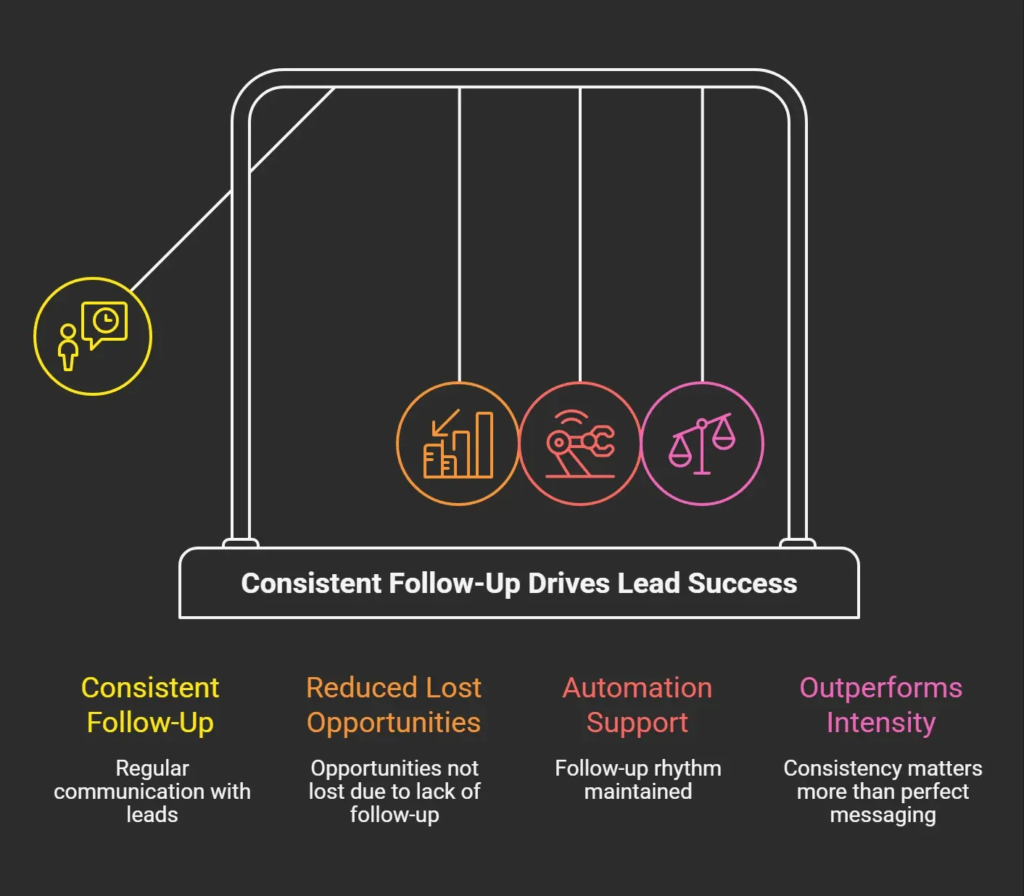
Consistent Follow-Up Matters More Than Perfect Messaging
Many businesses spend too much time trying to find the perfect text message while the larger problem goes unfixed.
Most opportunities are not lost because the wording was slightly off. They are lost because follow-up stopped entirely.
Consistent communication usually matters more than highly polished messaging.
That consistency becomes difficult as lead volume grows.
Office staff are already handling calls, scheduling, customer support, estimates, internal coordination, and active sales conversations. Older opportunities naturally receive less attention during busy periods.
Automation helps create a follow-up rhythm so old leads continue receiving communication instead of disappearing into the CRM.
Consistency usually outperforms intensity in lead follow-up.
Clear Appointment Handoff Reduces Lead Friction
Reactivation does not stop once a lead responds.
Businesses still need a clear process for:
- scheduling appointments
- routing conversations
- assigning ownership
- handling callbacks
- following up after replies
- confirming next steps
Without a clear handoff, reactivated leads can fall back into the same gaps that caused the original problem.
If a prospect responds positively to an old estimate but nobody follows up quickly, the opportunity may stall again. The same happens when a business reactivates missed calls but fails to coordinate scheduling internally.
A strong process separates the roles clearly.
Automation restarts conversations and identifies interested prospects. The business team handles scheduling, estimates, consultations, and closing conversations once interest returns.
That division helps staff focus on active prospects instead of manually chasing inactive leads all day.
Tracking Revenue Recovery Helps Businesses Evaluate Results
Lead reactivation works best when businesses track outcomes clearly.
The goal is not to force every old lead into a sale. The goal is to recover opportunities that would otherwise remain inactive.
Useful metrics include:
- response rates
- booked appointments
- re-engaged conversations
- recovered estimates
- missed call recovery
- consultation bookings
- closed revenue tied to reactivated leads
This gives the business a clearer picture of how much opportunity was already sitting inside existing lead records.
It also changes how owners think about lead generation.
Instead of treating every slow period as a reason to buy more leads, the business can first look at how well the current pipeline is being worked.
That helps the business get more value from what it already paid for before increasing acquisition costs again.
FAQ
What is AI SMS lead reactivation?
AI SMS lead reactivation is a follow-up process that uses automated text messaging to reconnect with old leads, unsold quotes, missed calls, and inactive prospects.
The goal is to restart conversations with people who already showed interest but never became customers.
For many local businesses, those contacts are already sitting inside the CRM. Reactivation helps the business follow up with them consistently instead of letting them stay untouched.
Do old leads actually respond to text messages?
Many do, especially when the original follow-up was inconsistent.
Some prospects were busy. Some delayed the decision. Some stopped responding temporarily. Others may simply prefer text over phone calls.
Not every old lead will respond, but many businesses underestimate how many opportunities remain recoverable inside old CRM records.
What types of businesses benefit most from lead reactivation?
Lead reactivation usually works best for businesses that generate ongoing inquiries, sell through estimates or consultations, and have delayed buying cycles.
Common examples include roofing companies, remodelers, HVAC businesses, med spas, dental offices, law firms, real estate services, and other appointment-based local businesses.
Businesses with inconsistent follow-up often have the largest opportunity because many older leads were never fully worked.
Is AI SMS lead reactivation expensive?
The cost depends on the size of the lead database, the automation setup, and the follow-up process needed.
For many businesses, reactivation can be more cost-efficient than continuously buying new leads because the original acquisition cost was already paid.
The bigger issue is often the amount of revenue sitting inactive inside the CRM without consistent follow-up.
Can AI book appointments automatically?
AI can help with parts of appointment booking, including re-engaging leads, identifying interest, answering basic questions, coordinating scheduling, and sending reminders.
Most businesses still need staff involved for estimates, consultations, quoting, and closing conversations.
Automation works best as a follow-up layer, not as a full replacement for human sales communication.
How many old leads does a business usually need for reactivation?
A business does not necessarily need thousands of old leads.
What matters more is whether the business has accumulated older inquiries that never received long-term follow-up.
A company generating a few dozen leads per month may have hundreds of inactive contacts after a year or two if follow-up has been inconsistent.
Does AI SMS replace a sales team?
No.
AI SMS usually supports sales teams by handling repetitive outreach and early follow-up. It can restart conversations, organize responses, and identify interested leads.
Sales staff still handle consultations, estimates, pricing discussions, relationship-building, and closing.
The goal is to reduce missed opportunities, not remove human involvement.
Is lead reactivation better than buying new leads?
Many businesses need both.
The issue is that businesses often increase lead generation before fixing follow-up problems. If old leads, missed calls, and unsold estimates are already slipping through the cracks, more advertising may create more waste.
Lead reactivation helps businesses recover value from leads they already paid to generate. For many local service businesses, improving follow-up creates a stronger foundation before increasing lead acquisition.
Most local service businesses already have more lead opportunities than they realize. The issue is usually not that every old lead is worthless. The issue is that follow-up becomes inconsistent once newer inquiries take priority.
AI SMS lead reactivation helps create a repeatable way to revisit old estimates, missed calls, inactive prospects, and stalled conversations without relying entirely on staff memory or manual outreach.
That does not mean automation replaces strong operations or a real sales process. It works best when it supports a business that already understands its services, customers, and appointment flow.
For businesses looking to improve follow-up, recover older opportunities, or understand how automated outreach fits into their workflow, you can review our AI automation approach to see what implementation may look like.