

SMS Follow-Up Systems for Local Businesses
New leads usually get the attention first. Older inquiries are usually where the missed revenue sits.
A contractor sends an estimate and never follows up again. A missed call gets one callback attempt before disappearing. A dental consultation request sits untouched because the front desk is focused on current patients and incoming appointments. Over time, businesses keep paying for new leads while older opportunities quietly die inside the CRM.
SMS follow-up helps local service businesses stay in contact with leads after the first conversation. When the office gets busy, callbacks slow down, estimates stop getting second touches, and inactive prospects pile up.
This article explains what an SMS follow up system for local businesses does, where it helps most, and what automation can realistically handle.
Key Takeaways: Are SMS Follow-Up Systems Worth It?
- SMS follow-up works best for businesses that already generate leads but lose track of prospects after the first contact.
- Text messaging often gets more replies than repeated calls because prospects can answer when convenient.
- Automation can handle reminders and follow-up outreach, but staff still need to handle estimates, sales calls, and scheduling.
- Businesses with old estimates, stale CRM records, or missed calls often have opportunities they already paid for but never fully worked.
- Fixing follow-up gaps usually makes more sense before increasing ad spend or buying more leads.
Why Local Businesses Struggle With Follow-Up
Most follow-up problems start after the first conversation.
A roofing company sends the estimate, then moves to the next job. A med spa replies once to a consultation inquiry, then the conversation stalls. An HVAC office misses a callback because the phones are overloaded during peak season.
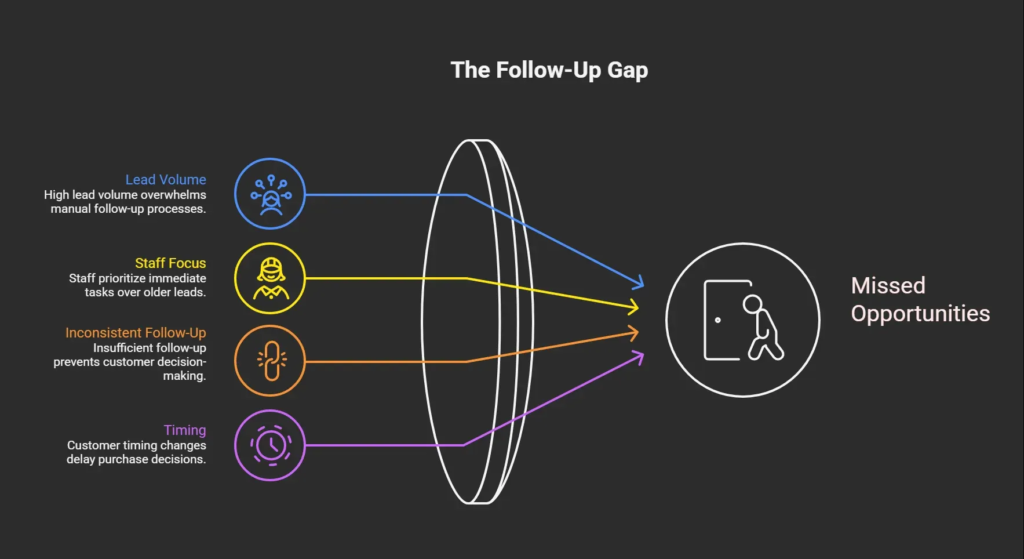
Follow-up breaks when lead volume grows beyond what staff can manage manually.
Once a business handles a steady flow of inquiries, older leads lose visibility fast. Staff focus on active customers, booked appointments, incoming calls, and scheduling problems. Anything that does not require immediate attention gets pushed later.
That is how old estimates sit untouched for weeks. It is how missed calls never get a second touch. It is how CRM records turn into stale opportunities nobody revisits.
Many businesses keep buying leads while this is happening. They spend money on ads, SEO, referrals, or lead vendors, but a large percentage of those inquiries never receive consistent follow-up after the initial response.
Many local service businesses should fix follow-up gaps before spending more money on new leads.
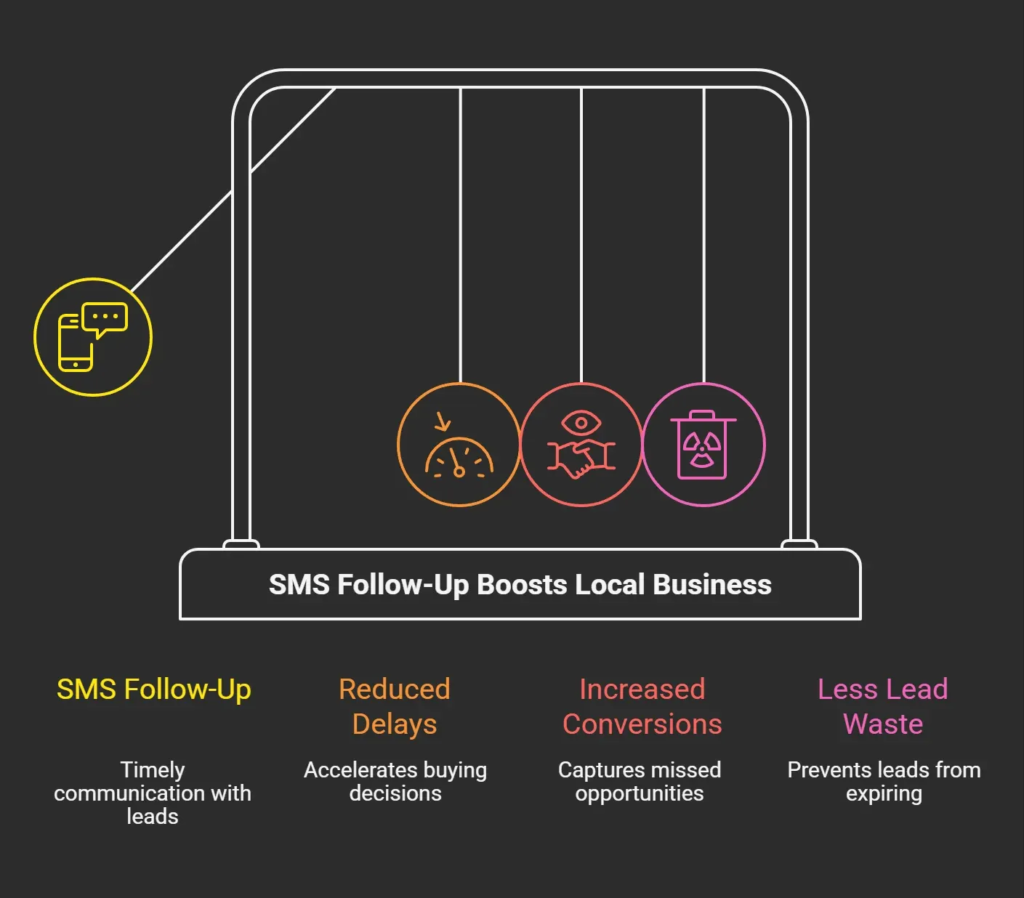
One or Two Follow-Ups Usually Is Not Enough
Many businesses stop follow-up long before the customer has actually decided against the service.
A homeowner comparing remodeling quotes may take weeks before making a decision. A dental patient may wait until finances line up. A property owner dealing with insurance approvals may delay roofing work for months.
A prospect may get one callback, one email, one estimate, maybe one voicemail, and then the conversation dies.
That does not always mean the lead was bad. Sometimes the customer got distracted. Sometimes timing changed. Sometimes they intended to respond later and forgot.
Without consistent follow-up, businesses build lists of unsold estimates, missed callbacks, inactive consultation requests, and old CRM records with no final outcome.
What an SMS Follow-Up System Actually Does
An SMS follow-up system continues conversations after the first interaction instead of letting them die inside the CRM.
The system sends text messages tied to missed calls, estimates, inactive inquiries, appointment reminders, stalled conversations, and scheduling follow-up. This is not cold outreach. The person already contacted the business earlier.
A roofing company may answer the initial estimate request quickly but never revisit the lead afterward. A law office may collect intake forms that never receive another touch after the first call attempt. A remodeling company may have hundreds of old quote requests sitting untouched because nobody has time to manually revisit them.
The goal is simple: keep leads from disappearing after the first interaction.
Text messaging works because it is easier to respond to. Many prospects ignore unknown calls during work hours. Email inboxes fill up quickly. A short text is easier to notice and easier to answer later.
That matters for businesses where customers often delay decisions, such as remodeling, roofing, cosmetic dental work, legal consultations, and financing-based services.
Most customers already use texting for appointment confirmations, scheduling updates, quick service questions, and estimate reminders. SMS follow-up fits naturally into how many businesses already communicate with customers.
Older leads often answer texts they never would have answered by phone.
What SMS Follow-Up Can and Cannot Do
SMS follow-up works best when it handles repetitive outreach.
The system can send reminders, restart stalled conversations, ask whether someone is still interested, and route replies back to staff.
People still handle estimates, inspections, consultations, pricing, objections, and closing.
We use AI SMS as a follow-up tool, not as a replacement for real sales conversations.
If callbacks are slow, appointments are disorganized, or nobody owns the next step after a reply comes in, leads will still die after re-engagement.
A lead may reply positively to a follow-up text and still disappear if nobody calls them back quickly afterward. Automation can restart the conversation, but staff still need clear ownership once the lead responds.
Where SMS Follow-Up Creates the Most Value
SMS follow-up helps most when businesses deal with delayed buying decisions.
Many local services involve estimates, financing, insurance approvals, consultations, or multi-step decisions. That creates long gaps between the first inquiry and the final decision.
A homeowner requesting a remodeling estimate may wait months before moving forward. Someone comparing roofing bids may delay until insurance approves the claim. A cosmetic dental consultation may stall while the customer decides whether the treatment fits their budget.
Most estimate requests receive one call, one email, one quote, and little or no communication afterward. Over time, those opportunities pile up inside the CRM.
Missed calls create the same problem. A customer calls while the office is busy, after hours, or during another appointment. Nobody answers. The callback either never happens or happens too late.
A short follow-up text after a missed call often creates another chance to restart the conversation before the customer moves on to another company.
Businesses often replace leads they never fully followed up with in the first place.
What a Good SMS Follow-Up Process Looks Like
A good SMS follow-up process starts with organized lead categories.
An old remodeling estimate is different from a missed call, an abandoned intake form, or an inactive consultation request. Grouping leads correctly makes follow-up more relevant and easier to manage.
A missed call may need a fast text asking how the business can help. An old estimate may need a check-in asking whether the project is still on the customer’s radar.
Good follow-up also needs clear handoff rules.
A lead may respond positively to a text and still disappear if nobody replies quickly, scheduling is disorganized, appointment ownership is unclear, or the next step never gets confirmed.
Staff should know who handles callbacks, who schedules appointments, who follows up after estimates, and who owns active conversations.
The follow-up should stay visible without overwhelming the prospect. Consistency matters, but too many messages can turn useful follow-up into spam.
Most local service businesses already have opportunities sitting inside old estimates, missed calls, inactive consultations, and stale CRM records.
Follow-up slows down once the office gets busy and newer inquiries take priority. SMS follow-up helps businesses stay in contact with leads after the first conversation instead of letting opportunities disappear after one voicemail or one estimate.
Automation does not replace sales teams or fix weak operations automatically. Staff still need clear ownership, organized scheduling, and consistent callbacks once a lead responds.
We use AI SMS follow-up to help businesses recover opportunities they already paid to generate. If you want to see how we help businesses improve follow-up and reactivate old leads, you can review our AI automation approach.