

How Missed Call Text Back Systems Reduce Lead Loss
A missed call is rarely just a missed conversation. For many local service businesses, it is a missed opportunity to book a job, schedule an estimate, or start a sales conversation.
Phone calls are often the highest-intent lead source a business receives. Someone calling a roofing company, HVAC contractor, attorney, plumber, or med spa is usually looking for information, pricing, availability, or immediate help. They are not casually browsing.
Most business owners assume callers will leave a voicemail or call back later. Many don’t. They move on to the next provider who answers.
That is why missed calls create a unique form of revenue leakage. The lead already exists. The customer already took action. The conversation simply never started.
A missed call text back system addresses that specific gap by responding immediately when a call cannot be answered, helping businesses stay connected during the moment when interest is highest.
Key Takeaways: Is a Missed Call Text Back System Right for Your Business?
- Most missed calls come from people actively looking for a service, quote, or appointment.
- Customers rarely wait for callbacks when other providers are available.
- A missed call text back system creates an immediate response when staff cannot answer the phone.
- Businesses with consistent inbound call volume typically see the greatest benefit.
- The system improves lead capture but does not replace follow-up or sales processes.
- Missed call recovery helps businesses get more value from leads they are already generating.
Why Missed Calls Become Lost Revenue
Most local service businesses already know they miss calls.
The bigger issue is what happens afterward.
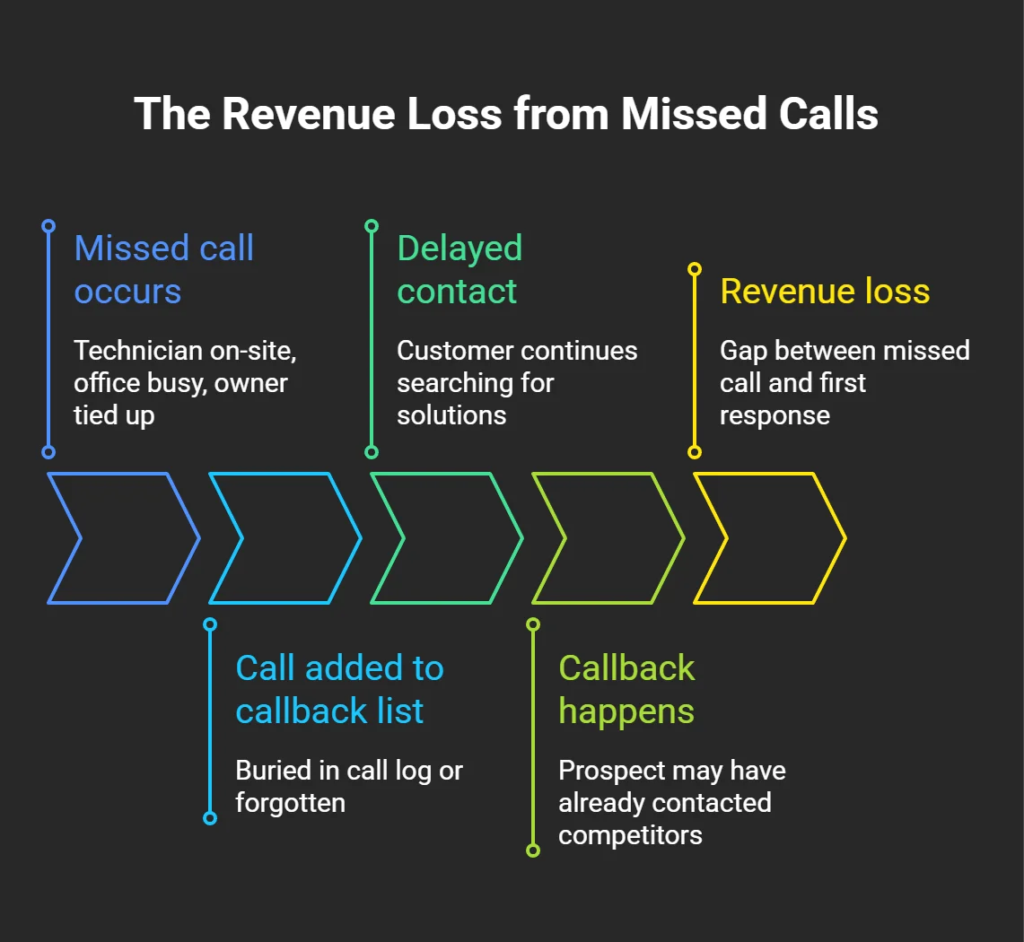
A call comes in while a technician is on-site, the office is handling another customer, or the owner is tied up with an estimate. The missed call gets added to a callback list, buried in a call log, or simply forgotten during a busy day.
The result is usually the same: delayed contact.
Many businesses rely on manual processes to recover missed calls. Someone checks voicemail later. Someone reviews call history before closing. Someone remembers to return calls between appointments.
Those systems work inconsistently because they depend on availability and memory.
Meanwhile, the customer continues looking for solutions.
By the time a callback happens, the prospect may have already spoken with competitors, received pricing, scheduled appointments, or made a decision.
We see this pattern frequently when reviewing lead-handling processes. Businesses are often aware they miss calls, but there is no reliable process for responding immediately after those calls occur.
The revenue loss comes from the gap between the missed call and the first response.
What a Missed Call Text Back System Actually Does
A missed call text back system is simple.
When a call goes unanswered, the system automatically sends a text message to the caller.
Instead of disappearing into a missed-call log, the lead receives an immediate response that acknowledges the inquiry and invites them to continue the conversation.
At a basic level, the system:
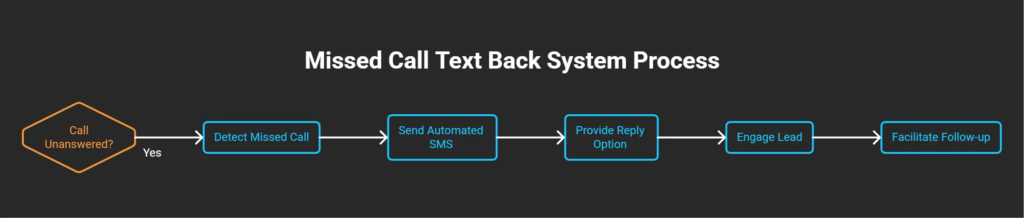
- detects a missed call
- sends an automated SMS
- gives the customer an easy way to reply
That immediate response matters because replying to a text is often easier than leaving a voicemail or making another phone call.
For local service businesses, this creates a second chance to engage while the customer is still actively searching.
The system also reduces dependence on perfect timing. Staff may be unavailable at the moment of the call, but the business still responds within seconds rather than hours.
At TTRAN, we view missed call text back systems as a recovery mechanism, not a replacement for sales conversations. Their purpose is to keep the lead active long enough for a real follow-up to occur.
The Speed-to-Lead Problem Behind Missed Calls
Missed calls create one of the most severe response-time problems in local service businesses because the response window starts at zero.
There is no conversation.
There is no acknowledgment.
There is no indication that anyone saw the inquiry.
For the customer, silence often feels like a rejection.
This becomes especially important in industries where buyers contact multiple providers at the same time. Someone looking for emergency HVAC service, roof repairs, legal assistance, or a remodeling estimate is rarely waiting around for a single company to call back.
The first business that engages often gains a significant advantage.
Missed calls remove a business from that early decision process entirely.
Common causes include:
- technicians working in the field
- overloaded office staff
- after-hours inquiries
- multiple calls arriving simultaneously
- callbacks delayed until later in the day
A missed call text back system shortens that response window dramatically. Even if nobody can answer immediately, the caller still receives confirmation that the business is aware of the inquiry.
That acknowledgment helps keep the opportunity alive while staff become available to continue the conversation.
The Operational Impact of Adding a Missed Call Text Back System
The biggest change is not more leads.
It is fewer lost opportunities.
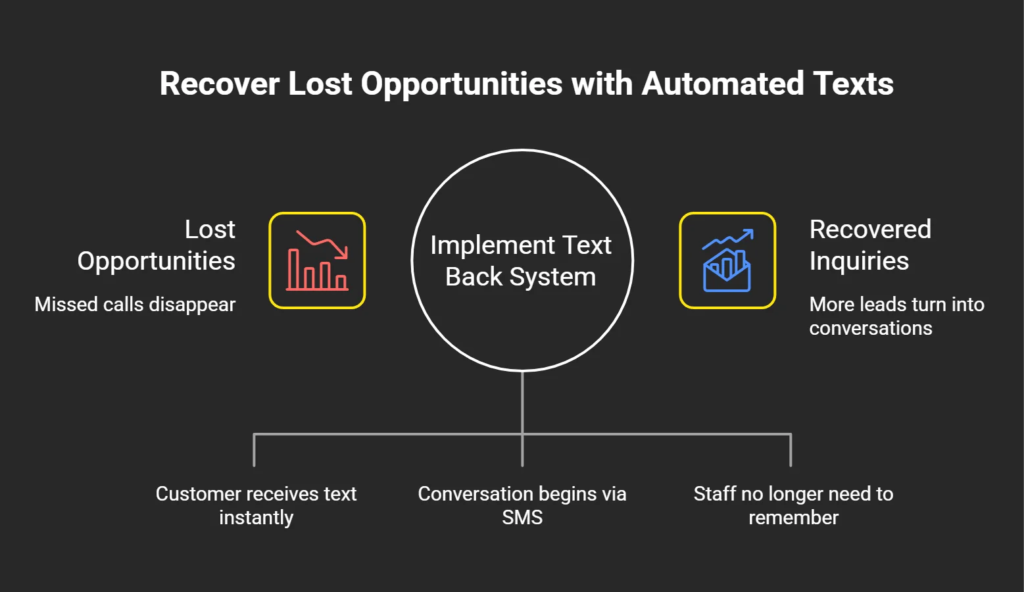
Without a recovery system, missed calls frequently disappear into callback lists that never get fully worked. With an automated text response, more of those inquiries turn into active conversations.
The operational impact is usually straightforward.
A customer calls.
Nobody answers.
The customer receives a text immediately.
The conversation begins through SMS instead of ending with silence.
This reduces the number of opportunities that depend entirely on manual callbacks.
It also creates a more reliable process during busy periods. Staff no longer need to remember every missed call because the first response has already happened automatically.
Businesses often notice that more callers remain engaged long enough for someone to follow up properly.
That matters because every missed call represents marketing dollars already spent. Whether the lead came from referrals, SEO, Google Ads, local directories, or previous marketing campaigns, the acquisition cost has already been paid.
Recovering more of those inquiries improves the value of existing lead flow without increasing advertising spend.
Where Missed Call Text Back Systems Still Fall Short
A missed call text back system only solves the first problem.
It creates the initial response.
It does not manage everything that happens afterward.
Many businesses successfully recover the lead, receive a reply, and then lose momentum because follow-up becomes inconsistent again.
Common breakdowns include:
- delayed responses to SMS replies
- no process for scheduling appointments
- leads never entering the CRM
- conversations receiving one or two replies before stopping
- staff prioritizing new calls over existing conversations
At that point, the missed-call recovery system has already done its job.
The remaining challenge is lead management.
This distinction is important because some business owners expect a missed call text back system to solve every follow-up problem. In reality, it addresses a very specific stage of the funnel: recovering opportunities immediately after a missed call.
The quality of the follow-up process still determines whether those recovered leads become booked appointments.
Missed calls are one of the simplest and most preventable sources of lead loss in local service businesses.
The customer already found your business. They already decided to reach out. The opportunity exists before any marketing, sales, or follow-up discussion begins.
Without a recovery process, many of those inquiries disappear before a conversation ever starts.
A missed call text back system helps close that gap by ensuring callers receive an immediate response when staff cannot answer the phone. It keeps the lead engaged during the most important part of the interaction: the moment they first reach out.
At TTRAN, we view missed-call recovery as one of the foundational pieces of a strong follow-up process. Before investing more into advertising, lead generation, or additional marketing channels, it makes sense to ensure inbound callers actually receive a response and a path to continue the conversation.