

What to Expect During the First 30 Days of AI SMS Implementation
The first few days after launching an AI SMS system can feel confusing.
Messages are going out. Leads are replying. Conversations are starting.
But a business owner’s first question is usually the same:
“Is this actually working?”
That uncertainty is normal.
Most local service businesses have never systematically re-engaged old leads, missed calls, abandoned quotes, or stale CRM records before. When responses begin appearing from people who have not been contacted in months, it can be difficult to tell whether those conversations represent real opportunities or temporary activity.
The first 30 days are less about immediate revenue and more about understanding what is hidden inside your existing database. They reveal how many opportunities were never fully worked, how responsive your old leads still are, and where follow-up gaps have been costing the business money.
Here is what typically happens during the first month and what results are realistic to expect.
Key Takeaways: First 30 Days of AI SMS Implementation
- The first month reveals how much opportunity already exists in your database.
- Week 1 focuses on setup and activating old leads.
- Week 2 reveals how past leads actually behave when re-contacted.
- Week 3 creates more consistent lead flow and follow-up coverage.
- Week 4 is when the first meaningful ROI signals usually appear.
- Strong results depend heavily on database quality and response handling.
Week 1: Activating the Database
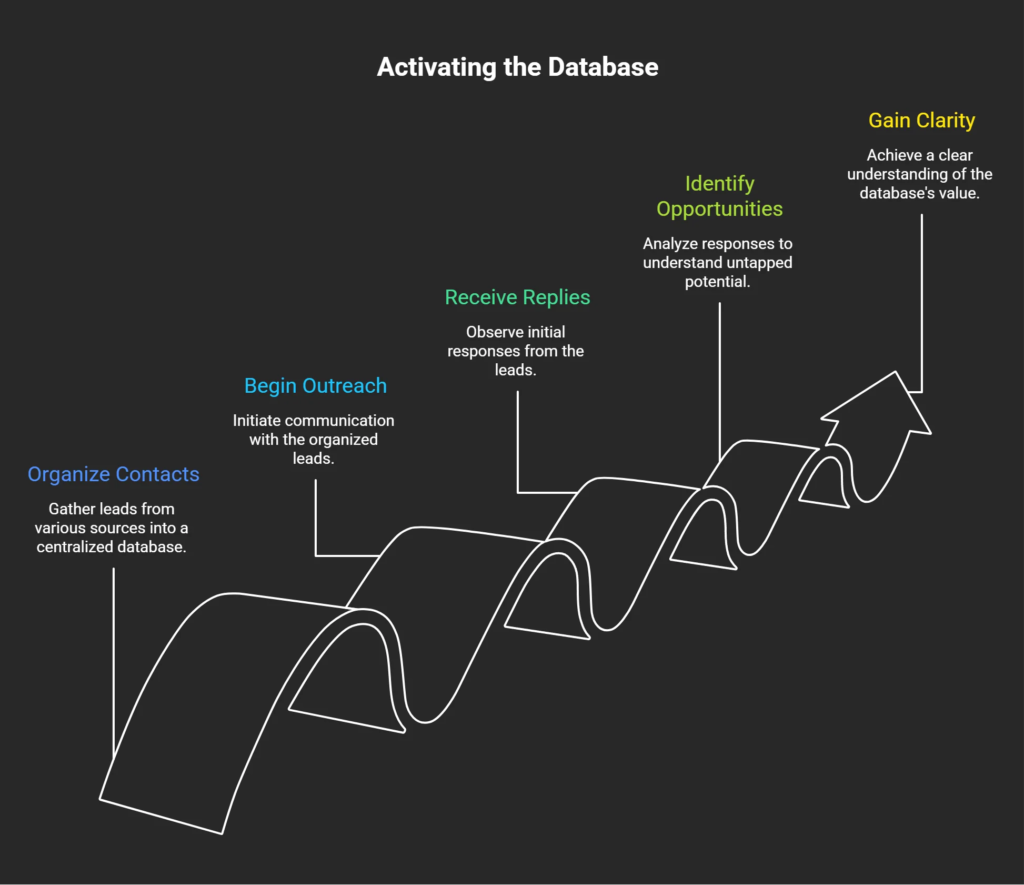
The first week is primarily about getting the system connected to real business data and beginning outreach.
Most businesses have leads spread across multiple places:
- CRM records
- Old quote requests
- Missed call logs
- Website inquiries
- Spreadsheets
- Past marketing campaigns
Once these contacts are organized, outreach begins.
This is often the first time many of these leads have received communication in months.
The most important thing that happens during Week 1 is not revenue generation.
It is proof that the database is still alive.
Many businesses discover that contacts they assumed were permanently lost are still willing to reply, ask questions, or continue conversations that previously stopped.
Replies often begin appearing within the first few days.
Some leads express immediate interest.
Others explain they already hired another company.
Both outcomes are valuable because they provide visibility that did not previously exist.
By the end of Week 1, most businesses have a much clearer understanding of how much untapped opportunity exists inside their existing lead database.
Week 2: Learning How Your Leads Actually Behave
Week 2 shifts from activation to observation.
The system is now generating enough conversations to reveal patterns.
Businesses begin learning:
- Which lead types respond most often
- How recent leads compare to older leads
- Which services generate the strongest engagement
- How previous follow-up habits affected outcomes
This is often where business owners realize many leads were never truly lost.
They simply stopped hearing from the company.
Some prospects respond because the timing is finally right.
Others respond because they never received meaningful follow-up in the first place.
One of the biggest insights from Week 2 is seeing how much opportunity remained hidden inside the CRM.
The pipeline begins to expand beyond “this week’s leads” and starts including opportunities that were generated months earlier but never fully worked.
For many businesses, this is the first indication that follow-up gaps were larger than expected.
Week 3: Creating Consistent Follow-Up
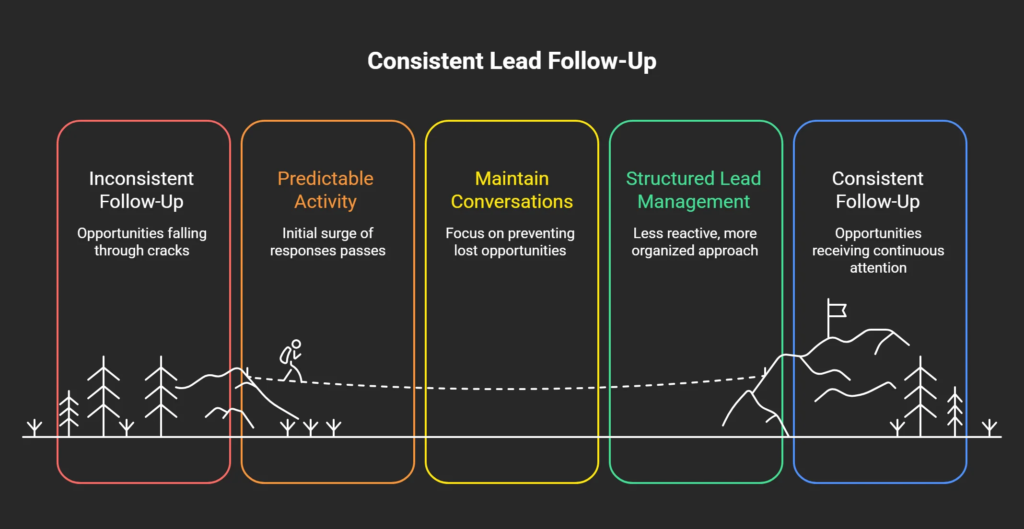
By Week 3, activity starts becoming more predictable.
The initial surge of responses has passed, and the focus shifts toward maintaining conversations and preventing opportunities from falling through the cracks again.
This is often where businesses notice a change in workflow.
Instead of relying entirely on new inbound leads, there is now a steady stream of conversations coming from previously inactive opportunities.
Leads continue moving through:
- Follow-up conversations
- Appointment scheduling
- Quote discussions
- Re-engagement sequences
The most important improvement during Week 3 is consistency.
Opportunities that would normally disappear after one or two contact attempts continue receiving attention.
Many business owners also begin recognizing how much manual follow-up was previously dependent on memory, workload, or individual effort.
By this stage, lead management starts feeling more structured and less reactive.
Week 4: The First Meaningful ROI Signals
Week 4 is where most businesses start seeing outcomes that connect directly to revenue.
Typical signs include:
- Booked appointments from old inquiries
- Previously abandoned quotes becoming active again
- Conversations restarting after months of inactivity
- Missed-call leads finally engaging
These are important because they come from opportunities the business already paid to generate.
No additional advertising was required.
No new lead source was introduced.
The business is simply recovering value from leads that were already in the system.
This is also where perception begins to change.
Many owners start the process believing their CRM contains mostly dead records.
By Week 4, they often realize the database contains a meaningful number of opportunities that were never fully worked.
The biggest ROI signal during the first month is not necessarily closed revenue.
It is clear evidence that recoverable revenue exists inside the existing pipeline.
Common Misconceptions About the First Month
“It should be fully optimized immediately.”
Most systems begin generating activity quickly, but optimization takes time.
The first month is primarily about collecting real-world engagement data and understanding how leads respond.
Early activity should be viewed as a baseline, not a finished result.
“The system replaces sales.”
AI SMS helps create conversations and maintain follow-up consistency.
Sales teams still need to:
- Respond to interested leads
- Qualify opportunities
- Schedule appointments
- Close deals
The system improves coverage. It does not eliminate the sales process.
“Old leads have no value.”
This assumption is challenged in almost every implementation.
Many older leads remain recoverable because:
- Timing changed
- Budgets changed
- Prior plans fell through
- Follow-up stopped too early
The first month often reveals that many “dead” leads were simply unfinished conversations.
What Determines Success in the First 30 Days?
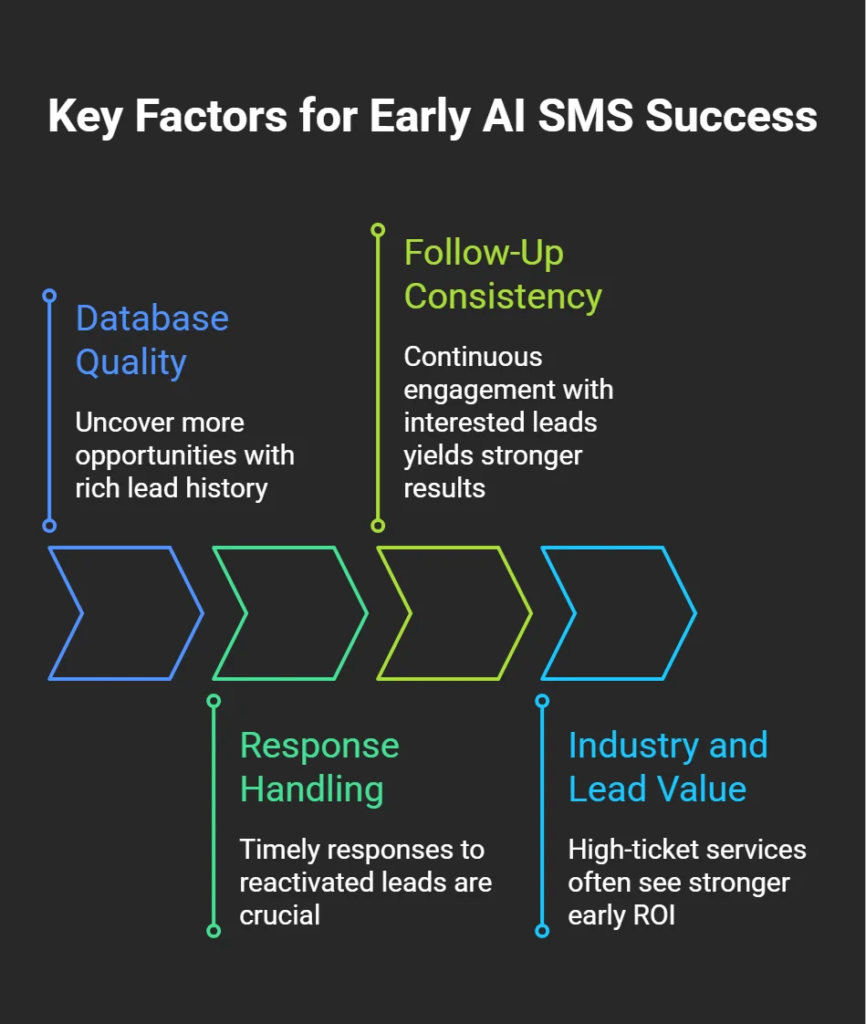
Several factors influence early performance.
Database Quality
Businesses with years of missed calls, stale quotes, and incomplete follow-up typically uncover more opportunities than businesses with limited lead history.
Response Handling
Fast responses to reactivated leads matter.
A lead that replies after months of inactivity can still go cold if nobody responds in a timely manner.
Follow-Up Consistency
The strongest results usually occur when businesses continue engaging interested leads rather than treating replies as passive notifications.
Industry and Lead Value
High-ticket services such as roofing, HVAC, remodeling, legal services, and med spas often see stronger early ROI because a small number of recovered opportunities can represent substantial revenue.
The first 30 days of AI SMS implementation are primarily about visibility.
They reveal how many opportunities were sitting inside the CRM, how responsive past leads still are, and where follow-up gaps have been reducing revenue.
Most businesses enter the process focused on generating new leads. The first month often shifts that perspective by showing how much value already exists in leads they have previously generated but never fully worked.
If you’re evaluating whether AI SMS is a fit for your business, understanding these expectations helps separate normal early activity from meaningful progress.
You can learn more about TTRAN’s approach through our AI automation and lead follow-up systems, which are designed to help local service businesses recover more value from the opportunities already in their pipeline.