

How AI SMS Systems Support Human Sales Teams
A roofing company receives 40 quote requests this month. A remodeling contractor has hundreds of old estimates sitting in the CRM. A dental office has dozens of missed inquiries from past marketing campaigns.
None of these businesses necessarily have a lead generation problem.
What they often have is a follow-up problem.
The first call usually happens. The first text often gets sent. After that, communication becomes inconsistent as new leads arrive, jobs need attention, and sales staff focus on the prospects most likely to close right now.
Over time, estimate requests go cold, old inquiries disappear into the CRM, and opportunities that already cost money to generate are never fully worked.
AI SMS systems help sales teams maintain consistent communication throughout the sales process. They handle routine follow-up, keep conversations active, and reduce the number of leads that fall through the cracks while allowing human reps to focus on selling.
This article explains how AI SMS fits into a real sales workflow, where it provides value, and where human involvement remains essential.
Key Takeaways: When AI SMS Supports Sales Teams Makes Sense
- Most local service businesses lose opportunities because follow-up becomes inconsistent as workload increases.
- AI SMS is most valuable when leads are already being generated but not being worked consistently.
- Immediate response times help prevent new inquiries from contacting competitors first.
- Old CRM records, unsold quotes, and stale inquiries become useful assets when systematic follow-up exists.
- Sales teams gain the most value when automation handles repetitive communication and humans handle closing.
- Businesses still need a clear sales process, pricing structure, and closing strategy for automation to produce results.
Why Follow-Up Breaks Down as Lead Volume Grows
Most sales teams do not intentionally ignore leads.
The problem is that follow-up becomes harder to manage as inquiries arrive from multiple sources. Calls, website forms, referrals, social media messages, and paid advertising can create more activity than a small team can consistently handle.
Many businesses respond quickly when a lead first comes in. The breakdown usually happens afterward.
A salesperson gets pulled into appointments. Field staff spend the day on job sites. New inquiries receive attention while older prospects move lower on the priority list. A quote request that seemed promising two weeks ago receives no additional contact because nobody remembered to follow up again.
We see this frequently when reviewing lead pipelines. Businesses continue investing in lead generation while hundreds of past opportunities remain untouched in the CRM.
The issue is rarely a lack of effort. Manual follow-up simply becomes difficult to sustain when every reminder, text message, and check-in depends on human memory.
What AI SMS Actually Does Inside a Sales Process
AI SMS works best as a follow-up layer within an existing sales workflow.
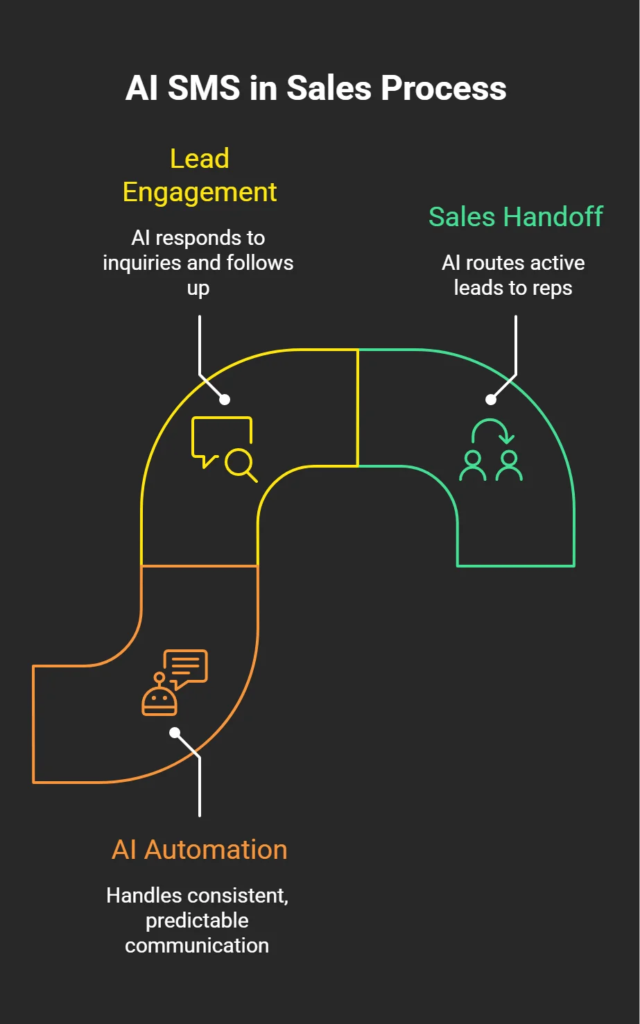
It handles repetitive communication tasks that need to happen consistently but do not require a salesperson’s direct involvement every time.
Examples include:
- Responding to new inquiries immediately
- Following up on unbooked estimates
- Checking in with prospects who stopped replying
- Re-engaging old leads from the CRM
- Sending appointment reminders
- Reaching out after missed calls
These interactions often follow predictable patterns. The system can send messages automatically based on lead activity, timing, or pipeline status.
Once a lead replies, requests pricing, asks detailed questions, or shows buying intent, the conversation can be routed to a salesperson.
This creates a simple division of labor: automation maintains communication while human reps handle sales conversations, objections, estimates, and closing.
Faster Response Times Without Adding Staff
Speed matters because many prospects contact multiple businesses before making a decision.
When someone submits a quote request, fills out a form, or calls after hours, every minute without a response increases the chance that another company gets the opportunity first.
The challenge is that staff are not always available when inquiries arrive.
A contractor may be on-site. A dental office may be helping patients. A law firm may be in meetings. Even businesses with dedicated sales staff experience response delays during busy periods.
AI SMS helps eliminate these gaps by responding immediately when a lead enters the system.
The message can acknowledge the inquiry, answer common questions, gather basic information, and begin moving the prospect toward an appointment.
The sales team remains involved, but the lead no longer waits hours—or sometimes days—for an initial response.
For businesses struggling with slow response times, this is often one of the fastest operational improvements they can make.
Re-Engaging Old Leads and Unused Quotes
Most businesses have more opportunities sitting in their database than they realize.
Old estimate requests, abandoned consultations, unanswered follow-ups, and prospects from previous marketing campaigns often remain in the CRM long after active outreach stops.
Many of these leads never said no.
They got busy. Their priorities changed. The timing was wrong. They stopped responding after an estimate was delivered.
Without a system, these opportunities remain untouched because sales teams naturally focus on newer inquiries.
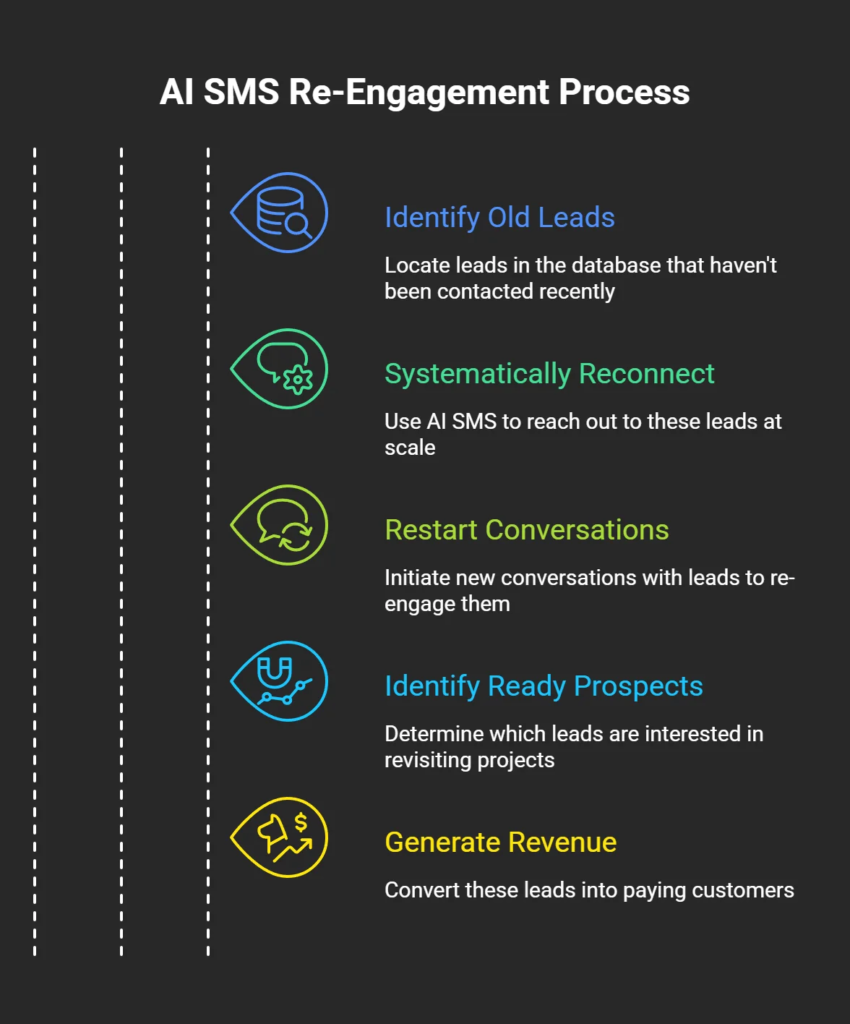
AI SMS allows businesses to systematically reconnect with these contacts.
Instead of manually reviewing hundreds of records, the system can reach out at scale, restart conversations, and identify prospects who are ready to revisit a project.
This is one of the areas where we often see the clearest revenue impact. Businesses have already paid to generate these leads. Consistent re-engagement gives those opportunities another chance to convert.
Reducing Administrative Follow-Up Work
Salespeople create the most value when they are speaking with interested prospects and closing business.
Yet many spend a large portion of their day sending reminder texts, checking on unresponsive leads, and repeating nearly identical follow-up messages.
These tasks are necessary, but they are rarely the highest-value use of a salesperson’s time.
Automation removes much of this repetitive workload.
Instead of manually tracking every lead, sending every reminder, and remembering every follow-up date, the system handles routine communication automatically.
The result is a cleaner workflow.
Sales reps spend less time managing follow-up logistics and more time working active opportunities. Leads continue receiving communication even during busy periods, reducing the likelihood that prospects disappear simply because nobody had time to reach out.
What This Means for Revenue
Businesses rarely lose revenue because every lead is bad.
More often, revenue leaks out of the pipeline through missed follow-up, delayed responses, and opportunities that receive only one or two contact attempts before being abandoned.
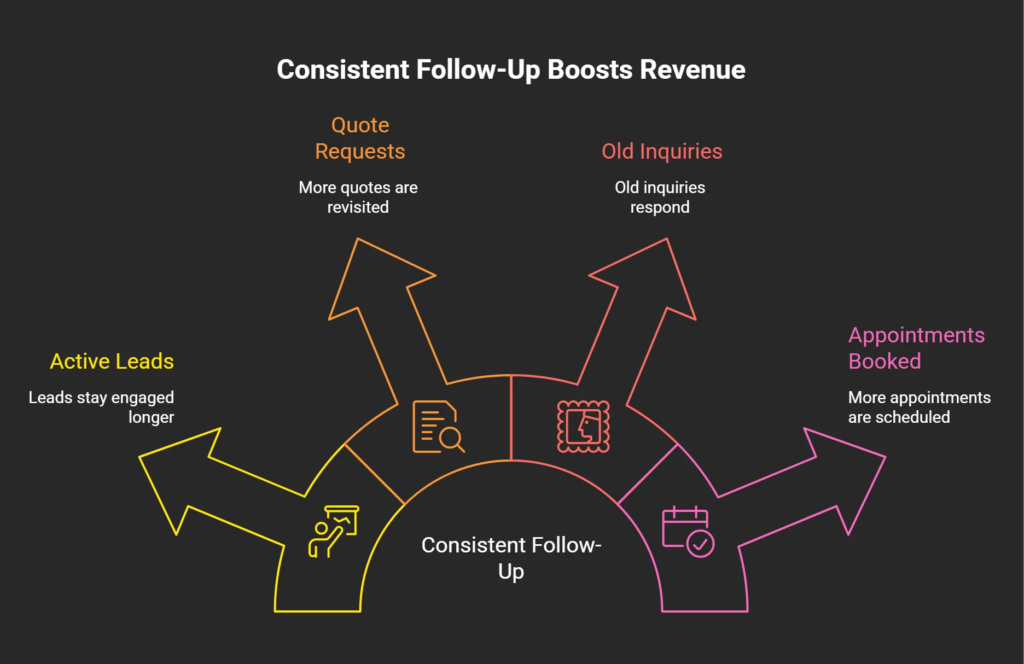
When communication becomes consistent, more leads stay active long enough to reach a buying decision.
More quote requests get revisited. More old inquiries respond. More appointments get booked.
The lead volume may remain exactly the same.
What changes is the percentage of opportunities that are actually worked.
This is why many businesses discover that improving follow-up produces a better return than immediately increasing ad spend. Before investing in additional leads, it often makes sense to maximize the value of the leads already sitting in the database.
AI SMS Still Depends on a Functional Sales Process
Automation cannot compensate for unclear pricing, weak sales conversations, or inconsistent closing practices.
If prospects receive estimates but never receive a compelling reason to move forward, AI SMS will not solve that problem.
If sales reps struggle to handle objections or follow a defined process, automation will not close deals on their behalf.
Human involvement remains essential once a prospect becomes engaged.
Salespeople still need to qualify leads, provide estimates, answer questions, and guide customers toward a decision.
The strongest results occur when AI SMS supports an existing sales process that already works. The system improves consistency, response times, and follow-up coverage while the sales team handles the conversations that require judgment and expertise.
Most local service businesses already have more opportunities than they fully monetize.
New inquiries, old CRM records, unsold quotes, missed calls, and abandoned consultations all represent potential revenue that often goes untouched because follow-up becomes inconsistent over time.
AI SMS helps create a structured process for staying in contact with those opportunities. It improves response times, keeps leads active longer, and reduces the administrative burden placed on sales teams.
Businesses that benefit most are usually not struggling to generate leads. They are struggling to consistently work the leads they already have.
If follow-up gaps, stale CRM records, or unworked quote requests sound familiar, our AI SMS lead reactivation service is designed to help businesses recover more value from the opportunities already in their pipeline.