

AI Appointment Setting for Local Service Businesses
One of the biggest operational bottlenecks in local service businesses happens before the real sales conversation even begins.
A lead calls after hours, submits a form while the office is busy, or requests an estimate during a high-volume period. The business intended to follow up, but callbacks get delayed, scheduling conversations stall, and some inquiries disappear before anyone ever books the appointment.
That is one reason AI appointment setting systems have started getting attention in contractors, med spas, home services, and other consultation-based businesses. Most businesses are not trying to replace staff entirely. They are trying to reduce the number of opportunities that disappear when workloads increase and follow-up becomes inconsistent.
This article explains what AI appointment setting actually means in local service businesses, where it helps operationally, and where human conversations still matter.
Key Takeaways: AI Appointment Setting for Local Service Businesses
- AI appointment systems are usually most effective at improving response consistency during busy periods.
- Businesses often lose appointments before the sales conversation starts because callbacks and scheduling fall behind.
- Missed call follow-up and after-hours response gaps are common operational problems in local service businesses.
- AI appointment setting works best when it supports staff workloads instead of replacing human sales conversations entirely.
- Businesses with stale inquiries, delayed callbacks, or overloaded office staff are often stronger candidates for appointment automation.
- Faster response times usually improve booking rates because customers often contact multiple businesses at once.
What AI Appointment Setting Actually Means in Local Service Businesses
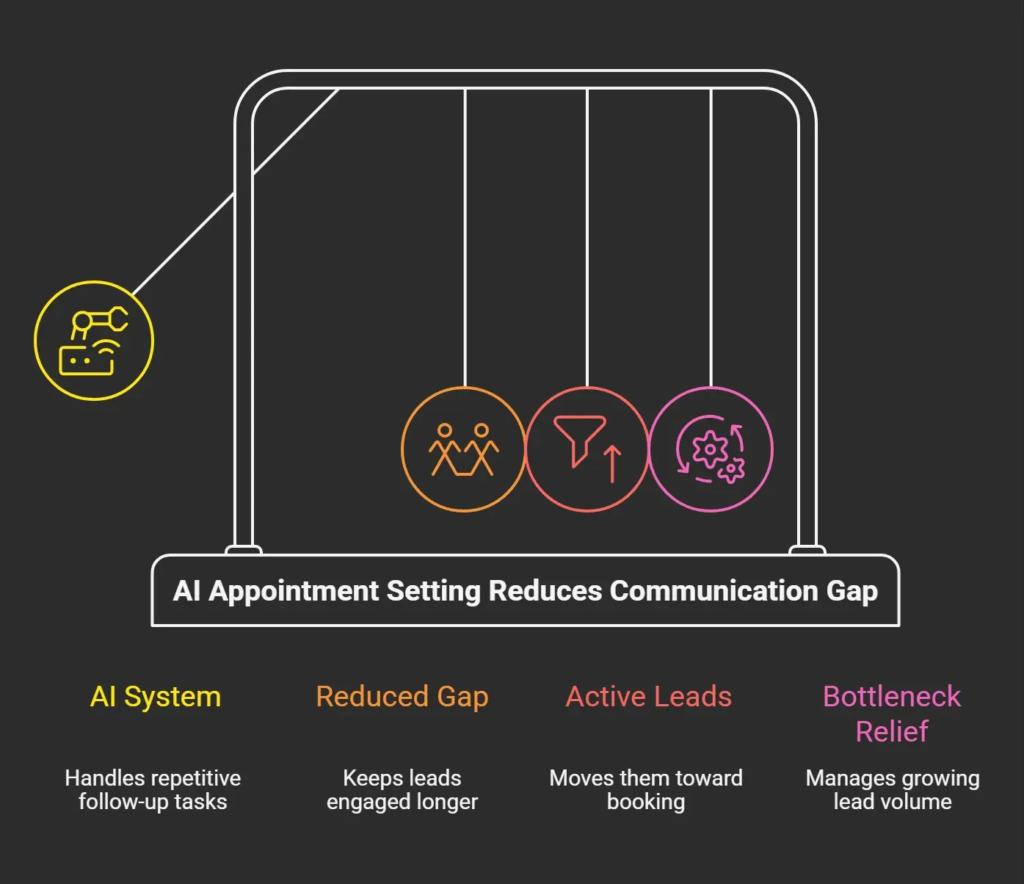
In most local service businesses, AI appointment setting focuses on keeping leads engaged long enough to book the next step.
That usually means handling repetitive follow-up tasks that slow down during busy periods. An AI appointment system may respond to inbound form submissions, follow up after missed calls, answer basic scheduling questions, qualify simple inquiries, or help book consultations and estimates through text.
Most systems are not handling the entire sales process.
For contractors, med spas, HVAC companies, and other quote-based businesses, the biggest breakdown often happens before a real conversation even starts. A lead calls after hours. A form submission sits untouched for several hours. Office staff plan to call back later but get pulled into scheduling, dispatching, or existing customers.
That delay creates early friction in the sales process.
AI appointment systems help reduce that communication gap while staff are busy elsewhere. Instead of relying entirely on manual callbacks, businesses can keep leads active long enough to move them toward a scheduled estimate, consultation, or follow-up call.
Appointment setting often becomes the operational bottleneck once lead volume grows beyond what staff can manage consistently.
Where AI Appointment Setting Helps Most
Fast follow-up directly affects whether a lead turns into a booked appointment.
Most local service customers contact multiple businesses within a short period of time. A homeowner looking for a roofer may submit several estimate requests in one evening. Someone searching for a med spa consultation may compare multiple providers before booking. Once response times slow down, buyer momentum fades quickly.
Many businesses lose opportunities after the first interaction because follow-up becomes inconsistent.
This is where appointment-setting systems often help most operationally. Quick text responses, missed call follow-up, and faster scheduling conversations help reduce the delay between inquiry and engagement. Even a simple reply confirming availability can keep the conversation active while competitors remain silent.
Busy periods create the largest follow-up gaps.
Nights, weekends, high lead volume, and overloaded office staff all create situations where inquiries sit untouched longer than intended. Old leads also become harder to revisit once newer opportunities continue entering the pipeline.
AI appointment systems help maintain communication consistency during those periods by keeping scheduling and follow-up conversations moving.
What AI Appointment Setting Does Not Replace
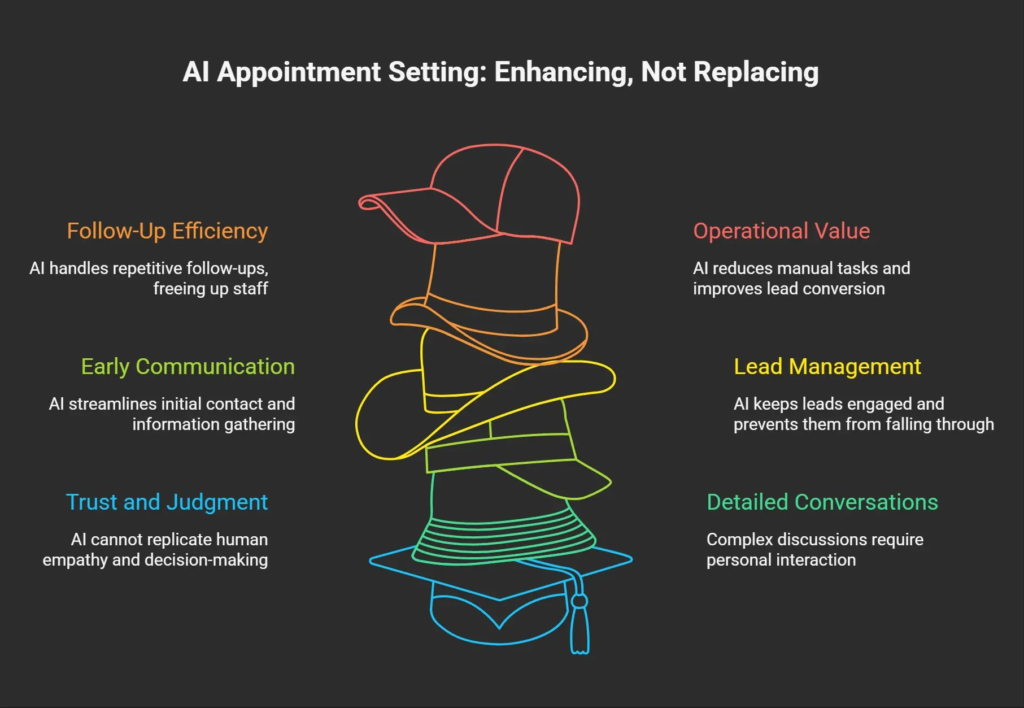
AI appointment systems do not replace the parts of the sales process that depend on trust, judgment, and detailed conversations.
Most local service customers still expect direct discussions before committing to larger purchases or appointments. Homeowners usually want real conversations before approving remodeling estimates or HVAC replacements. Med spa clients often have questions about pricing, timing, or treatment expectations.
AI appointment systems usually improve the early stages of communication rather than replacing the entire sales process.
That distinction matters because some businesses expect automation to fully replace staff interaction. In practice, appointment systems work better when they help move leads toward the conversation that still requires a real person.
The strongest operational use case is reducing follow-up gaps during busy workloads.
AI systems can keep leads active, manage repetitive scheduling conversations, follow up after missed calls, and surface interested prospects faster. That reduces the amount of manual outreach office staff and sales reps need to handle every day.
The operational value comes from reducing the number of leads that disappear before meaningful conversations happen.
When AI Appointment Setting Makes Sense for a Business
AI appointment systems usually make the most sense when follow-up consistency is becoming difficult to manage manually.
Businesses often notice the problem operationally before identifying it formally. Missed calls increase. Callbacks get delayed until the next day. Old inquiries sit untouched inside the CRM. Office staff spend most of the day reacting to incoming work instead of following up consistently.
Those gaps become more visible as lead volume grows.
AI appointment systems improve weak workflows faster than they fix them.
Businesses still need organized CRM records, clear ownership of follow-up, and realistic expectations about what automation can handle. Disorganized lead records and inconsistent sales processes usually become more obvious once automated systems are introduced.
At TTRAN, we usually see the strongest fit with businesses that already generate inquiries but struggle maintaining consistent communication across missed calls, estimate follow-up, and stale leads.
How AI Appointment Setting Connects to Lead Reactivation
Appointment setting and lead reactivation often overlap inside the same follow-up workflow.
Many businesses already have old leads sitting inside the CRM that never fully moved through the sales process. Some requested estimates but stopped responding. Others delayed decisions or disappeared after the first conversation.
In many cases, the operational goal is simply restarting communication and moving the lead back toward a booked appointment.
A short text conversation may help re-engage an inactive prospect, qualify whether interest still exists, and book a follow-up estimate or consultation without requiring the sales team to manually revisit every old lead one at a time.
At TTRAN, we usually approach AI SMS appointment systems as part of a broader revenue recovery process. The focus is not only booking new appointments, but also recovering opportunities that were already sitting inside the pipeline without consistent follow-up.
AI appointment setting is usually about reducing operational gaps that cause leads to disappear early in the process.
Missed calls, delayed callbacks, inconsistent scheduling, and stale inquiries quietly reduce booking rates in many local service businesses. Appointment-setting systems help maintain communication consistency while staff are busy handling customers, estimates, scheduling, and day-to-day operations.
The businesses that benefit most are often the ones already generating inquiries but struggling to keep follow-up organized as workloads grow.
AI systems still work best alongside human conversations, especially for estimates, inspections, pricing discussions, and trust-building interactions.
For businesses exploring ways to improve follow-up, appointment consistency, or lead recovery workflows, learning more about how TTRAN approaches AI SMS systems can help clarify what practical implementation actually looks like.