

Lead Reactivation vs Buying More Leads
You paid for the lead, had the first conversation, sent the estimate, and then nothing happened.
That situation is common in local service businesses. Contractors, med spas, home service companies, and other quote-based businesses often assume inconsistent revenue means they need more ads, more traffic, or more inbound leads. Sometimes they do. In many cases, though, old opportunities are already sitting untouched inside the CRM.
A business may have missed calls that never received a second touch, stale estimates from past ad campaigns, or leads that stopped responding after one follow-up attempt. Those opportunities rarely get revisited once newer inquiries start coming in.
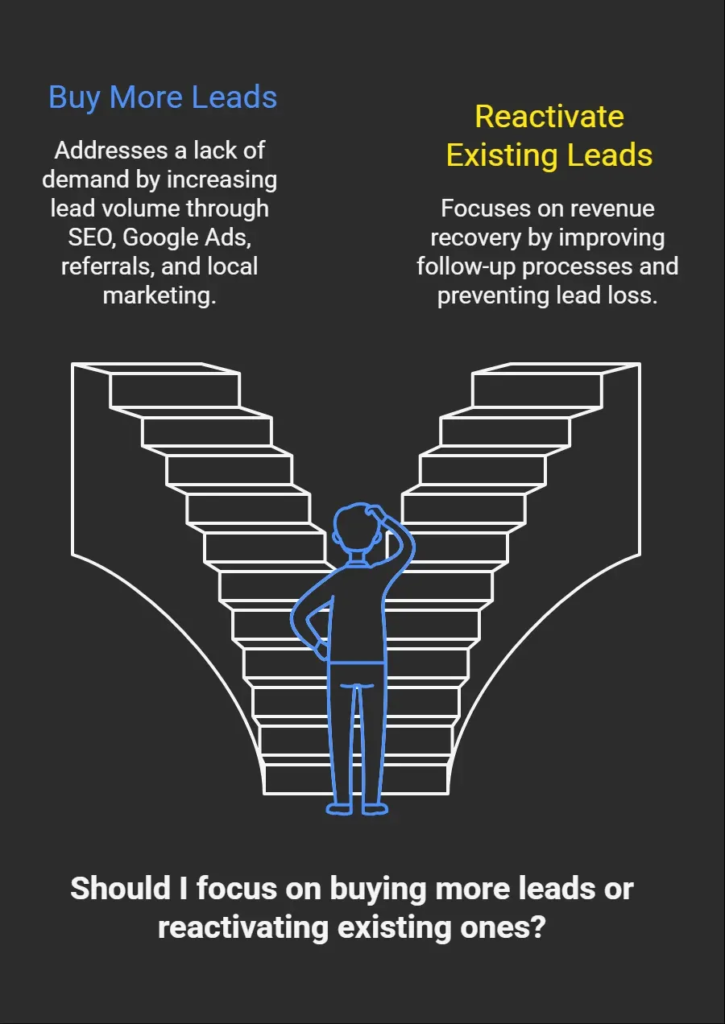
This creates an important operational decision: should the business spend more money generating new leads or recover more value from the leads it already has?
This article explains where each strategy makes sense and why follow-up consistency often affects the ROI of both.
Key Takeaways: Lead Reactivation vs Buying More Leads
- Buying more leads does not fix missed callbacks, weak follow-up, or stale CRM workflows.
- Lead reactivation works best when old estimates, missed calls, or inactive inquiries are already sitting in the pipeline.
- Businesses with low inquiry volume may still need lead generation before lead recovery becomes a priority.
- Slow response times reduce ROI from both SEO and paid lead generation campaigns.
- Old leads are often delayed buyers rather than completely dead opportunities.
- Businesses usually scale marketing more efficiently after follow-up systems become more consistent.
Buying More Leads Solves a Different Problem
Buying more leads helps when a business genuinely does not have enough demand entering the pipeline.
If inbound calls are inconsistent, estimate requests are slow, or the schedule has large gaps, lead generation may be the right priority. SEO, Google Ads, referrals, and local marketing can all help create more opportunities.
Many local service businesses already have leads coming in, though. The revenue loss happens later when follow-up becomes inconsistent.
A contractor may send estimates without checking back in. A med spa may respond too slowly to consultation requests during busy periods. A home service company may miss inbound calls and never return them later.
More leads do not create more revenue when the business cannot consistently work the leads it already has.
That is where operational waste starts building. New inquiries keep entering the pipeline while older opportunities quietly disappear. Businesses end up paying repeatedly for lead generation while stale estimates, missed calls, and inactive CRM records continue piling up in the background.
Increasing lead volume before fixing follow-up usually adds pressure to the same weak process.
Lead Reactivation Focuses on Revenue Recovery
Lead reactivation focuses on opportunities the business already paid to generate.
Many old leads still contain buying intent. The timing simply changed. A homeowner may delay a remodeling project because of budget concerns. An HVAC customer may postpone replacement until the system becomes a larger problem. Some prospects stop responding because life became busy, not because they lost interest completely.
Old leads often represent unfinished conversations rather than permanent rejection.
The business already invested in generating the inquiry. The lead already called, submitted a form, requested pricing, or asked questions about the service. That prior engagement matters.
Lead reactivation is often cheaper than generating completely new demand because the business is working existing opportunities instead of starting from zero again.
At TTRAN, we usually review inactive leads before recommending additional acquisition spend. If the CRM already contains stale estimates, missed callbacks, or unworked leads from previous campaigns, there may already be recoverable revenue sitting inside the pipeline.
Lead reactivation does not guarantee conversions. It simply gives businesses another chance to work opportunities that were never fully followed through the first time.
When Buying More Leads Too Early Creates Bigger Problems
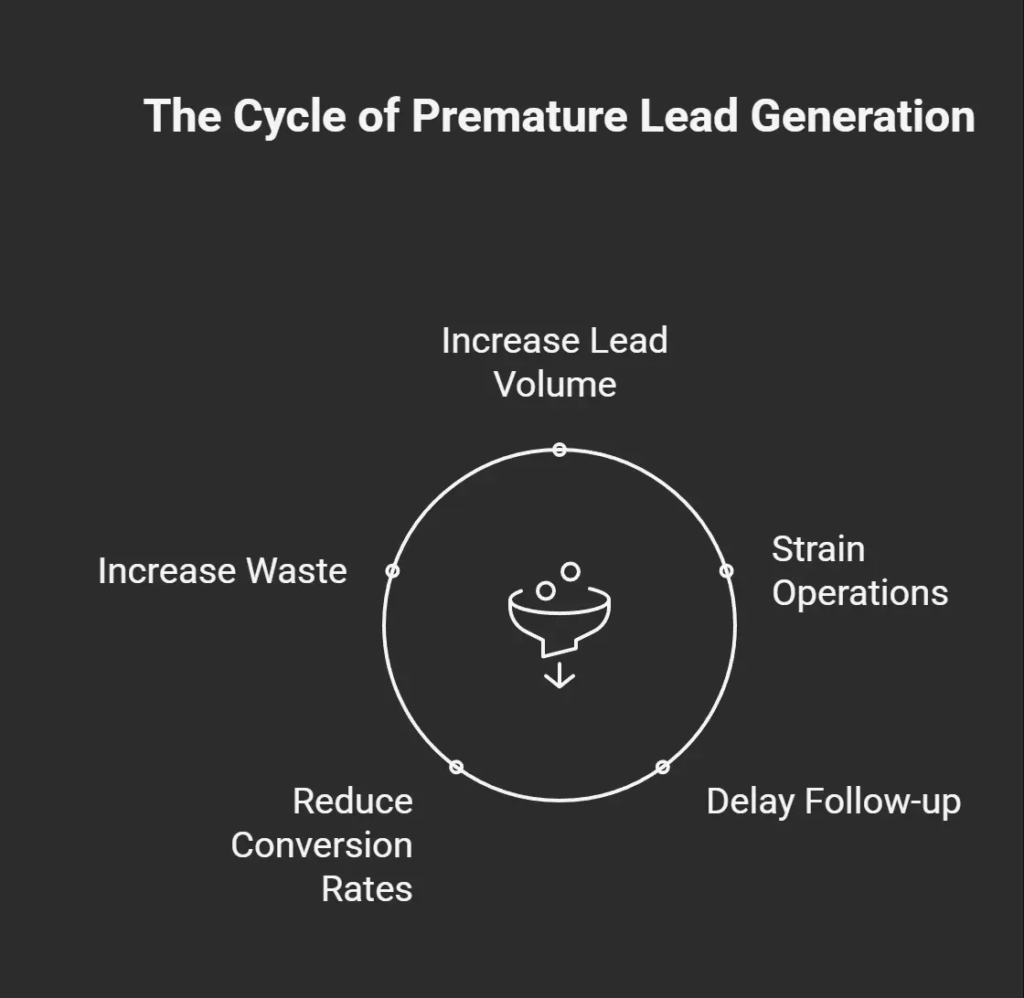
More lead volume increases operational pressure.
If callbacks are already delayed, estimates are going untouched, or appointment scheduling is inconsistent, adding more leads usually creates a larger version of the same problem. New inquiries arrive, but the business still has the same staffing limits, response delays, and follow-up gaps.
That is how businesses end up spending more on lead generation while conversion rates stay inconsistent.
A contractor may increase ad spend while estimates continue going stale after the first visit. A service business may generate more calls while office staff still struggle to respond during busy hours. More demand does not help when the sales process cannot consistently keep up.
Scaling weak follow-up systems usually increases waste before it increases revenue.
This does not mean businesses should stop generating leads. It means follow-up capacity matters. When old leads, missed calls, and unsold estimates are already slipping through the cracks, increasing acquisition spend often compounds the same operational issues instead of fixing them.
When Each Strategy Makes More Sense
The better strategy depends on what the business is struggling with operationally.
Buying more leads usually makes sense when inquiry volume is genuinely low. If inbound calls are inconsistent, estimate requests are limited, or the sales team has room for more work, lead generation may be the priority.
Lead reactivation makes more sense when the pipeline already contains underworked opportunities.
That may include:
- old estimates with no follow-up
- missed calls that never received another contact attempt
- stale CRM records
- inactive consultation requests
- leads that stopped responding after one or two conversations
Businesses with decent lead flow often lose revenue through inconsistent lead management rather than lack of demand.
In many cases, improving follow-up consistency first creates a stronger foundation before increasing lead acquisition further.
The Strongest Businesses Usually Combine Both Strategies
Lead generation and lead recovery work best together.
New inquiries keep the pipeline active, while lead reactivation helps businesses recover more value from opportunities already sitting inside the CRM. Better follow-up improves the performance of nearly every lead source, including SEO traffic, paid ads, referrals, missed calls, and old estimates.
Businesses that consistently work their pipeline usually scale marketing more efficiently because fewer opportunities disappear after the first interaction.
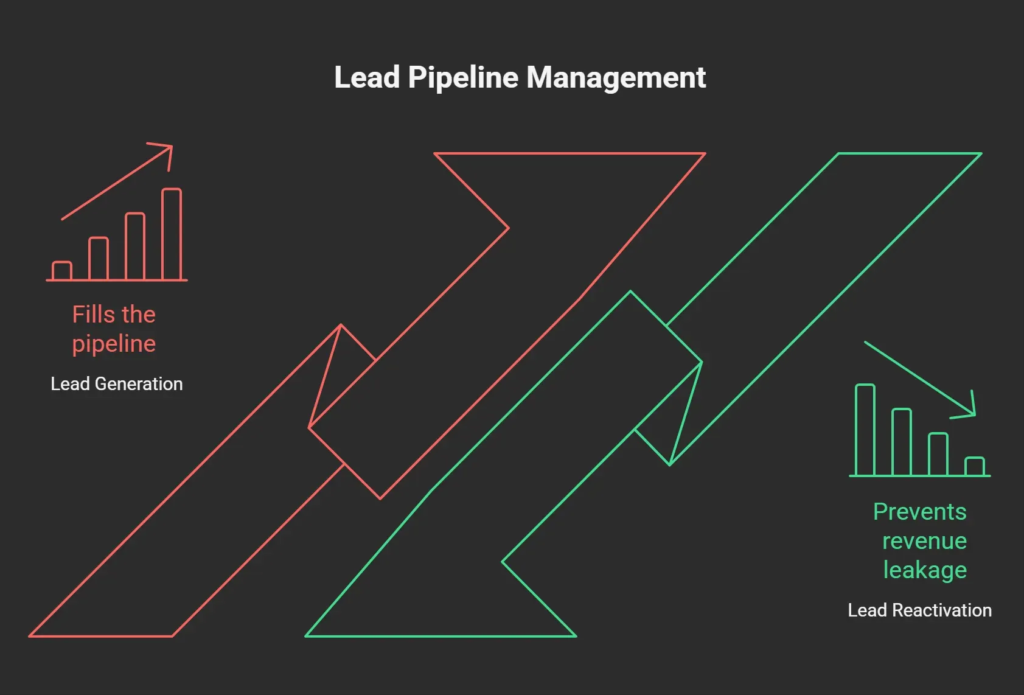
Lead generation fills the pipeline. Lead reactivation helps prevent revenue from leaking out of it.
For many local service businesses, stabilizing follow-up first creates a stronger operational foundation before increasing acquisition spend further.
Lead generation and lead reactivation support different parts of the sales process.
Buying more leads helps create demand when inquiry volume is genuinely low. Lead reactivation focuses on recovering value from missed calls, stale estimates, inactive CRM records, and older opportunities that were never fully worked.
Many local service businesses already have revenue sitting inside their pipeline without realizing it. Follow-up slows down, newer leads take priority, and older opportunities quietly disappear over time.
Businesses usually scale more efficiently when follow-up systems become more consistent before acquisition spending increases further.
For businesses exploring ways to improve follow-up, recover older opportunities, or understand how AI SMS systems fit into lead reactivation, our approach at TTRAN focuses on practical operational improvement rather than generic automation hype.