

7 Warning Signs Your CRM Is Quietly Losing Leads
A CRM can look healthy while revenue quietly leaks out of it.
New leads are coming in. Contact records are being created. Sales activity appears in reports. The pipeline looks active.
Yet booked appointments stay flat, close rates feel inconsistent, and old opportunities seem to disappear without explanation.
This happens because most CRM failures are not software failures.
They are operational failures.
Leads stop receiving follow-up. Response delays go unnoticed. Old opportunities sit untouched for months. Prospects are marked as lost before the decision process is actually over.
The result is a pipeline that appears busy but converts less revenue than it should.
If you suspect your business is generating enough opportunities but not getting the results you expect, these warning signs can help identify where leads are quietly slipping through the cracks.
Key Takeaways: CRM Losing Leads Warning Signs
- Most CRM problems come from process breakdowns rather than software limitations.
- Leads often stop moving through the pipeline long before they are officially marked as lost.
- Inconsistent follow-up creates hidden revenue leakage.
- Slow response times reduce conversion before meaningful conversations begin.
- Old leads frequently remain in the database without receiving further attention.
- Poor visibility makes it difficult to identify where opportunities are actually being lost.
- Rising lead costs often expose CRM problems that already existed.
1. Leads Enter the CRM but Rarely Move Forward
The first warning sign is a pipeline filled with leads that never progress.
New inquiries continue arriving from website forms, referrals, advertising campaigns, and missed calls. Contact records are created. Statuses are assigned.
Then very little happens.
Many local service businesses have large numbers of leads sitting in stages such as:
- New
- Open
- Contacted
- Awaiting Response
Some remain there for weeks or months.
This creates the appearance of a healthy pipeline even though very few opportunities are actively moving toward appointments or closed business.
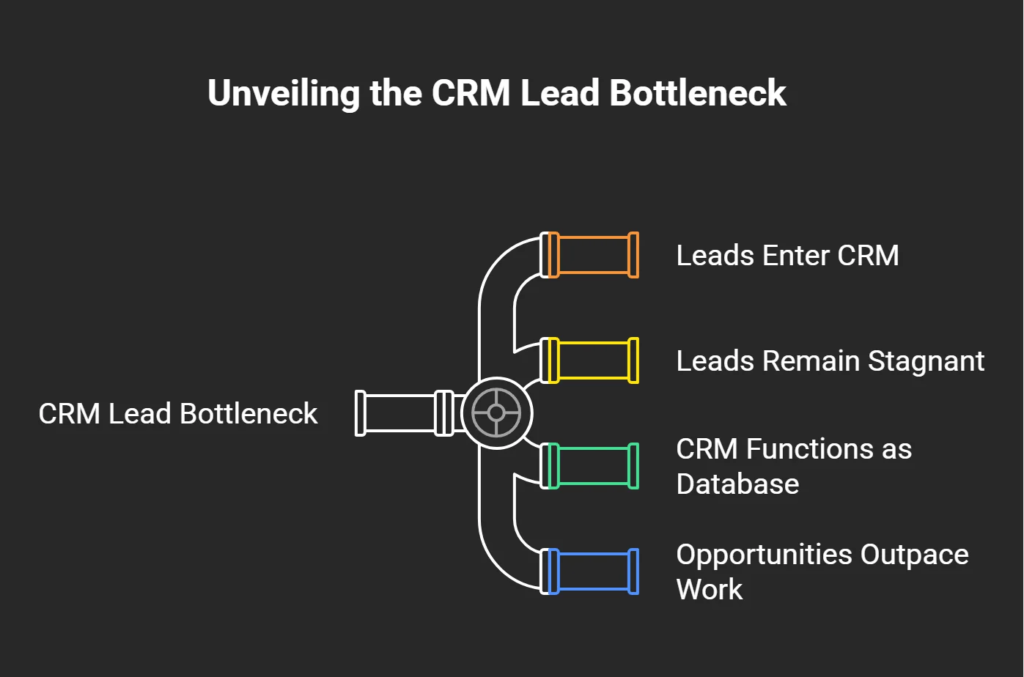
When leads consistently enter the system but rarely advance, the CRM is functioning as a database rather than a sales tool.
The issue is rarely lead volume.
The issue is that opportunities are entering the pipeline faster than they are being worked through it.
2. Follow-Up Stops After One or Two Attempts
Many businesses contact leads.
Far fewer consistently follow up with them.
This warning sign appears when prospects receive an initial call, text, or email but little communication afterward.
A lead does not respond immediately.
The salesperson moves on.
The opportunity remains open inside the CRM, but active outreach effectively stops.
This happens frequently with:
- Estimate requests
- Consultation inquiries
- Missed calls
- Quote follow-ups
- Website leads
In many cases, these prospects never explicitly decline service.
They simply stop hearing from the business.
Over time, this creates a growing pool of partially worked opportunities that remain visible inside the CRM but are no longer receiving meaningful attention.
When follow-up ends early, businesses often underestimate how many potential customers are still recoverable.
3. Response Times Are Not Being Tracked
A lead can be marked as contacted without revealing how long it took to make contact.
That creates a significant blind spot.
Many businesses know whether a lead received a callback.
Far fewer know whether that callback happened within five minutes, five hours, or the next day.
This distinction matters.
A delayed response can reduce engagement before the sales process even begins.
When response times are not measured, businesses lose visibility into one of the earliest points of revenue leakage.
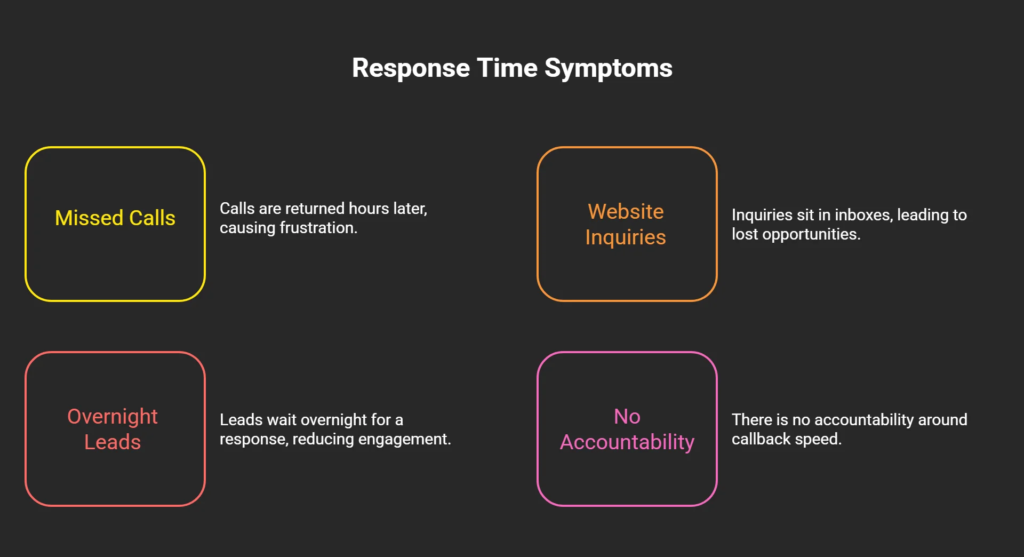
Common symptoms include:
- Missed calls returned hours later
- Website inquiries sitting in inboxes
- Leads waiting overnight for a response
- No accountability around callback speed
Without response-time visibility, conversion problems often appear random even though the underlying cause is predictable.
4. Old Leads Sit in the CRM Untouched
Every CRM contains old opportunities.
The question is whether those opportunities are still being worked.
Many businesses have months or years of estimate requests, consultation inquiries, and unconverted leads stored in the system.
Most receive little or no additional attention.
These records remain technically active, but nobody is calling, texting, or re-engaging them.
The larger the database becomes, the easier it is for older opportunities to disappear from daily operations.
This creates a situation where businesses continue paying for new lead generation while large portions of previous lead spend remain underutilized.
When old leads never receive another touchpoint, the CRM becomes a storage archive rather than an active revenue asset.
5. Leads Are Being Closed Too Quickly
Some businesses lose leads because they never follow up.
Others lose leads because they stop following up too soon.
A common warning sign is a high volume of leads being marked as lost after minimal outreach.
Examples include:
- One unanswered phone call
- One text message
- One estimate delivery
- A short period without a reply
The lead is then closed and removed from active attention.
This creates artificially clean pipelines but hides lost opportunities.
Many service purchases involve delays, comparisons, budget discussions, and changing priorities.
A prospect who does not respond this week may still be evaluating options next month.
When leads are routinely closed after minimal effort, conversion opportunities disappear long before the customer’s decision process ends.
6. Nobody Can Explain Where Leads Drop Off
Healthy pipelines make it easy to identify bottlenecks.
Unhealthy pipelines create confusion.
A major warning sign appears when managers and owners cannot clearly answer questions such as:
- Where do most leads stop responding?
- How many estimates receive follow-up?
- Which stage has the highest drop-off?
- How long does a typical lead remain active?
Without those answers, improvement becomes guesswork.
The CRM may contain large amounts of information, but very little usable insight.
We often see businesses increase marketing spend, change sales scripts, or purchase new software before identifying where leads are actually being lost.
A lack of visibility prevents meaningful optimization because the source of the problem remains hidden.
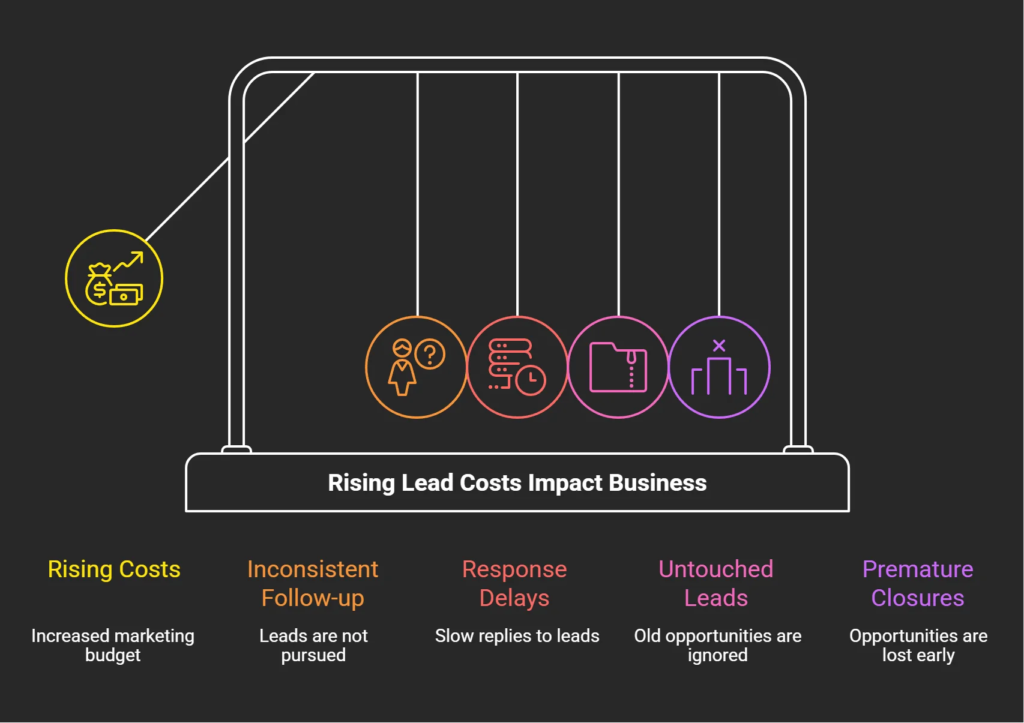
7. Lead Costs Keep Rising but Results Stay Flat
The final warning sign often appears after the previous six have been present for some time.
Lead costs increase.
Marketing budgets increase.
Lead volume increases.
Booked jobs remain largely unchanged.
This pattern usually indicates that new opportunities are being fed into an existing process that is already leaking revenue.
More leads enter the CRM, but:
- Follow-up remains inconsistent
- Response delays continue
- Old leads remain untouched
- Opportunities close prematurely
The business becomes busier without becoming more effective.
When acquisition costs rise while conversion performance stays flat, the CRM often deserves closer inspection before additional marketing dollars are deployed.
CRM breakdowns rarely happen all at once.
They develop gradually through missed follow-ups, delayed responses, stale opportunities, incomplete visibility, and inconsistent pipeline management.
Because these problems accumulate slowly, many businesses do not recognize them until revenue growth stalls or marketing costs begin climbing.
The warning signs in this article are useful because they expose operational issues before they become obvious financial problems.
If your CRM contains stagnant leads, incomplete follow-up, unclear drop-off points, or large numbers of untouched opportunities, our AI automation and lead follow-up systems are designed to help local service businesses create more consistent lead coverage and recover opportunities that would otherwise be lost.