

What Local Businesses Should Automate First in Their Follow-Up Process
Many businesses start automation projects with marketing tools, email campaigns, CRM customization, or social media scheduling. Those systems may have value, but they rarely address the biggest sources of lost revenue.
The highest-impact follow-up failures are usually much simpler.
Calls go unanswered during busy periods. Website inquiries wait hours for a response. Estimates are sent but never revisited. Sales staff focus on today’s leads while last week’s opportunities sit untouched.
We see this frequently when reviewing lead pipelines. A business may have thousands of CRM records, active advertising campaigns, and multiple software subscriptions, yet no reliable process for ensuring every lead receives timely follow-up.
Revenue leaks occur at the moments where prospects expect communication and don’t receive it.
Before investing in advanced workflows, review how quickly new leads receive a response, how missed calls are handled, and whether old opportunities are being revisited. Those areas typically create larger gains than adding another marketing tool.
Automate Immediate Lead Response First
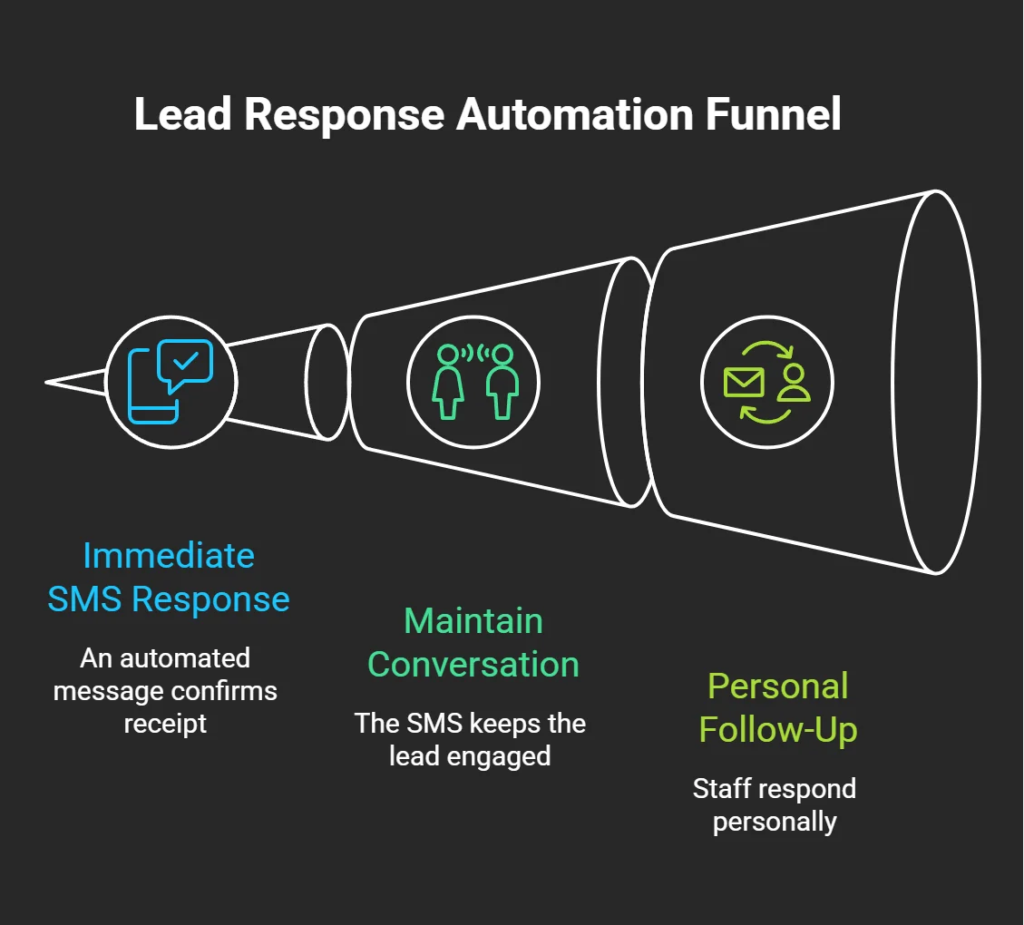
The first follow-up task every local service business should automate is responding to new leads immediately.
This is the point where buyer intent is highest. Someone has just submitted a form, requested an estimate, called your office, or asked for pricing. They are actively looking for a solution and are often contacting multiple providers at the same time.
A delay of even a few hours can change the outcome. By the time someone gets around to calling back, the prospect may have already booked with a competitor.
An automated SMS sent immediately after a lead comes in helps keep the conversation alive while interest is strongest. It confirms the inquiry was received and creates a touchpoint before staff members are available to respond personally.
This is particularly valuable for contractors, home service companies, dental offices, legal practices, and other appointment-driven businesses where leads frequently arrive during working hours, evenings, or weekends.
At TTRAN, speed-to-lead is the first layer we focus on because every other follow-up system depends on it. If new inquiries sit untouched for hours, nurturing campaigns and CRM automations won’t make up for the opportunities already lost.
Once every lead receives a consistent first response, the rest of the follow-up process becomes easier to improve.
Automate Missed Calls and No-Response Follow-Up
After immediate response is in place, the next priority is missed-call and no-response follow-up.
Missed calls happen constantly in local service businesses. Owners are on job sites. Office staff are handling customers. Technicians are unavailable. The incoming call gets logged, but nobody follows up.
Many of these leads disappear without ever entering an active sales process.
The same thing happens after the first outreach attempt. A text is sent, a voicemail is left, or a call is made, and the prospect doesn’t respond immediately. Without a structured process, the lead slowly falls out of view.
Silence does not automatically mean lack of interest.
People get busy, compare providers, postpone projects, or simply forget to respond.
Automated follow-up messages within the next 24 to 72 hours help keep the conversation moving without requiring manual tracking. They ensure every inquiry receives additional contact even when staff members are occupied with current customers.
This stage is about consistency. A simple system that follows up every time will outperform a manual process that works only when someone remembers.
Automate Old Lead and Quote Reactivation
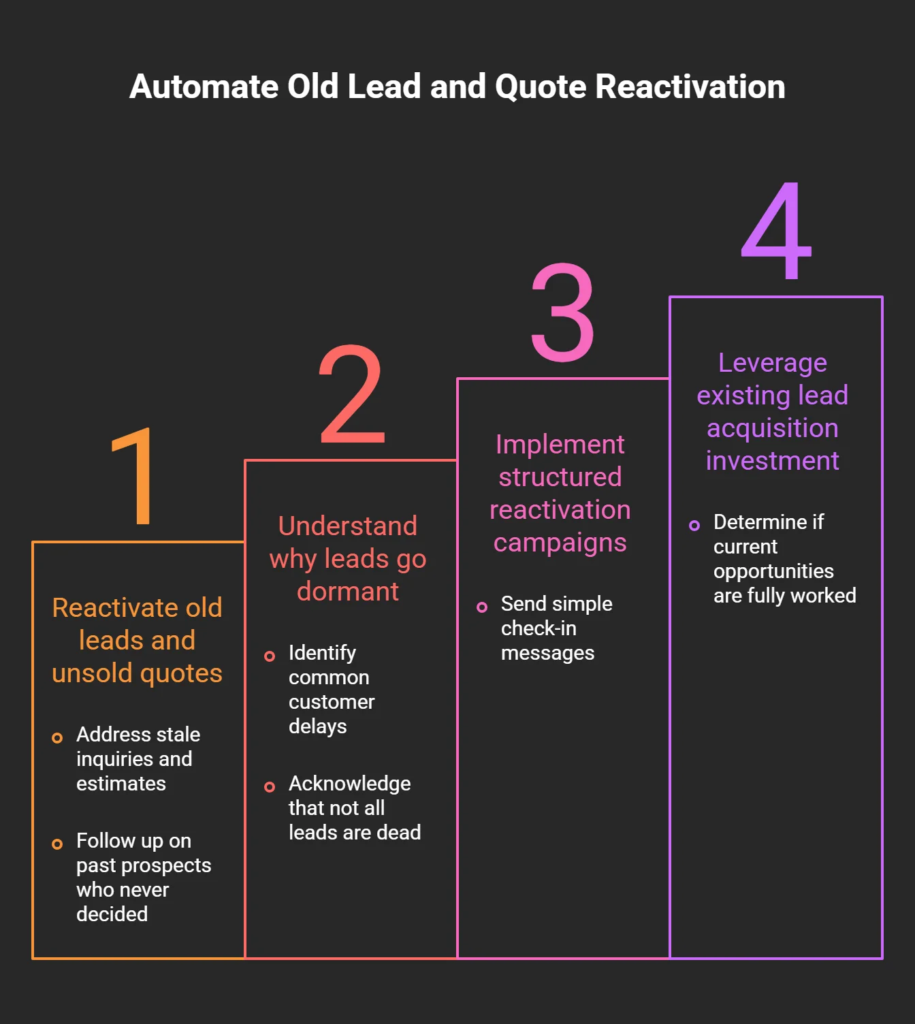
Once new inquiries and missed-call follow-up are covered, attention should shift to old leads and unsold quotes.
Most businesses have a growing collection of stale opportunities inside their CRM. Estimates were sent months ago. Website inquiries never moved forward. Past prospects requested information but never made a decision.
These records often remain untouched indefinitely.
Many projects take longer to close than business owners expect. Customers delay decisions because of budget, timing, competing priorities, financing, or other circumstances unrelated to the original conversation.
That makes old leads one of the most overlooked sources of potential revenue.
A structured reactivation campaign can automatically reach back out to past inquiries, estimate recipients, and dormant prospects. These messages don’t need to be aggressive. Often a simple check-in is enough to restart a conversation.
At TTRAN, lead reactivation is one of the first opportunities we look for because businesses have already paid to acquire those leads. Before increasing ad spend, it makes sense to determine whether existing opportunities have been fully worked.
A large portion of dormant CRM records are not dead leads. They’re simply leads that haven’t been contacted recently.
Add Light Nurture for Longer Sales Cycles
The final follow-up automation layer is light nurturing for prospects who are interested but not ready to move forward.
Not every customer is prepared to buy immediately. Some are gathering quotes, waiting for project approval, evaluating vendors, or planning for a future date.
Without ongoing contact, your business gradually disappears from consideration.
Effective nurturing does not require complex funnels or endless messaging sequences. For most local service businesses, occasional check-ins are enough to maintain visibility.
A short SMS every few weeks can keep the conversation open and create opportunities for prospects to re-engage when timing changes.
The objective is simple: remain present throughout longer buying cycles without overwhelming the lead.
Once this layer is added, the business can continue generating opportunities from prospects who need more time to make a decision.
What Not to Automate First
Many businesses spend time building systems that produce little immediate impact.
Email newsletters, social media automation, advanced CRM workflows, and elaborate lead-scoring systems often get implemented before basic follow-up issues are solved.
Meanwhile, missed calls remain unanswered and estimate requests still go untouched.
Another common mistake is increasing lead generation before maximizing the leads already being generated. More advertising can create additional opportunities, but it can also amplify existing follow-up problems.
If a business struggles to consistently work its current pipeline, adding more leads usually creates a larger backlog rather than more revenue.
Focus first on response speed, missed-call recovery, and lead reactivation. Once those systems are working reliably, marketing automation and advanced workflow projects become much easier to justify.
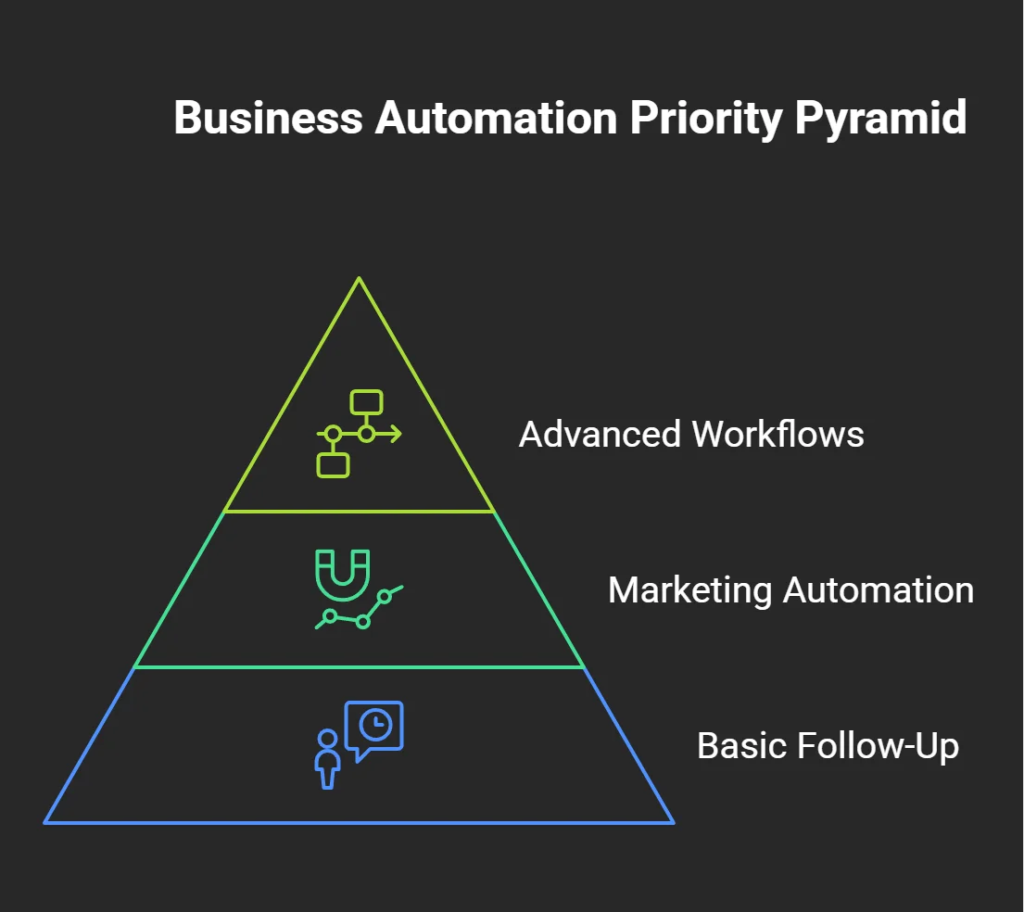
Most local service businesses don’t need more software. They need a clear order of operations.
Start by automating immediate lead response. Then automate missed-call and no-response follow-up. Next, reactivate old leads and unsold quotes. Finally, add light nurturing for prospects with longer buying timelines.
That sequence addresses the areas where opportunities are most commonly lost.
Businesses often discover they can book more jobs from their existing pipeline before spending more money on advertising or lead generation.
If you want help building a structured follow-up system, our AI SMS lead reactivation service is designed to help local service businesses recover missed opportunities, reactivate dormant leads, and create more consistent follow-up across the entire sales process.