

A Step-by-Step Breakdown of a Strong Lead Follow-Up Workflow
A homeowner requests a roofing estimate on Monday.
The office returns the call once.
The homeowner doesn’t answer.
By Friday, the lead is buried under newer inquiries and nobody is quite sure whether anyone followed up again.
This happens every day in local service businesses.
The problem usually isn’t a lack of leads. It’s what happens after those leads arrive.
Many contractors, HVAC companies, dental offices, med spas, and other appointment-driven businesses generate enough inquiries to grow. Yet missed calls, unanswered quotes, and inconsistent follow-up create gaps where opportunities quietly disappear from the pipeline.
Most teams assume follow-up is happening because someone is making calls or sending texts. In reality, follow-up often depends on memory, workload, and whoever happens to have time.
A strong lead follow-up workflow removes that uncertainty. It creates a repeatable process that ensures every inquiry receives timely attention, ongoing communication, and a path back into the pipeline if the timing wasn’t right the first time.
Key Takeaways: Lead Follow-Up Workflow for Local Service Businesses
- Strong follow-up workflows rely on process, not memory.
- Most leads are lost after the initial contact attempt, not during lead generation.
- Fast response times improve the chances of starting conversations.
- Consistent follow-up keeps opportunities active while prospects make decisions.
- Old leads often remain recoverable when re-engaged systematically.
- Automation works best when the workflow already has clear stages and ownership.
Why Most Follow-Up Workflows Break Down
Most local service businesses have a lead process.
Far fewer have a lead follow-up system.
New inquiries arrive from website forms, phone calls, referrals, Google Ads, and social media. What happens next often depends on whoever notices the lead first.
Some inquiries receive immediate attention.
Others wait until the end of the day.
Some get multiple follow-up attempts.
Others receive one phone call and nothing else.
Over time, this creates predictable problems:
- Follow-up stops after one or two attempts
- Response times vary depending on workload
- New leads receive attention while older leads are forgotten
- Quotes are sent but never revisited
The result is a pipeline that appears active while opportunities quietly stall.
When we review lead-handling processes, the most common issue isn’t lead quality. It’s that no consistent process exists for moving leads from inquiry to appointment to decision.
Without structure, follow-up becomes reactive instead of repeatable.
The Three Stages of a Strong Follow-Up Workflow
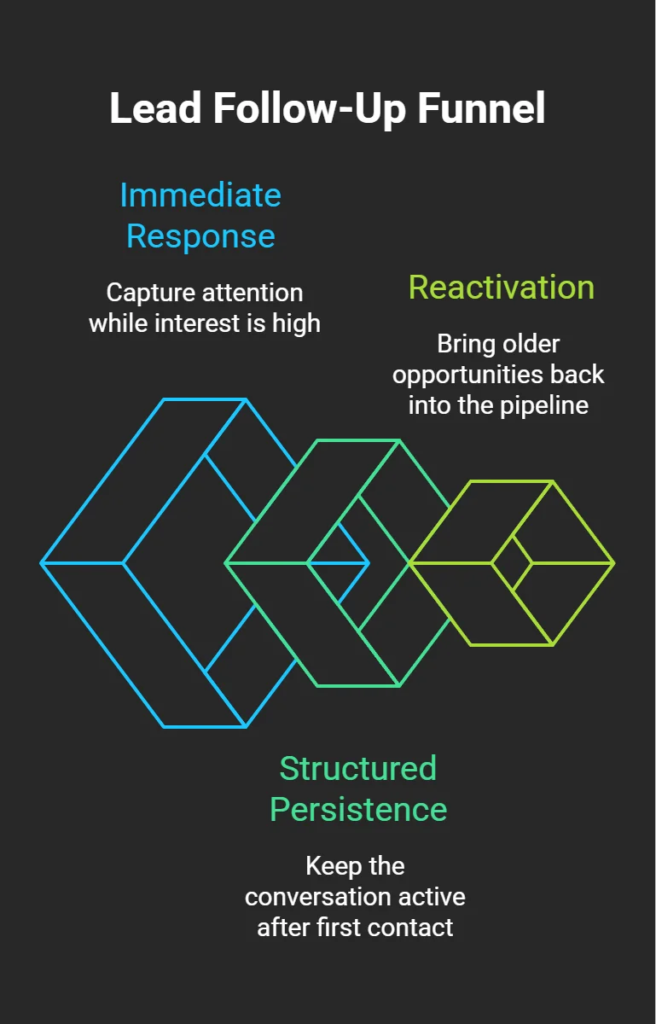
Every effective follow-up workflow contains three stages:
- Immediate response
- Structured persistence
- Reactivation
Each stage serves a different purpose.
Immediate response captures attention while interest is highest.
Structured persistence keeps the conversation active after the first contact.
Reactivation brings older opportunities back into the pipeline after the initial decision window has passed.
Many businesses perform reasonably well in one stage and poorly in another.
For example, an HVAC company may respond quickly to every new lead but never revisit old estimates. A dental office may have excellent long-term follow-up but inconsistent response times for new inquiries.
The strongest workflows connect all three stages into a single process.
When one stage is missing, opportunities tend to disappear at that point in the pipeline.
Stage One: Immediate Response
The first few minutes after an inquiry are often the most important.
A homeowner requesting a quote, a patient looking for an appointment, or a business owner requesting a consultation is actively seeking a solution.
That attention fades quickly.
Many prospects contact multiple providers at the same time, especially in competitive industries.
A delayed response creates room for competitors to start the conversation first.
This is why speed-to-lead plays such a critical role in the workflow.
Common causes of response delays include:
- Teams working on job sites
- Missed calls after hours
- Shared inboxes
- Manual lead assignment
- Staff handling multiple responsibilities
A strong workflow ensures every inquiry receives an immediate touchpoint, even when a full conversation cannot happen right away.
The goal is simple: acknowledge the lead before attention shifts elsewhere.
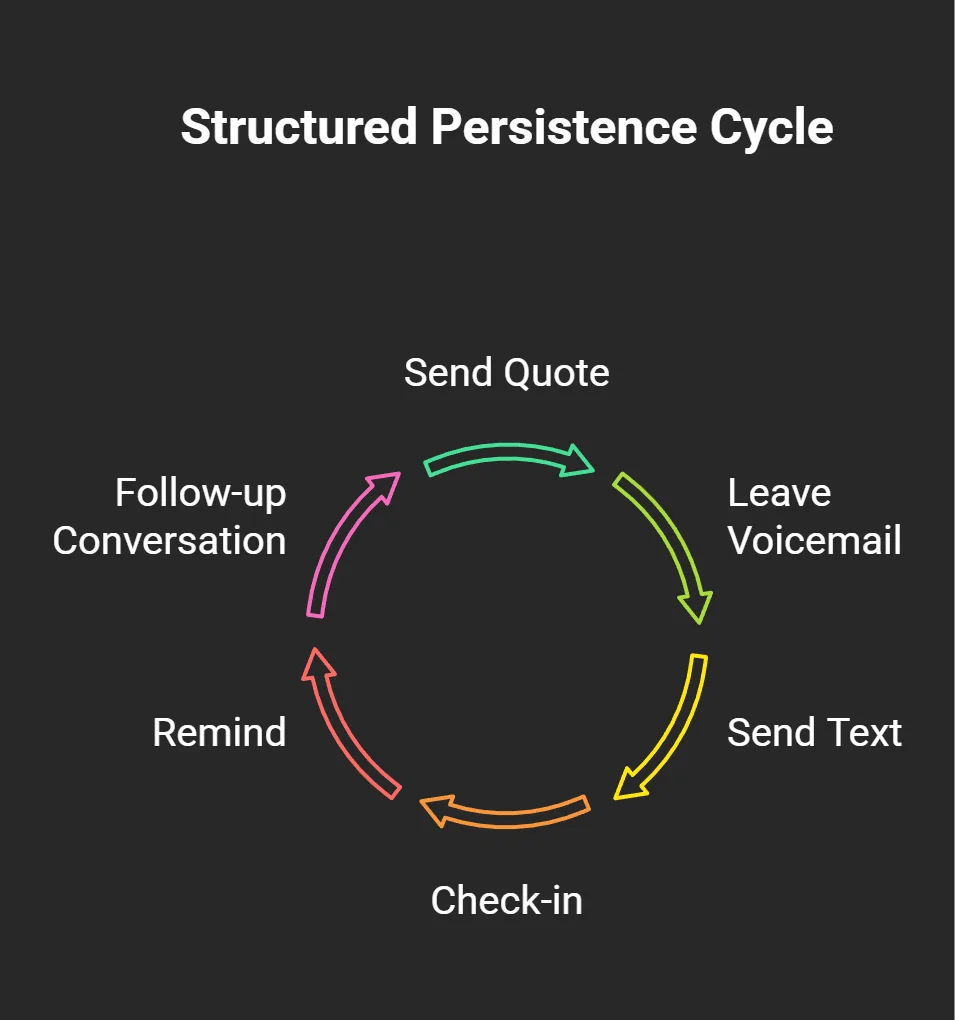
Stage Two: Structured Persistence
Most revenue leakage happens after the first interaction.
A quote gets sent.
A voicemail gets left.
A text goes unanswered.
The lead remains interested, but communication stops.
Many businesses interpret silence as rejection when it often means the prospect is still deciding.
They may be:
- Comparing providers
- Reviewing budgets
- Waiting for spouse approval
- Delaying the project
- Getting busy with other priorities
Without follow-up, the business disappears from the decision process.
Structured persistence solves this problem by creating multiple touchpoints over time.
These do not need to be aggressive sales messages.
Simple check-ins, reminders, and follow-up conversations are often enough to keep opportunities active while decisions are being made.
The purpose of this stage is not pressure.
It is visibility.
The business remains present while the prospect works through the decision process.
Stage Three: Reactivation
Most businesses have a hidden pipeline sitting inside their CRM.
Old quote requests.
Missed calls.
Consultation inquiries.
Leads from previous marketing campaigns.
Many received little follow-up after the initial interaction and were eventually forgotten.
That does not mean they lost interest permanently.
Projects get postponed.
Budgets change.
Circumstances change.
Priorities return.
A homeowner who ignored a roofing estimate six months ago may be ready today.
A patient who delayed treatment may now want to move forward.
Reactivation creates a structured process for returning to these opportunities instead of assuming they are gone.
When done consistently, this stage often uncovers revenue opportunities that required no additional advertising spend to generate.
The lead already existed.
The conversation simply ended too early.
A strong lead follow-up workflow is not a collection of isolated tasks.
It is a process that guides every lead through three stages: immediate response, structured persistence, and reactivation.
Most local service businesses already generate opportunities. The challenge is ensuring those opportunities continue receiving attention after the first call, first quote, or first message.
Businesses that rely on memory and individual effort eventually create follow-up gaps. Businesses with structured workflows create consistency.
If your CRM contains missed calls, unworked quotes, stale inquiries, or old leads that never received meaningful follow-up, our AI automation and lead follow-up systems are designed to help create a more consistent process for recovering opportunities that would otherwise be lost.