

Why Local Service Businesses Lose So Many Leads
One of the biggest revenue leaks in local service businesses happens after the lead is already generated.
A customer calls, submits a form, asks for an estimate, or books a consultation request. The business paid to create that opportunity, but the follow-up becomes inconsistent before the lead turns into a booked appointment or sale.
That is where contractors, med spas, dental offices, HVAC companies, law firms, and other quote-based businesses quietly lose revenue.
The issue is not always lead generation. In many cases, the business already has enough inquiries coming in. The problem is that too many of those leads are never worked consistently after the first conversation.
This article explains why local service businesses lose leads, where follow-up usually breaks down, and why fixing lead management often matters before spending more money on new traffic.
Key Takeaways: Why Local Service Businesses Lose Leads
- Many local service businesses lose leads after the inquiry arrives, not before it.
- Slow response times reduce booking rates because customers often contact multiple businesses at once.
- Follow-up usually stops too early, especially after one missed call, one voicemail, or one unanswered estimate.
- Weak CRM organization makes it hard to track old inquiries, unsold quotes, and missed callbacks.
- More lead generation can create more waste if the sales process cannot handle current lead volume.
- Old leads are often still worth reviewing because many customers delay decisions instead of rejecting the business completely.
Most Lead Loss Happens After the Inquiry Arrives
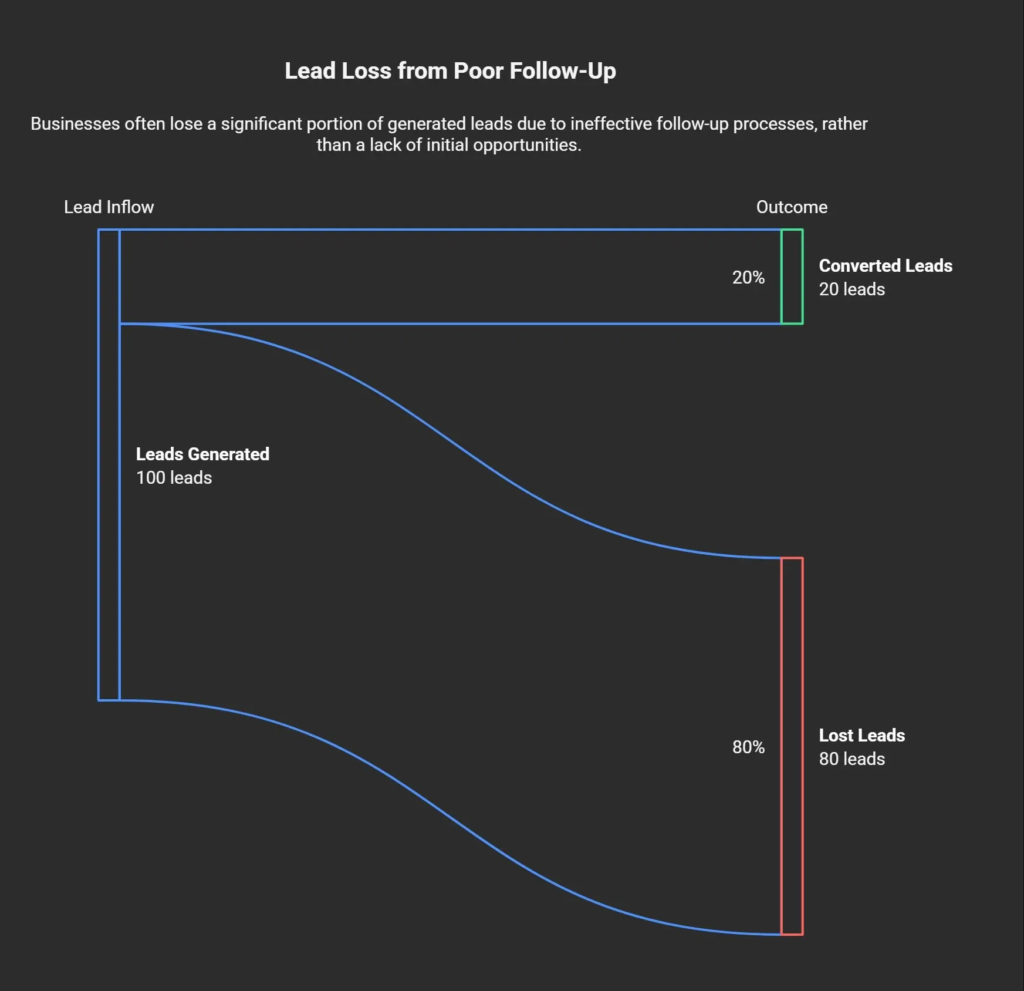
Most local service businesses do not lose leads because people are not interested. They lose leads because follow-up breaks down after the inquiry arrives.
A business may spend money on Google Ads, SEO, referrals, or lead platforms and still lose opportunities because nobody follows up quickly, consistently, or long enough.
A roofing company may receive estimate requests but only call once. A med spa may get consultation inquiries that sit untouched overnight. An HVAC company may send a quote but never check back after the first conversation.
The lead generation worked. The follow-up process failed afterward.
This is why more leads do not automatically create more revenue. If the business is already missing callbacks, forgetting estimates, or losing track of old inquiries, increasing lead volume usually adds more pressure to the same broken process.
Before spending more money on new leads, businesses should ask:
- How fast are new inquiries being contacted?
- How many missed calls receive a second attempt?
- What happens after an estimate is sent?
- Who owns follow-up after the first conversation?
- How many old leads are sitting untouched in the CRM?
Those questions usually reveal where revenue is leaking.
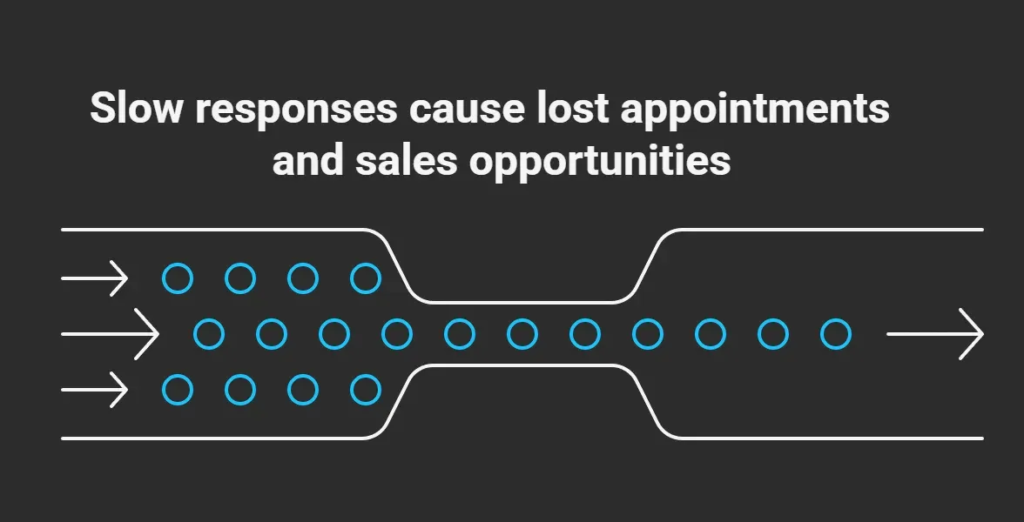
Slow Response Times Kill Buyer Momentum
The faster a business responds to a lead, the more likely that lead is to turn into an appointment or sale.
Local service customers rarely contact only one company. Someone looking for a roofer, plumber, attorney, med spa, or HVAC company is usually comparing several providers at the same time.
That means response time affects trust before pricing is even discussed.
A missed call at 6:30 PM may not get returned until the next morning. A form submitted Friday afternoon may sit untouched until Monday. A customer requesting an estimate may hear from a competitor first and book before the original business replies.
Many businesses underestimate this because the lead technically entered the pipeline. The phone rang. The form was submitted. The CRM captured the contact.
But operationally, the opportunity was never handled.
Slow response times also make follow-up harder later. Once the customer’s buying momentum fades, calls get ignored more often, emails receive fewer replies, and sales reps spend more time chasing leads that were easier to convert earlier.
Follow-Up Usually Stops Too Early
In many local service businesses, follow-up stops before the lead has actually decided “no.”
A lead requests an estimate, asks a few questions, or answers one call, then goes quiet. The sales rep assumes the opportunity is dead and moves on to newer inquiries.
But silence does not always mean rejection.
Customers delay decisions for normal reasons: work schedules, budget timing, insurance questions, family discussions, comparing quotes, or waiting for the problem to become more urgent.
A homeowner may still want the remodeling project but need time to review pricing. A dental patient may delay treatment because of insurance. A roofing customer may wait until financing or weather conditions change.
Many businesses make one or two attempts and stop. A quote gets emailed once. A voicemail gets left once. A missed call receives one callback. Then the lead slowly disappears inside the pipeline.
That creates a lead quality problem that may not actually be a lead quality problem.
The business may assume the leads are bad when the real issue is that follow-up did not continue long enough to catch delayed buyers.
Weak CRM Organization Makes Lead Loss Hard to See
Businesses cannot recover leads they cannot properly track.
In many local service businesses, lead information gets scattered across too many places. Some inquiries live in the CRM. Others sit in email inboxes, call logs, spreadsheets, text threads, Facebook messages, or sales reps’ notes.
Individually, each situation feels manageable.
Collectively, the pipeline becomes hard to control.
An estimate may be marked “pending” and never updated. A missed call may never receive a second attempt. A prospect may ask for pricing by message and never get added to the CRM. A sales rep may plan to follow up next week but forget once newer leads arrive.
That creates invisible lead loss.
The business may still be busy, still booking jobs, and still generating calls. But underneath that activity, old opportunities are quietly going stale.
A healthy lead management process should make it easy to answer:
- Which estimates never received follow-up?
- Which leads stopped responding after the first conversation?
- Which missed calls were never contacted again?
- Which inquiries have gone untouched for 30, 60, or 90 days?
If the business cannot answer those questions quickly, it probably has revenue sitting inside unmanaged lead records.
Old Leads and Unsold Quotes Are Often Ignored
Old leads are often more useful than businesses assume because the customer already showed interest once.
They called, submitted a form, requested an estimate, asked about pricing, or booked a consultation. That means the business is not starting from zero.
The problem is that older opportunities no longer feel urgent.
New leads get attention first. Current customers get attention first. Scheduling issues, active jobs, and daily operations get attention first. Over time, old estimates and past inquiries move further down the list until nobody revisits them.
These old records often include:
- unsold estimates
- abandoned quote conversations
- missed consultation requests
- old form submissions
- inbound calls that never received follow-up
- leads marked “follow up later”
Some of these leads are truly no longer interested. Others simply delayed the decision.
A homeowner may revisit a project months later. A med spa prospect may become ready after comparing treatment options. A legal or dental inquiry may still need help but prefer to respond by text instead of phone.
The goal is not to pressure old leads. The goal is to avoid assuming every silent lead is dead.
More Lead Generation Does Not Fix Broken Follow-Up
Buying more leads rarely fixes a weak follow-up process.
If a business already struggles to respond quickly, track estimates, or follow up after the first conversation, more lead volume usually makes the problem worse.
New inquiries arrive faster. Sales reps get busier. Office staff have less time. Older leads receive even less attention.
That is how businesses end up paying for more opportunities while converting a smaller percentage of them.
Before increasing ad spend, it often makes sense to review how current leads are being handled. The business may not need more traffic first. It may need faster response times, clearer lead ownership, better CRM visibility, and a repeatable follow-up process.
This is where lead reactivation and AI SMS follow-up can become useful.
Once a business understands where leads are being lost, the next step is creating a practical way to re-engage old inquiries, respond faster to missed opportunities, and keep follow-up from depending entirely on staff memory.
Local service businesses often lose leads after the customer has already shown interest.
The lead was generated. The opportunity entered the pipeline. But the response was delayed, the estimate was never revisited, the CRM record went stale, or the follow-up stopped too early.
That is why lead loss is not always a traffic problem. It is often a follow-up and lead management problem.
For businesses that already have old inquiries, unsold quotes, missed calls, or inactive CRM records, the next step is understanding how those opportunities can be recovered. TTRAN’s AI SMS and lead reactivation approach is built around helping businesses follow up more consistently and recover more value from leads they already paid to generate.