

Why Local Businesses Continue Paying for Leads They Never Fully Work
A roofing company spends thousands on advertising every month. The phone rings. Quote requests come in. Estimates go out.
Six months later, the CRM contains hundreds of names, dozens of old quotes, and a long list of inquiries that never received another call after the initial conversation.
At the same time, the business is discussing how to generate more leads.
This pattern is far more common than most owners realize.
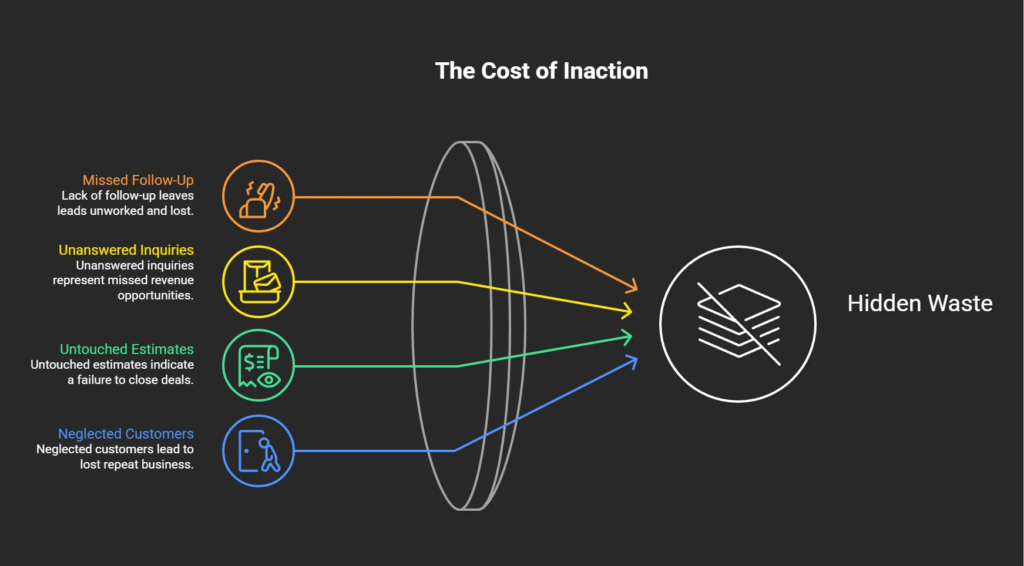
Many local service businesses continue investing in lead generation while a significant portion of existing opportunities remain untouched. Missed calls never get returned. Estimate requests receive one follow-up and then disappear. Old leads from previous marketing campaigns sit in the CRM without any structured attempt to re-engage them.
Over time, this creates the impression that demand is the problem when the real issue is how much of that demand is actually being worked.
This article breaks down why this happens, what it costs, and why many businesses continue buying more leads before fixing the follow-up gaps already sitting inside their pipeline.
Key Takeaways: Paying for Leads Never Followed Up
- Many businesses track lead volume but do not track whether leads receive consistent follow-up.
- Missed calls, stale CRM records, and unworked quote requests often represent lost revenue that was already paid for.
- Follow-up failures usually occur because staff are busy, not because leads are intentionally ignored.
- The cost of poor follow-up compounds over time as more leads accumulate in the system.
- New lead generation often masks follow-up problems instead of fixing them.
- Businesses frequently have more opportunities in their database than they realize.
What “Paying for Leads Never Followed Up” Actually Looks Like
Most business owners think about lead costs in terms of advertising spend, SEO campaigns, referral fees, or lead providers.
The larger expense often appears after the lead has already been generated.
A prospect fills out a form but never receives another message after the first response. A missed call sits in the call log for three days. An estimate gets sent, but nobody checks back in after the prospect goes quiet. A previous customer asks about another project and never hears back.
These situations happen every day inside local service businesses.
The opportunity was generated. Money was spent to create the inquiry. What never happened was the follow-up required to move that lead toward a decision.
A lead that receives one call and no additional contact is not fully worked. Neither is a quote request that sits untouched after the initial estimate.
Many businesses measure lead generation carefully but never measure how many leads actually receive multiple follow-up attempts, ongoing communication, or a clear outcome.
That gap creates hidden waste inside the sales process because acquisition costs continue to rise while existing opportunities remain unfinished.
Why Follow-Up Breaks Down in Local Service Businesses
Most follow-up failures come from workload and priorities rather than a lack of effort.
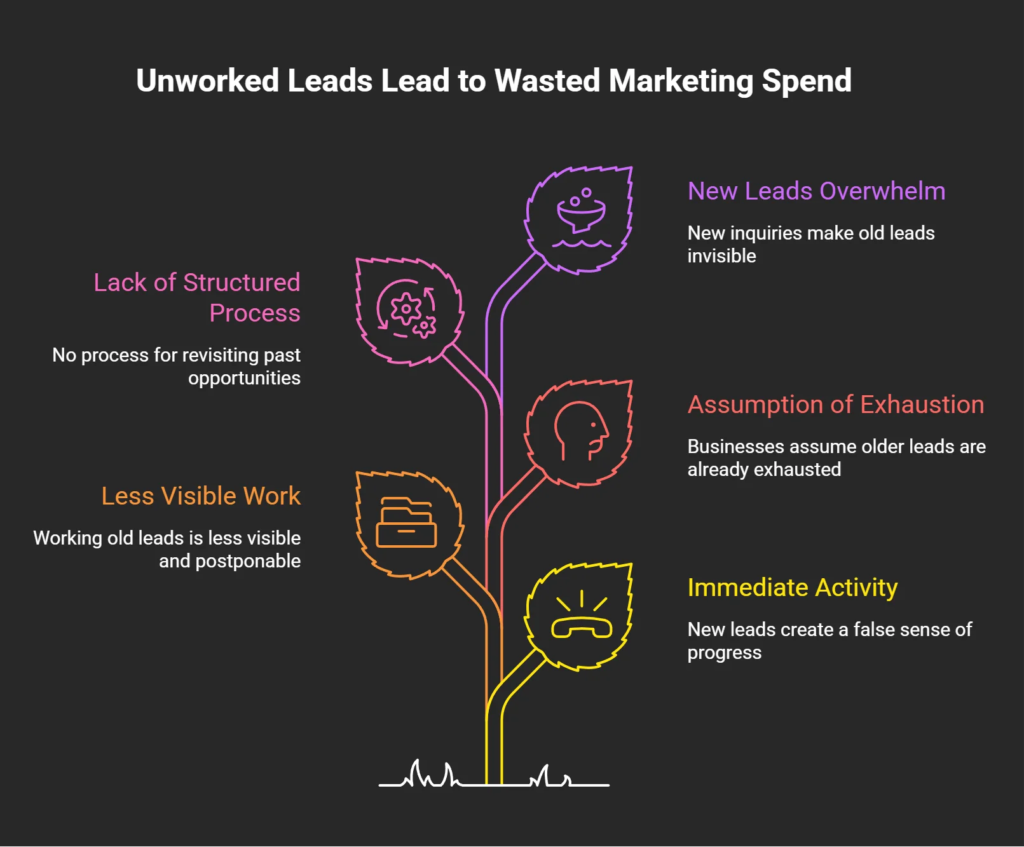
New inquiries naturally demand attention. They are recent, responsive, and often tied directly to current advertising spend. As a result, teams focus on what just came in.
Older opportunities gradually move down the priority list.
A salesperson plans to call a prospect back later. An office manager intends to revisit old estimates at the end of the week. A contractor finishes a job and forgets about three quote requests from earlier in the month.
None of these decisions seem significant on their own.
Over time, however, they create a growing backlog of partially worked leads.
Many businesses also lack a defined follow-up process beyond the first contact. A call is made. A text is sent. An estimate is delivered. After that, communication becomes inconsistent and depends on individual initiative rather than a repeatable process.
When lead volume increases, manual follow-up becomes harder to maintain. Staff focus on today’s work while yesterday’s opportunities slowly disappear into the CRM.
This is one of the most common patterns we see when reviewing lead pipelines. Good opportunities exist in the system, but nobody owns the responsibility of consistently working them.
The Revenue Cost of Unworked Leads
The financial impact rarely appears on a single report.
Businesses can clearly see what they spend on advertising, SEO, direct mail, or lead generation platforms. What they usually cannot see is the revenue tied to opportunities that never received enough follow-up to convert.
Imagine a company generating 100 inquiries per month.
If a portion of those leads receive only one contact attempt before being abandoned, the business still pays the full acquisition cost for those opportunities. The difference is that the revenue side of the equation never materializes.
As follow-up becomes less consistent, the effective cost per booked job increases.
The business often interprets this as a lead quality issue.
In reality, many leads never received enough communication to reach a decision in the first place.
This is especially common with quote-based businesses where customers compare multiple providers, delay projects, or postpone decisions for weeks or months.
When follow-up stops early, opportunities disappear long before their buying window actually closes.
Why Businesses Keep Buying More Leads
Generating new leads creates immediate activity.
The phone rings. New forms arrive. New appointments get booked.
That activity creates the feeling that progress is being made.
Working old leads feels different. It requires reviewing CRM records, revisiting past conversations, and contacting prospects who may not respond immediately. The work is less visible, which makes it easier to postpone.
Many businesses also assume older leads have already been exhausted.
In practice, that is often not true.
Prospects delay projects. Budgets change. Priorities shift. Homeowners postpone remodeling projects. Patients wait before scheduling treatment. Business owners delay service decisions until a problem becomes urgent.
A lead that did not convert three months ago is not automatically worthless today.
The challenge is that most businesses never create a structured process for revisiting these opportunities.
As new inquiries continue arriving, old leads become invisible. They remain stored in the CRM but stop being treated as active opportunities.
This creates a cycle where businesses continue spending money to generate demand while existing demand remains underutilized.
Most local service businesses have more opportunities in their pipeline than they realize.
Old estimate requests, missed calls, unresponsive prospects, past customers, and stale CRM records often represent revenue that was never fully pursued. These opportunities rarely disappear because someone deliberately ignored them. They accumulate because follow-up becomes difficult to maintain as daily workloads increase.
Over time, businesses continue investing in new lead generation while a growing number of existing opportunities remain unfinished.
Before increasing ad budgets or buying additional leads, it is worth examining how many leads already in the system received consistent follow-up and a clear outcome.
For businesses that discover significant gaps in that process, our AI automation and lead follow-up systems provide a structured way to keep opportunities from slipping through the cracks.