

Why Businesses Misjudge the Quality of Facebook Leads
Many local service businesses decide Facebook leads are low quality long before those leads have been fully worked.
A lead comes in, receives a call or two, doesn’t respond immediately, and gets written off. After enough experiences like this, the conclusion seems obvious: Facebook leads don’t convert.
The problem is that most of these leads are being judged based on the outcome of the follow-up process rather than the quality of the lead itself.
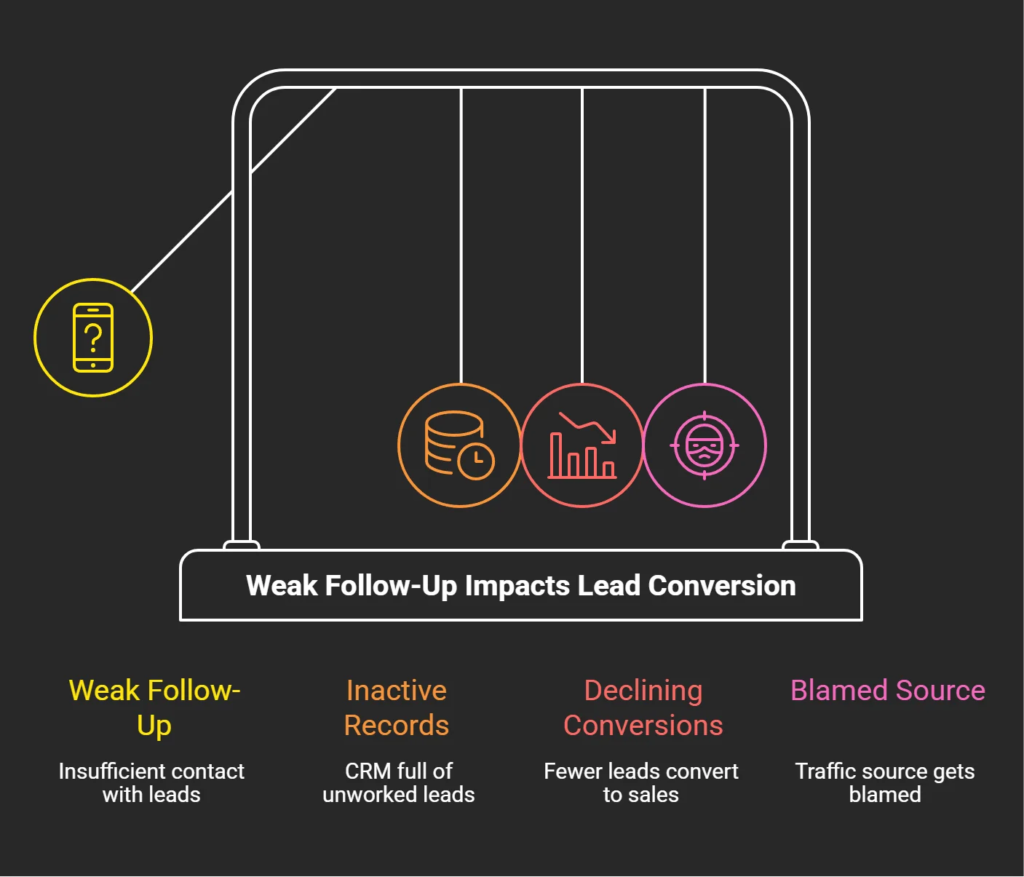
Facebook leads are highly sensitive to response speed, follow-up consistency, and timing. When those areas break down, conversion rates drop and the traffic source gets blamed.
We see this regularly across contractors, home service companies, med spas, dental offices, and other local businesses. The lead arrives successfully, but the follow-up process never creates enough engagement for a decision to happen.
Many Facebook leads fail because the conversation ends too early, not because the prospect lacked interest.
Key Takeaways: Are Facebook Leads Really Bad or Just Poorly Managed?
- Most Facebook leads require more follow-up than referrals or inbound phone calls.
- Response speed has a major impact on whether Facebook leads engage.
- One or two contact attempts rarely provide enough information to judge lead quality.
- Weak CRM processes often make viable leads appear unqualified.
- Older Facebook leads can still generate appointments when re-engaged properly.
- Businesses should evaluate follow-up performance before blaming lead quality.
Why Businesses Assume Facebook Leads Are Bad
Most business owners don’t arrive at that conclusion through detailed analysis.
They arrive there through experience.
A lead comes in. Someone makes a call. A voicemail is left. A text might get sent. The prospect doesn’t respond immediately, and attention shifts to newer opportunities.
After this happens repeatedly, Facebook becomes associated with low-quality leads.
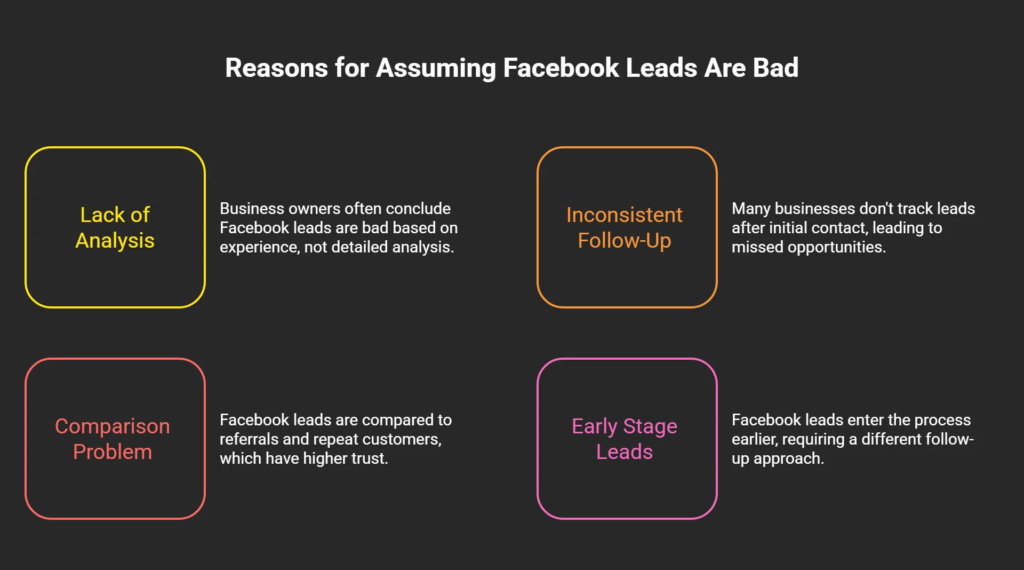
The issue is that many businesses never track what happens after the first few contact attempts. They know how many leads arrived, but they don’t know how many received consistent follow-up over several days or weeks.
This creates a common blind spot.
Leads that never received enough outreach to make a decision get grouped together with leads that genuinely had no interest.
There is also a natural comparison problem. Facebook leads are often measured against referrals, repeat customers, and word-of-mouth inquiries. Those lead sources typically arrive with trust already established and usually require less effort to convert.
Facebook leads enter the process much earlier.
That doesn’t automatically make them lower quality. It means they require a different follow-up approach than leads who already know and trust the business.
Speed-to-Lead Has a Bigger Impact Than Most Businesses Realize
Many Facebook lead problems are actually response-time problems.
When someone submits a Facebook lead form, they are usually researching a service, comparing providers, or trying to solve a problem. Their attention is highest immediately after taking action.
That attention fades quickly.
If a lead sits in a CRM until someone has time to review it later, the conversation starts from a weaker position. The prospect may have already spoken with competitors, become distracted, or moved on to other priorities.
This is especially common in industries such as:
- roofing
- HVAC
- plumbing
- remodeling
- dental services
- med spas
In these markets, leads often contact multiple businesses within a short period of time.
The business that responds first frequently gets the first conversation, the first appointment opportunity, and the first chance to build trust.
When Facebook leads are contacted hours later, businesses often interpret low engagement as poor lead quality. In many cases, the lead simply wasn’t contacted during the period when engagement was easiest.
At TTRAN, response timing is one of the first areas we review before making any judgment about lead quality.
How Weak Follow-Up Makes Leads Look Worse Than They Are
Most Facebook leads do not convert from a single phone call.
Yet many businesses treat one unanswered call as a completed follow-up process.
A common pattern looks like this:
- lead enters CRM
- one call is made
- voicemail is left
- one text may be sent
- no response is received
- lead gets labeled “no answer”
The lead technically received follow-up, but not enough follow-up to determine whether it was truly qualified.
This becomes a bigger issue as lead volume increases.
Sales teams naturally prioritize fresh opportunities. New leads receive attention while older Facebook inquiries move further down the list. After a few days, those leads stop receiving outreach entirely.
The result is a CRM full of inactive records that were never fully worked.
When enough leads follow this path, conversion rates decline and the traffic source gets blamed.
What often looks like a lead-quality problem is actually a lead-management problem.
The prospect may still have interest. The conversation simply ended before enough contact occurred to create a buying decision.
Why Old Facebook Leads Often Convert Later
One of the clearest signs that Facebook leads are frequently misjudged is what happens when old leads are revisited.
Businesses are often surprised by how many previously inactive leads respond when contacted again weeks or months later.
We see this happen with:
- old estimate requests
- unresponsive form submissions
- leads marked “no answer”
- inquiries from previous ad campaigns
- prospects sitting untouched in CRM databases
These contacts already expressed interest once. They already recognized a need, submitted information, and entered the sales process.
Many simply weren’t ready at that exact moment.
When reactivation campaigns are introduced, some of these leads immediately restart conversations. Others book appointments after previously appearing unresponsive. Some have delayed projects that are finally ready to move forward.
This does not mean every old Facebook lead will convert.
It does demonstrate that many leads initially labeled as “bad” were never fully exhausted as opportunities.
Their timing changed. The business re-engaged them. The conversation resumed.
When Facebook Leads Really Are Low Quality
Not every Facebook lead is valuable.
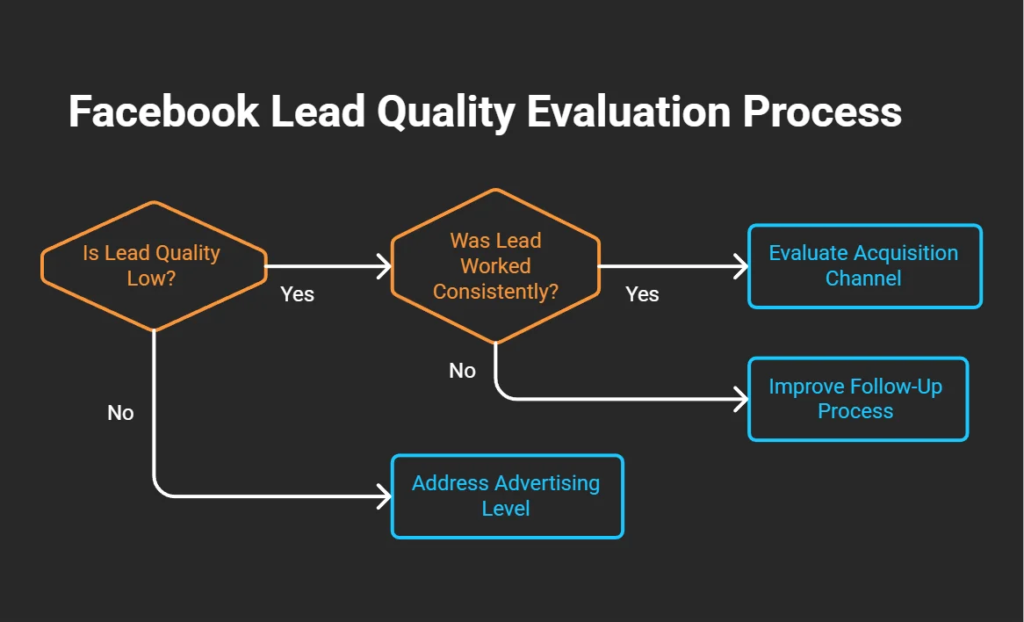
Some lead-quality issues are genuine and should be addressed at the advertising level.
Common examples include:
- targeting outside the service area
- attracting the wrong customer profile
- giveaway-driven campaigns that generate curiosity instead of buying intent
- misleading ad messaging
- offers that encourage form submissions without real interest
In those situations, stronger follow-up may improve results slightly, but it won’t solve the underlying problem.
The key distinction is whether leads have been worked consistently.
If a lead receives fast response, multiple follow-up attempts, structured outreach, and re-engagement efforts and still produces poor results, then lead quality becomes a reasonable concern.
Most businesses never reach that point before making a judgment.
They evaluate the lead source before fully evaluating the follow-up process.
At TTRAN, we prefer to determine whether the lead was actually worked to completion before deciding whether the acquisition channel is the problem.
Facebook leads are often judged based on what happens after they enter the business, not on the quality of the lead itself.
Slow response times, limited follow-up, neglected CRM records, and abandoned conversations can make viable prospects look unqualified on paper.
That creates a cycle where businesses blame the source while opportunities continue sitting untouched in their database.
Before concluding that Facebook leads are bad, review how quickly leads are contacted, how many follow-up attempts occur, and whether older inquiries are ever revisited.
At TTRAN, we frequently find that the biggest opportunity is not generating more leads. It’s improving how existing Facebook leads are handled after they arrive. Many businesses already have valuable prospects sitting in their CRM that never received enough follow-up to show their true value.