

Why Old Estimates Still Convert Months Later
Many local service businesses assume an estimate loses value quickly.
A quote gets sent, a follow-up call is made, and if the customer does not respond within a few days or weeks, the opportunity is considered lost. Attention shifts to newer leads, and the estimate becomes another inactive record in the CRM.
The reality is often different.
Many customers delay decisions rather than reject them. They may be comparing providers, waiting for financing, discussing the purchase with family members, or postponing the project until the timing feels right.
The need that triggered the estimate often remains long after the original conversation ends.
We regularly see businesses overlook opportunities sitting inside their existing database because the estimate appears old. In many cases, those opportunities still have buying potential when the conversation is restarted at the right time.
Understanding why old estimates still convert can help businesses recover value from opportunities they have already spent time and money generating.
Key Takeaways: Why Old Estimates Still Convert
- A delayed decision is often mistaken for a rejected estimate.
- Estimate requests usually indicate stronger intent than brand-new leads.
- Many opportunities disappear because follow-up stops before a decision is made.
- Long buying cycles are common in higher-ticket service industries.
- Old estimates often remain viable when the original need still exists.
- Businesses with large quote backlogs frequently have recoverable revenue inside their CRM.
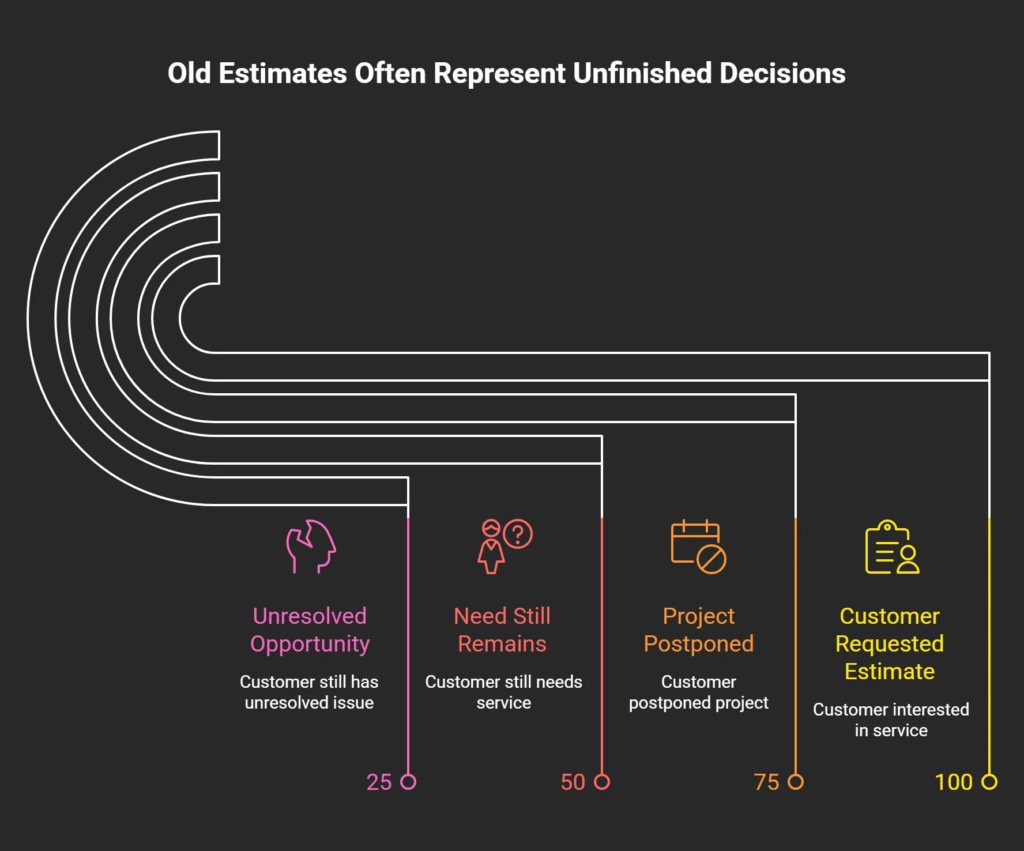
Old Estimates Often Represent Unfinished Decisions
An old estimate does not automatically mean the opportunity is gone.
The customer was interested enough to request pricing, discuss a project, schedule a consultation, or evaluate potential solutions. That level of engagement already separates them from someone who has never contacted the business.
The problem is that businesses often treat inactivity as a final outcome.
A homeowner who requested a roof replacement estimate may postpone the project until weather conditions improve. A patient may wait for insurance benefits to renew. A business owner may delay a renovation until cash flow improves.
The project pauses, but the need often remains.
This distinction matters because many estimates are removed from active attention before the customer has actually made a decision.
What appears to be a lost opportunity is frequently an unresolved one.
At TTRAN, we often find that old estimates are less about lead quality and more about timing. The prospect had a reason for requesting the estimate in the first place, and that reason may still exist months later.
Customer Timelines Rarely Match Business Timelines
Most businesses operate on short follow-up windows.
A quote is sent. A few calls are made. A reminder follows. If there is no response, the opportunity is gradually abandoned.
Customers do not always operate on that schedule.
Many purchases—especially higher-ticket services—take longer than businesses expect.
Common delays include:
- waiting for financing
- comparing multiple estimates
- discussing the decision with family members
- postponing projects until a future season
- prioritizing other expenses first
The estimate itself may not be the issue.
The customer simply has not reached the point where they are ready to act.
This creates a disconnect between how businesses manage opportunities and how customers actually make decisions.
Many estimates continue converting months later because the customer’s situation eventually changes. The project becomes more urgent, the budget becomes available, or the timing finally feels right.
The businesses that remain visible during that process are usually in the strongest position to win the work.
Why Businesses Lose Revenue From Old Estimates
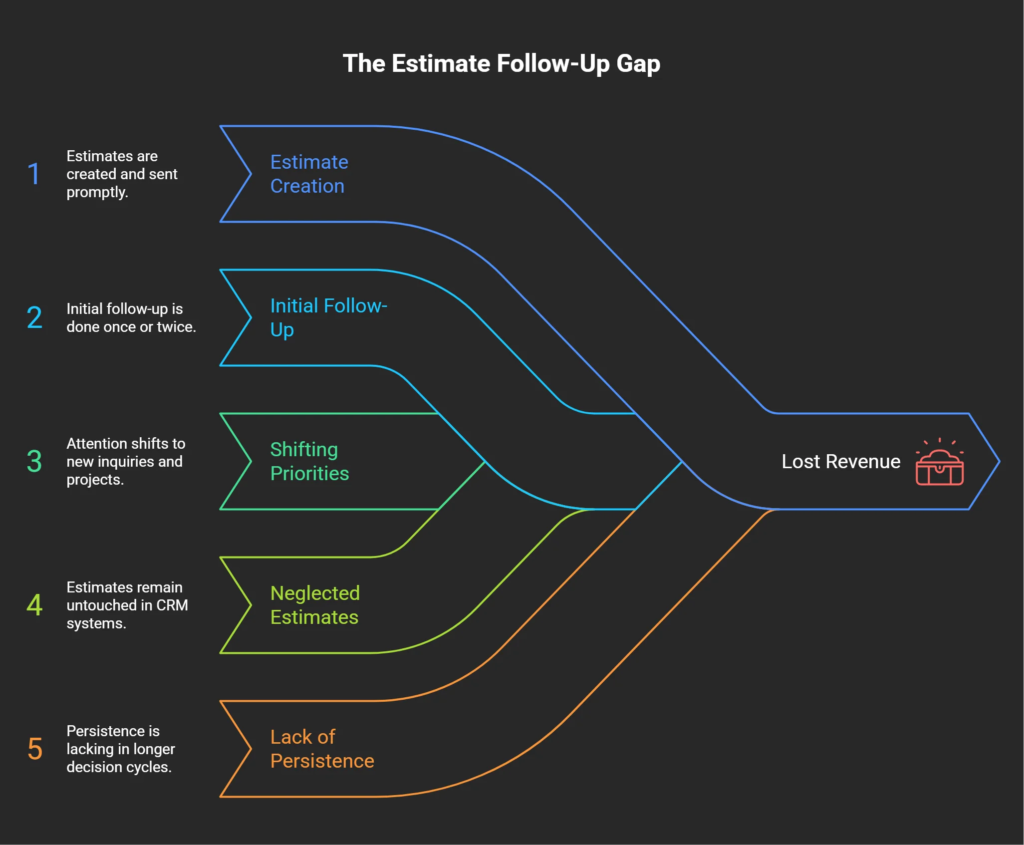
Most estimate-related revenue is lost after the quote is delivered.
The business creates the estimate, sends it promptly, and follows up once or twice. Then attention shifts elsewhere.
New inquiries arrive.
Current customers need attention.
Projects need to be completed.
The estimate remains inside the CRM, but nobody is actively working it.
Over time, these opportunities accumulate.
We frequently see businesses with years of estimate history sitting untouched in their systems. Many of those records belong to people who expressed real interest but never received meaningful follow-up after the initial conversation.
The issue is rarely lead generation.
The lead already exists.
The estimate has already been prepared.
The customer already entered the buying process.
What breaks down is the persistence required to stay engaged throughout a longer decision cycle.
This is one of the most common sources of hidden revenue loss in local service businesses.
Consistent Follow-Up Matters More Than Most Businesses Realize
Many businesses focus heavily on the first interaction and very little on what happens afterward.
That approach works when the customer is ready to buy immediately.
It works far less often when decisions take weeks or months.
A prospect who ignored an estimate two weeks ago may be ready to revisit the project today. A customer who postponed work three months ago may finally have the budget to move forward.
The challenge is that businesses often disappear during this period.
The estimate was delivered, but no additional contact occurred.
As a result, the customer may move forward with another provider or simply forget who provided the original quote.
Consistent follow-up helps prevent that outcome.
The objective is not constant outreach. The objective is remaining visible long enough for the customer’s timeline to catch up with the business opportunity.
Many estimates that eventually convert do so because the business maintained contact while competitors stopped communicating.
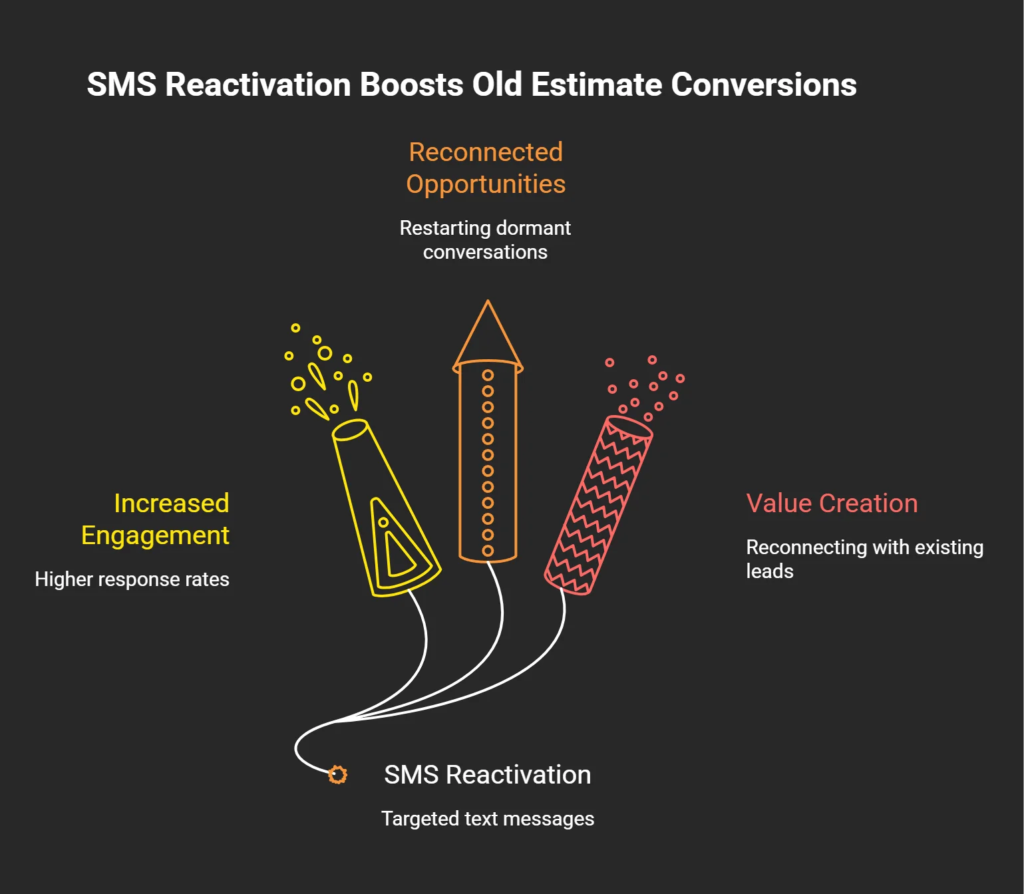
Why SMS Reactivation Works Well for Old Estimates
Old estimates are uniquely suited for reactivation because the prospect already knows who you are.
This is not a cold lead.
The customer has already requested pricing, discussed a project, or interacted with the business.
That familiarity changes the nature of the outreach.
The goal is not introducing your company for the first time. The goal is determining whether the original need still exists.
SMS works well in this context because it lowers the barrier to engagement.
Many prospects are more likely to respond to a simple text than return a phone call or schedule a conversation immediately.
We often see businesses struggle to revisit old estimates consistently because the process is entirely manual. Team members become busy, newer opportunities take priority, and older quotes fall further behind.
A structured SMS reactivation process creates a practical way to restart conversations that would otherwise remain dormant.
The value comes from reconnecting with existing opportunities, not creating new ones from scratch.
When Old Estimates Are Unlikely to Convert
Not every old estimate remains viable.
Some prospects hired a competitor. Some canceled the project. Some no longer need the service.
Follow-up cannot create demand that no longer exists.
What it can do is identify which opportunities still have potential and which ones should be removed from active consideration.
This distinction is important because reactivation is a filtering process as much as a conversion process.
Businesses gain clarity about:
- who is still interested
- who may need additional time
- who has already moved on
- which opportunities deserve further attention
The outcome is a cleaner pipeline and a more accurate understanding of where future revenue is most likely to come from.
Old estimates still convert because customer timelines are often much longer than business follow-up timelines.
Many prospects who requested quotes never rejected the opportunity. They delayed the decision.
Meanwhile, businesses frequently stop following up after the first few contact attempts and move on to newer leads.
The result is a growing collection of inactive estimates that may still contain real buying intent.
At TTRAN, we often find that some of the most overlooked opportunities inside a business are not new inquiries at all. They are past estimates, unfinished conversations, and quote requests that never received enough follow-up to reach a final decision. Before investing more heavily in lead generation, it is worth reviewing how much opportunity may already exist inside your current database.