

The Operational Difference Between Speed-to-Lead and Follow-Up
A business owner reviews the pipeline and sees the same problem month after month: leads are coming in, but too many never become customers.
The immediate assumption is often that response times are too slow.
Sometimes that is true.
Other times, the business responds quickly to every inquiry but stops following up after the first call, estimate, or text message.
From the outside, both situations produce the same result: lost jobs, inconsistent bookings, and revenue that never materializes.
The difference is where the breakdown occurs.
Speed-to-lead and follow-up are closely related, but they solve different problems inside the sales process. One determines whether a conversation starts. The other determines whether that conversation continues long enough to reach a buying decision.
Understanding the difference helps identify where leads are actually being lost so the business can fix the right part of the pipeline instead of guessing.
Key Takeaways: Speed-to-Lead vs Follow-Up
- Speed-to-lead measures how quickly a business responds to a new inquiry.
- Follow-up covers every contact after the initial response.
- Fast responses improve the chances of starting conversations.
- Consistent follow-up improves the chances of turning conversations into bookings.
- Many businesses perform reasonably well at one and poorly at the other.
- Diagnosing the correct problem helps prevent wasted effort and missed revenue.
What Speed-to-Lead Actually Measures
Speed-to-lead is the time between a prospect reaching out and the business making first contact.
That contact might be a phone call, text message, email response, or another direct acknowledgment that the inquiry has been received.
The goal is simple: engage the lead while interest is highest.
This matters because most local service customers do not contact a single business and wait patiently for a response. They request multiple quotes, call several providers, or submit forms to competing companies within a short period of time.
When response times slow down, opportunities disappear quickly.
We regularly see this happen with missed calls, after-hours inquiries, website forms that sit unattended, and estimate requests that do not receive a same-day response.
The issue is rarely awareness. Most owners understand that fast responses matter.
The challenge is maintaining consistency when staff are busy, jobs are underway, and incoming inquiries arrive faster than the team can manually manage.
Speed-to-lead affects whether the business gets an opportunity to have a sales conversation at all. If the lead moves on before contact occurs, the quality of the sales process becomes irrelevant.
What Follow-Up Actually Measures
Follow-up begins after the first response.
Once a lead has been contacted, follow-up becomes responsible for everything that happens next.
This includes:
- Checking in after a quote is sent
- Reaching out after an unanswered call
- Following up with prospects who stop responding
- Re-engaging leads that delayed a decision
- Continuing communication until a clear outcome exists
This is where many local service businesses experience the largest drop-off.
The initial response happens. The estimate gets delivered. A voicemail is left.
Then communication slows down or stops entirely.
Customers often need more time than businesses expect. They compare options, discuss pricing with family members, postpone projects, or simply get distracted by other priorities.
Without a structured follow-up process, these opportunities gradually disappear from active attention.
When we review lead pipelines, it is common to find estimates from weeks or months earlier that never received another call, text, or email after the initial interaction.
Those leads are often considered lost even though the business stopped communicating long before a final decision was made.
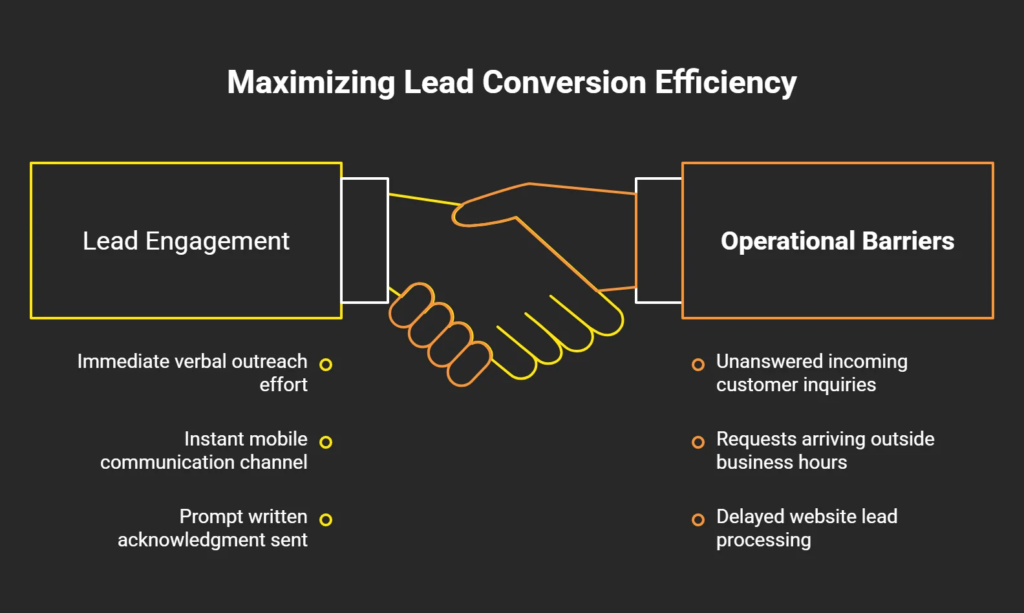
Where Revenue Is Actually Won or Lost
The simplest way to understand speed-to-lead versus follow-up is to view them as two separate stages of the sales process.
Speed-to-lead determines whether the conversation begins.
Follow-up determines whether the conversation reaches a conclusion.
Because they operate at different points in the pipeline, they fail differently.
A plumbing company might respond within five minutes to every inquiry but never follow up after sending estimates. In that case, speed-to-lead is working while follow-up is failing.
Another company might have excellent follow-up procedures but routinely take a full day to respond to new inquiries. Many prospects never make it into the follow-up process because they chose another provider first.
Both businesses experience lost revenue.
The cause is simply different.
This distinction matters because the solution depends on the location of the breakdown.
If response times are slow, improving follow-up alone will not recover opportunities that were never engaged.
If response times are strong but communication stops after one or two attempts, generating more leads will not fix the underlying problem either.
Many businesses discover they have weaknesses in both areas. Missed calls reduce the number of conversations that start, while inconsistent follow-up reduces the number that become booked work.
Understanding which stage is leaking revenue allows owners to focus improvement efforts where they will have the greatest impact.
Structuring Speed-to-Lead and Follow-Up as Separate Processes
One reason these problems persist is that many businesses treat speed-to-lead and follow-up as a single activity.
Operationally, they are different systems.
Speed-to-lead should focus entirely on ensuring every inquiry receives a prompt response. The process needs clear ownership, visibility, and accountability for incoming leads.
Follow-up should focus on maintaining communication after that first contact occurs.
This requires separate tracking, separate workflows, and separate expectations.
For example, a business may respond quickly to a website form but still need a process for checking back three days after an estimate is delivered. Those are different actions with different goals.
Separating them also makes diagnosis easier.
If appointments are not increasing, owners can review response times independently from follow-up activity instead of treating all lead handling as one category.
That visibility often reveals whether leads are being lost at the beginning of the pipeline or further down the sales process.
Speed-to-lead and follow-up both influence revenue, but they solve different operational problems.
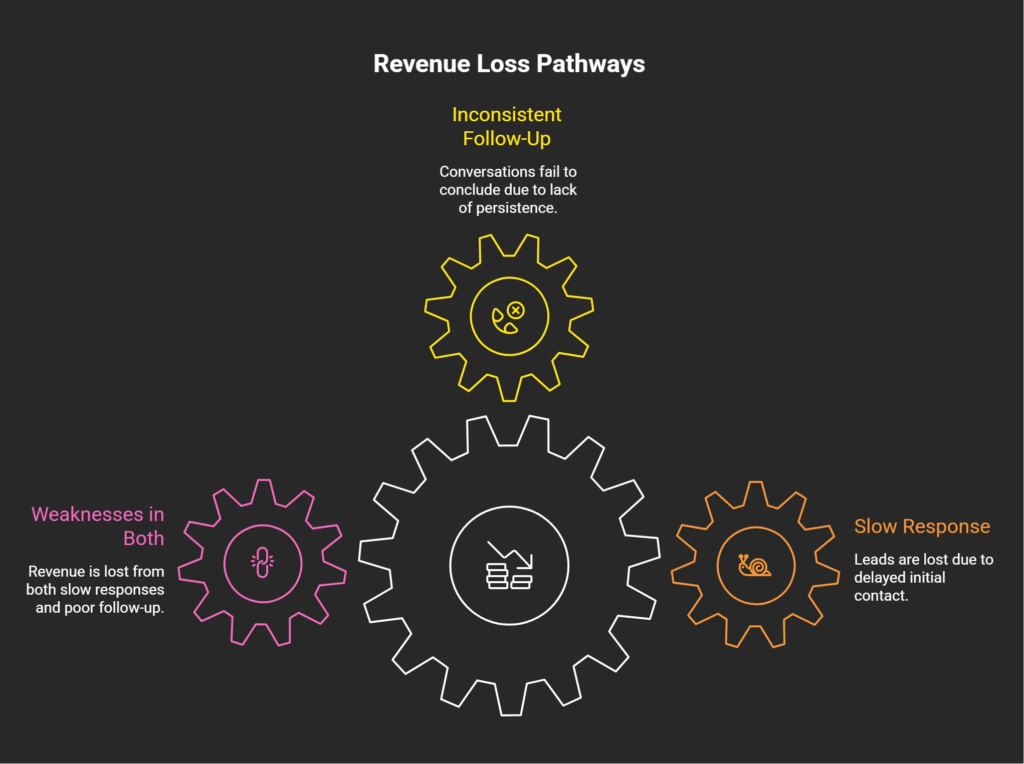
Speed-to-lead determines whether a prospect enters the sales process. Follow-up determines whether that opportunity receives enough communication to reach a decision.
When businesses combine these concepts into a single category, it becomes difficult to identify where leads are actually being lost.
Some companies need faster responses. Others need stronger follow-up. Many need improvements in both areas.
The first step is understanding which part of the pipeline is underperforming.
If your business struggles with missed calls, stale estimates, or leads that stop responding after the first conversation, our AI automation and lead follow-up systems are designed to help create more consistent coverage across the entire lead lifecycle.