

How Delayed Callbacks Affect Customer Trust
A homeowner submits a quote request at 10:00 AM.
By 10:15, they’ve contacted two other companies.
By noon, one business has already called back, answered questions, and scheduled an estimate.
At 4:00 PM, another company finally returns the original inquiry.
From the business owner’s perspective, the callback happened the same day.
From the customer’s perspective, the decision process already moved on hours ago.
This is why callback delays matter more than many local service businesses realize.
Trust starts forming long before a sales conversation begins. Customers use response behavior as an early signal of reliability, availability, and professionalism. When communication is delayed, they begin making assumptions about how the rest of the experience will unfold.
Understanding how delayed callbacks affect customer trust helps explain why good businesses sometimes lose opportunities before they ever get a chance to compete.
Key Takeaways: How Delayed Callbacks Affect Customer Trust
- Customers often form impressions before speaking with a business.
- Slow callbacks create uncertainty about reliability and communication.
- Delayed responses frequently push prospects toward faster competitors.
- Revenue loss often appears as lower conversion rates rather than obvious lead loss.
- Many callback delays result from workflow gaps rather than staffing shortages.
- Improving response speed can increase bookings without increasing lead volume.
Why Callback Speed Shapes Customer Trust
Customers rarely separate communication from service quality.
When someone requests a quote, calls for emergency service, or submits a consultation form, they are evaluating more than the final outcome. They are also evaluating how the business responds during the first interaction.
A quick callback signals attentiveness.
A delayed callback raises questions.
The customer does not know whether the business is busy, understaffed, disorganized, or simply uninterested. They only know that they reached out and did not receive a response when expected.
Those impressions form quickly.
This is especially true in local service industries where customers often need help solving an immediate problem. A leaking roof, broken HVAC system, plumbing issue, or urgent consultation request creates a desire for reassurance. The first business that provides it gains an advantage before pricing or service details are even discussed.
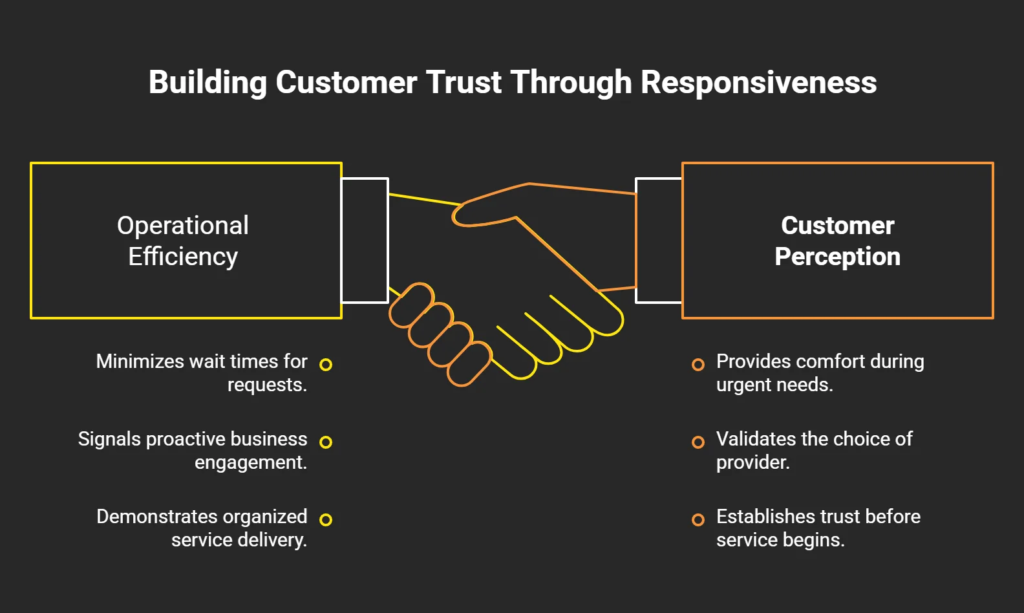
Many owners view callback speed as an operational metric.
Customers often view it as a trust signal.
What Customers Assume When a Callback Is Delayed
Most customers do not spend time analyzing why a callback was delayed.
They fill in the blanks themselves.
A delayed response commonly creates assumptions such as:
- The company is difficult to reach.
- Communication may be unreliable.
- The business is too busy for new customers.
- The request is not a priority.
- Service after the sale may be equally slow.
Whether those assumptions are accurate is largely irrelevant.
What matters is that they influence buying decisions.
Silence creates uncertainty, and uncertainty encourages customers to keep searching.
At the same time, competing businesses are responding, scheduling appointments, and creating momentum in the conversation.
This comparison effect happens quickly.
The customer is not evaluating your response in isolation. They are comparing it to every other business that contacted them first.
That comparison often shapes trust long before a quote is reviewed or a sales conversation begins.
How Delayed Callbacks Turn Into Lost Revenue
The financial impact of callback delays rarely appears as a clearly labeled expense.
Instead, it shows up through lower conversion rates and missed opportunities.
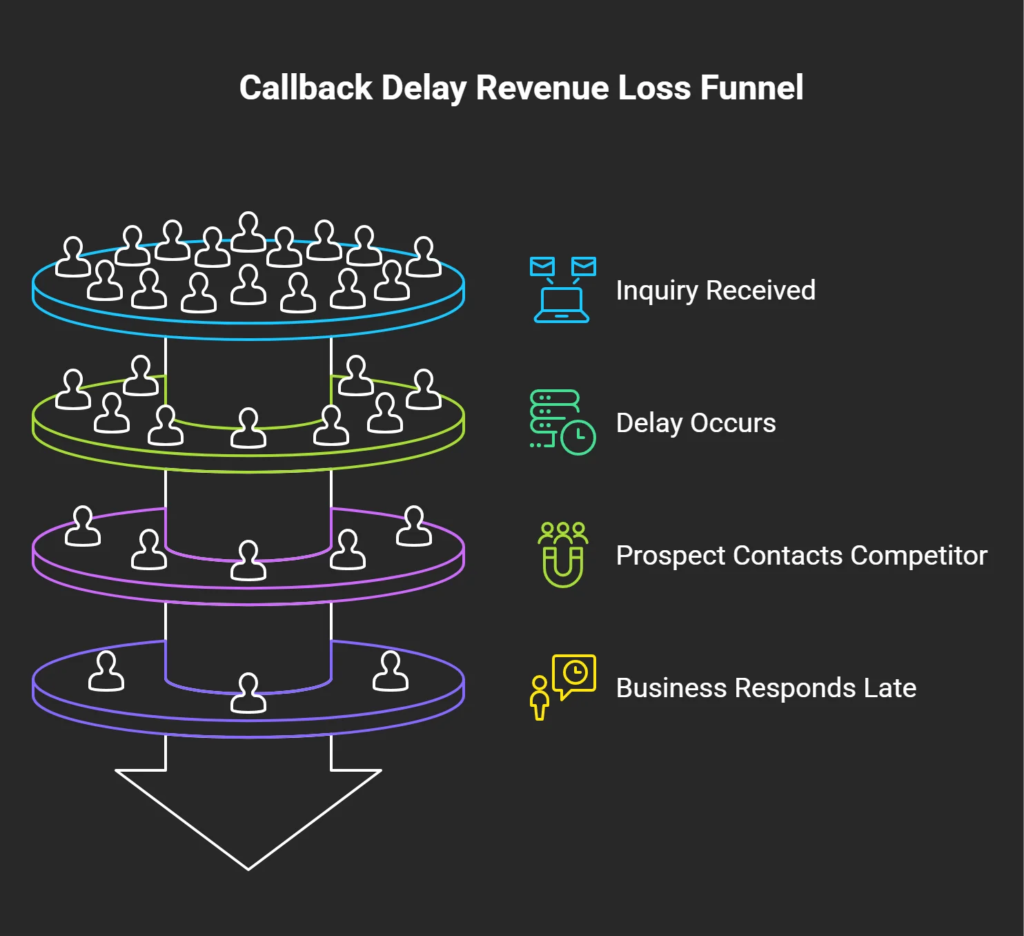
A lead submits an inquiry.
Hours pass.
The prospect contacts another provider.
The original business eventually responds, but the customer is already engaged elsewhere.
From inside the CRM, the lead may still appear active.
From the customer’s perspective, the decision process is already underway.
This is why delayed callbacks often create hidden revenue loss.
The lead was generated successfully.
The marketing worked.
The inquiry arrived.
The opportunity simply became less likely to convert because engagement happened too late.
We often see businesses misinterpret this as a lead quality issue.
In reality, many leads never received timely enough communication to reach the same conversion potential they had when they first reached out.
As response delays increase, the value of each lead begins to decline even when lead volume remains unchanged.
Why Callback Delays Persist in Well-Run Businesses
Most businesses with callback problems are not ignoring leads.
They are juggling competing priorities.
Owners are managing jobs. Office staff are handling customers. Salespeople are working active opportunities. New inquiries arrive while existing work is already demanding attention.
Under those conditions, follow-up becomes reactive.
Calls get returned when someone has time.
Forms get reviewed between appointments.
Voicemails sit in the queue longer than intended.
The problem is usually not awareness. Most owners understand that faster responses produce better outcomes.
The challenge is consistency.
When lead handling depends entirely on manual effort, response times become unpredictable. Some inquiries receive immediate attention while others wait hours or days depending on workload.
Over time, those delays become normal operating behavior even though they continue affecting conversions.
When we review lead pipelines, this is one of the most common patterns we find: good businesses losing opportunities because callback speed depends on availability rather than process.
How Delayed Callbacks Weaken Competitive Positioning
Customers frequently contact multiple providers before making a decision.
That means every inquiry becomes a race for attention.
The first company to engage often establishes the initial relationship, answers the first questions, and sets expectations for what happens next.
Once that conversation begins, competitors face a different challenge.
They are no longer introducing themselves to a prospect.
They are interrupting an existing conversation.
This changes the dynamics considerably.
Even businesses with better reviews, stronger service, or more experience can find themselves at a disadvantage because they entered the conversation too late.
The customer already has pricing information, appointment availability, and a point of contact from another provider.
At that stage, the delayed callback is trying to replace momentum that has already been created elsewhere.
Over hundreds of inquiries, those lost opportunities compound.
The result is lower conversion rates, fewer booked jobs, and weaker performance despite generating a healthy volume of leads.
What Actually Improves Callback Performance
Businesses improve callback speed when they reduce the amount of time a new inquiry spends without acknowledgment.
That does not necessarily mean every lead receives an immediate phone call.
It means every lead receives some form of response.
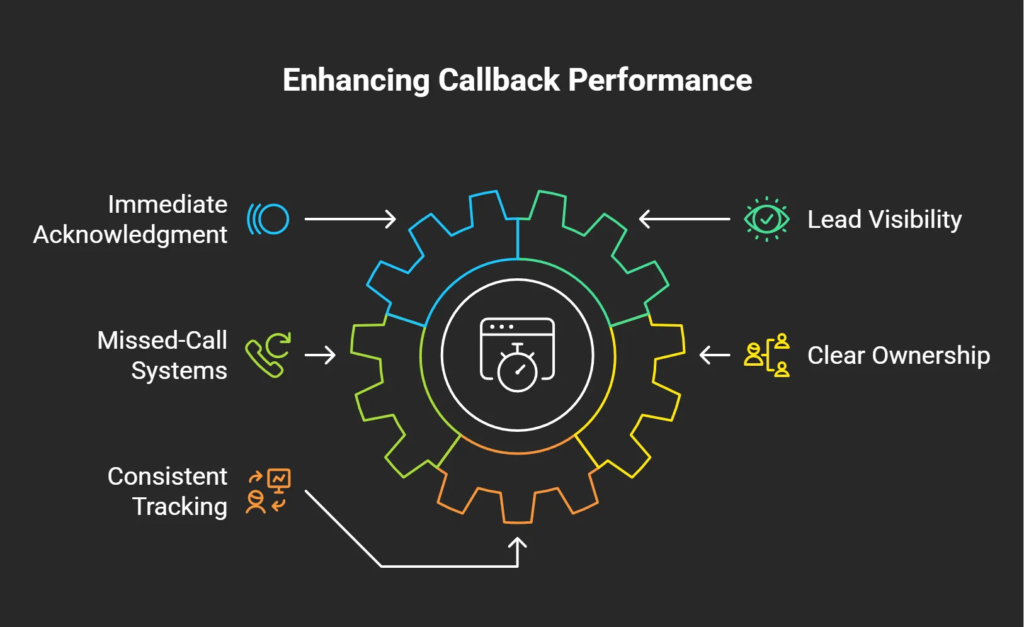
For many businesses, this starts with:
- Immediate acknowledgment of new inquiries
- Better visibility into incoming leads
- Missed-call response systems
- Clear ownership of lead follow-up
- Consistent tracking of response times
The common theme is coverage.
When inquiries can sit unnoticed in an inbox, voicemail system, or CRM queue, delays become inevitable.
When every inquiry receives immediate attention, even if a full conversation happens later, trust remains intact because the customer knows someone is actively responding.
The goal is not perfect speed.
The goal is eliminating long periods of silence where customers begin making decisions without you.
Delayed callbacks affect customer trust long before a salesperson has the opportunity to explain pricing, qualifications, or service quality.
Customers use response behavior as an early indicator of reliability. When communication is delayed, many continue evaluating other providers, become less responsive, or move forward with whoever engaged them first.
For local service businesses, this creates a hidden source of revenue loss that often looks like weak conversion rates or inconsistent lead quality.
Improving callback performance does not always require more leads, more advertising, or more staff. In many cases, it starts with creating a more consistent response process.
If delayed callbacks, missed calls, or slow follow-up are recurring issues in your business, our AI automation and lead follow-up systems are designed to help create more reliable coverage for every inquiry that enters your pipeline.