

Can AI SMS Actually Recover Old Leads?
Most local service businesses have a section of the CRM they rarely look at.
Old estimate requests.
Unbooked consultations.
Missed calls from past ad campaigns.
Leads that stopped responding after the first conversation.
The business already paid to generate those opportunities, but months or years later, nobody knows whether they still have value.
That uncertainty is one reason AI SMS lead reactivation has gained attention. Business owners hear stories about old leads turning into appointments and wonder whether the same thing could happen in their business. At the same time, many are understandably skeptical. Can a text message really restart conversations that went cold months ago?
The short answer is yes—sometimes.
The longer answer depends on why those leads became inactive, what type of business you’re running, and how much opportunity actually exists inside your database. This article explains where AI SMS works, where it falls short, and how to decide whether lead reactivation is worth testing.
Key Takeaways: Can AI SMS Actually Recover Old Leads?
- Old leads often became inactive because follow-up stopped before a decision was made.
- AI SMS works best when a business has a meaningful database of past inquiries, estimates, or consultations.
- Text messaging creates conversations that many businesses never have time to start manually.
- Reactivation works best when previous interest already existed.
- Poor-quality data and weak sales processes limit results.
- Comparing potential recovered revenue against new lead acquisition costs is one of the simplest ways to evaluate the opportunity.
Why Old Leads Often Contain More Opportunity Than Expected
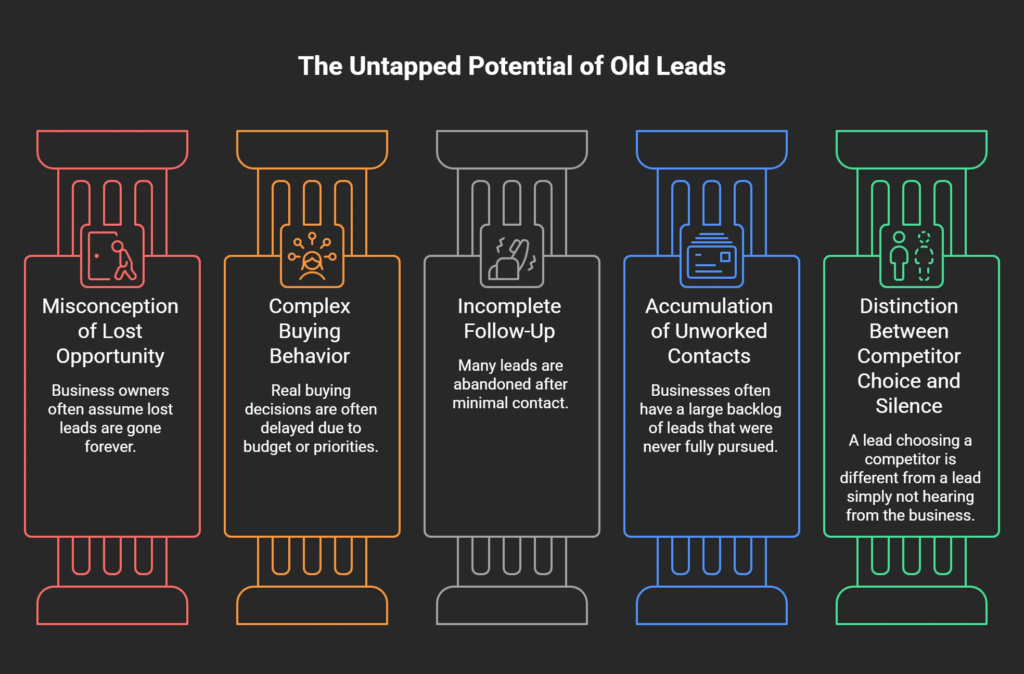
Many business owners assume that if a lead did not buy the first time, the opportunity is gone.
Real buying behavior is usually less straightforward.
A homeowner requests a roofing estimate and delays the project because the budget is not available yet. A dental patient waits until insurance renews. A business owner requests information, then shifts attention to more urgent priorities.
These prospects often disappear from active follow-up long before they make a final decision.
We regularly see CRM records where the entire sales process consisted of:
- One phone call
- One email
- One estimate
- No meaningful follow-up afterward
As new inquiries arrive, older opportunities move down the priority list. Over time, businesses accumulate hundreds or thousands of contacts that were never fully worked.
That distinction matters.
A lead that explicitly chose a competitor is different from a lead that simply stopped hearing from the business. Many databases contain far more unfinished conversations than owners realize, especially in industries where decisions take weeks or months rather than days.
How AI SMS Actually Recovers Old Leads
AI SMS works because it makes large-scale follow-up practical.
Most businesses already have access to old leads. The challenge is contacting them consistently.
A roofing contractor with 2,000 old estimates is unlikely to manually text every prospect. A dental office is not going to review years of inactive consultations one by one. Day-to-day operations always take priority.
As lead databases grow, older opportunities receive less attention.
AI SMS changes that by restarting conversations automatically.
A simple text often feels easier to respond to than a phone call. Prospects can reply on their own schedule, ask questions, or indicate whether they are still interested.
The AI component handles repetitive communication and identifies which contacts are actively engaging.
That allows staff to focus on prospects who respond rather than spending hours working through inactive records manually.
At TTRAN, we view AI SMS as a conversation-restart tool. Its value comes from creating interactions that otherwise would never happen. The system is not closing sales on its own. It is uncovering opportunities that have been sitting untouched in the CRM.
When AI SMS Is Most Likely to Work
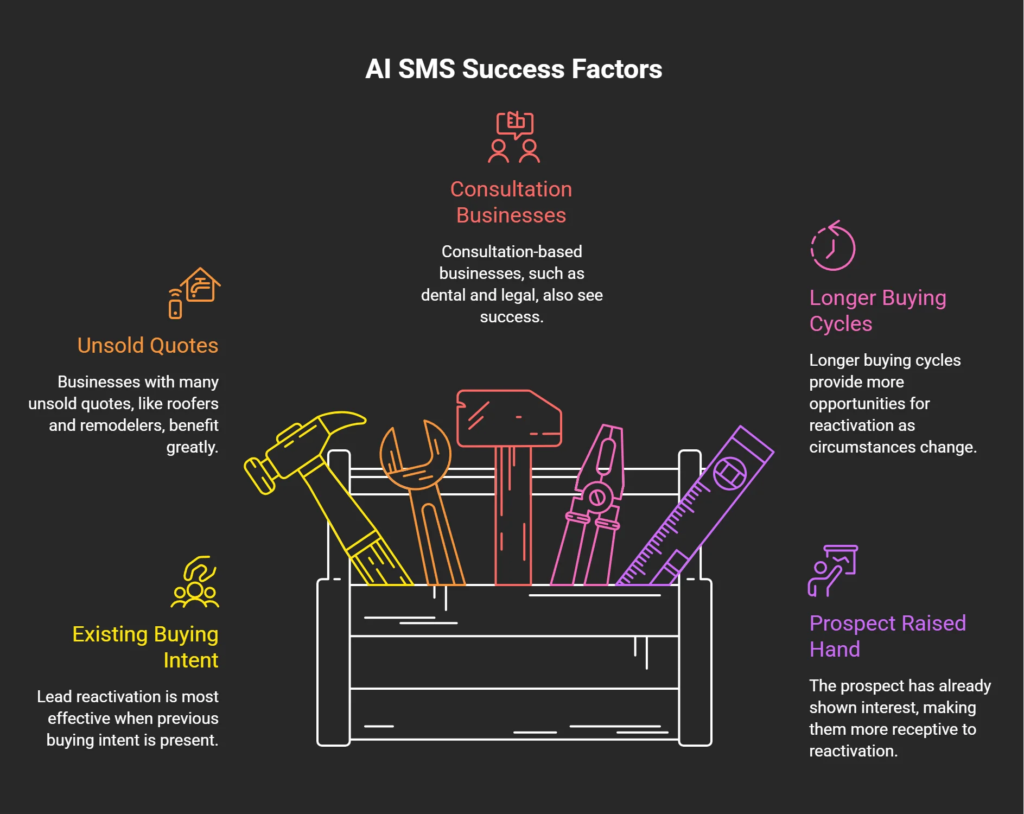
Lead reactivation performs best when previous buying intent already existed.
One of the strongest examples is businesses with large numbers of unsold quotes.
Roofers, HVAC companies, plumbers, remodelers, and other estimate-driven businesses often spend significant time generating proposals that never turn into jobs. That does not always mean the prospect lost interest. The project may have been delayed, repriced, or postponed.
Consultation-based businesses often face the same situation.
We frequently see:
- Dental consultations that never booked treatment
- Med spa inquiries that paused after pricing discussions
- Legal consultations that stalled
- Real estate prospects who delayed their search
Longer buying cycles generally create more reactivation opportunity because circumstances change.
The common thread is simple: the prospect already raised their hand once.
Businesses with meaningful databases of estimate requests, consultations, missed calls, and previous inquiries often have a stronger foundation for reactivation than businesses relying entirely on new lead generation.
Where AI SMS Falls Short
AI SMS is not a cure for bad data or weak sales execution.
Databases filled with invalid phone numbers, duplicate records, or low-intent contacts rarely perform well regardless of the outreach method.
Results also suffer when nobody handles engaged prospects after they reply.
A conversation restart is valuable only if someone:
- Answers questions
- Schedules appointments
- Provides estimates
- Moves the opportunity forward
Expectation management matters as well.
Many business owners hear “lead reactivation” and imagine recovering every dormant lead in the CRM. That is not realistic.
Some contacts no longer need the service.
Some hired competitors.
Some will never respond.
The value comes from identifying opportunities that would otherwise remain untouched, not from reviving every contact in the database.
How to Decide Whether Lead Reactivation Is Worth Testing
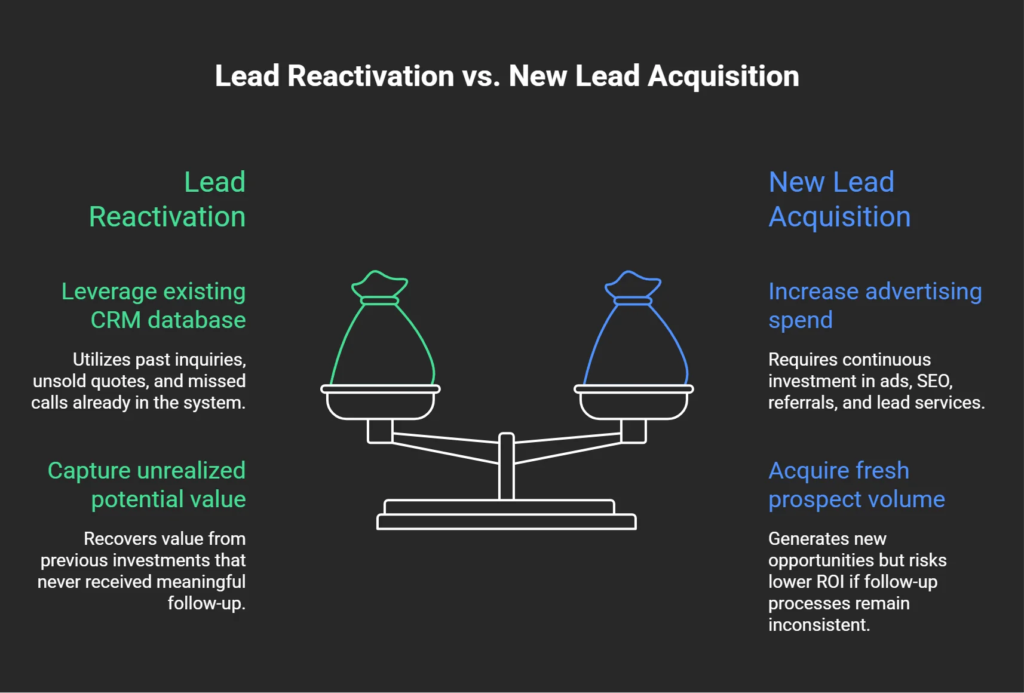
The simplest way to evaluate lead reactivation is to compare it against the cost of generating new leads.
Start by reviewing what already exists:
- How many old leads are in the CRM?
- How many unsold quotes are sitting untouched?
- How many missed calls never received additional follow-up?
- How many prospects received only one or two contact attempts?
These questions often reveal larger opportunities than expected.
Many businesses continue increasing advertising spend while hundreds of past inquiries receive little or no attention.
Every lead generated through ads, SEO, referrals, or lead services represents an investment. Opportunities that never received meaningful follow-up reduce the return on that investment.
At TTRAN, we usually encourage businesses to understand the size of their existing opportunity before increasing lead acquisition budgets. In many cases, the database already contains enough potential value to justify testing a structured reactivation campaign.
AI SMS can recover old leads, but its effectiveness depends heavily on the quality of the database and the process behind it.
Businesses with large numbers of old estimates, consultation requests, missed calls, and inactive CRM records often discover that some opportunities never truly disappeared. They simply stopped receiving attention.
The most useful question is not whether every old lead can be recovered.
It is whether enough recoverable opportunities exist to make reactivation worthwhile.
If your CRM contains years of untouched inquiries and unsold opportunities, our approach to AI SMS lead reactivation systems can help you evaluate what is actually sitting inside the database and whether those contacts are worth re-engaging.