

Why SEO Outperforms Outbound for Compliance Automation Software
If you’re a founder, head of growth, or senior marketer at a compliance automation SaaS company, you’ve probably leaned on outbound to drive pipeline. It’s been the default in high-trust categories because deals are complex, buyers are cautious, and waiting for inbound can feel risky.
That buying behavior is changing. Teams still want to move carefully, but they do more of that work privately now. They research vendors, compare approaches, and pressure-test claims before they ever reply to a cold email.
This is why SEO often outperforms outbound for compliance automation software. It meets buyers while they’re already evaluating, builds credibility earlier in the process, and tends to produce cleaner pipeline economics over time:
- higher-intent conversations
- fewer wasted touches
- better acquisition efficiency
If you want the broader strategy behind this approach, start with our guide on building an inbound engine for SOC 2 automation software.
Key Takeaways
- Compliance automation buyers research privately before they talk to sales. SEO meets them earlier in that process.
- SEO captures higher-intent evaluators and produces cleaner pipeline than cold outreach alone.
- Outbound can create activity fast, but lead quality and timing are inconsistent in high-trust markets.
- SEO improves pipeline velocity by building context across multiple touchpoints before the demo.
- SEO scales more efficiently over time because content compounds instead of resetting each month.
- Outbound works best as an amplifier, using SEO content as the value anchor in sequences.
Clarifying the Terms: SEO vs Outbound in B2B Compliance SaaS
In this article, SEO means a deliberate inbound system built around decision-oriented searches. These are the queries buyers use while evaluating vendors: comparisons, alternatives, implementation concerns, pricing expectations, and risk questions. The goal isn’t “more content.” It’s to show up when a buyer is already trying to make a decision and needs enough confidence to take the next step.
Outbound includes cold email, cold LinkedIn outreach, SDR sequences, and paid prospecting. It’s a push motion. You’re initiating contact and trying to create interest, often before the buyer has context or urgency.
This comparison matters more in compliance automation than it does in many SaaS categories. Sales cycles are longer, stakeholder review is heavier, and perceived risk is higher. That changes what “effective” looks like.
A useful way to think about the difference:
- SEO improves pipeline quality and conversion efficiency over time
- Outbound increases activity and coverage, but quality varies with timing and targeting
Buyer Behavior in Compliance SaaS: Why Inbound Matters More
Compliance automation buyers behave differently from most B2B SaaS audiences. They don’t start with a demo request. They start with private research, because the cost of choosing the wrong vendor is real.
Most teams begin by trying to answer questions like:
- What’s the difference between compliance automation platforms?
- How much work is still required internally?
- Will this integrate cleanly with our stack and workflows?
- Can we trust the vendor to support an audit timeline?
Outbound doesn’t map well to that moment. It shows up before the buyer has context, and it often reaches the wrong stakeholder. SEO meets the buyer where they already are: looking for clarity and a path to a safer decision.
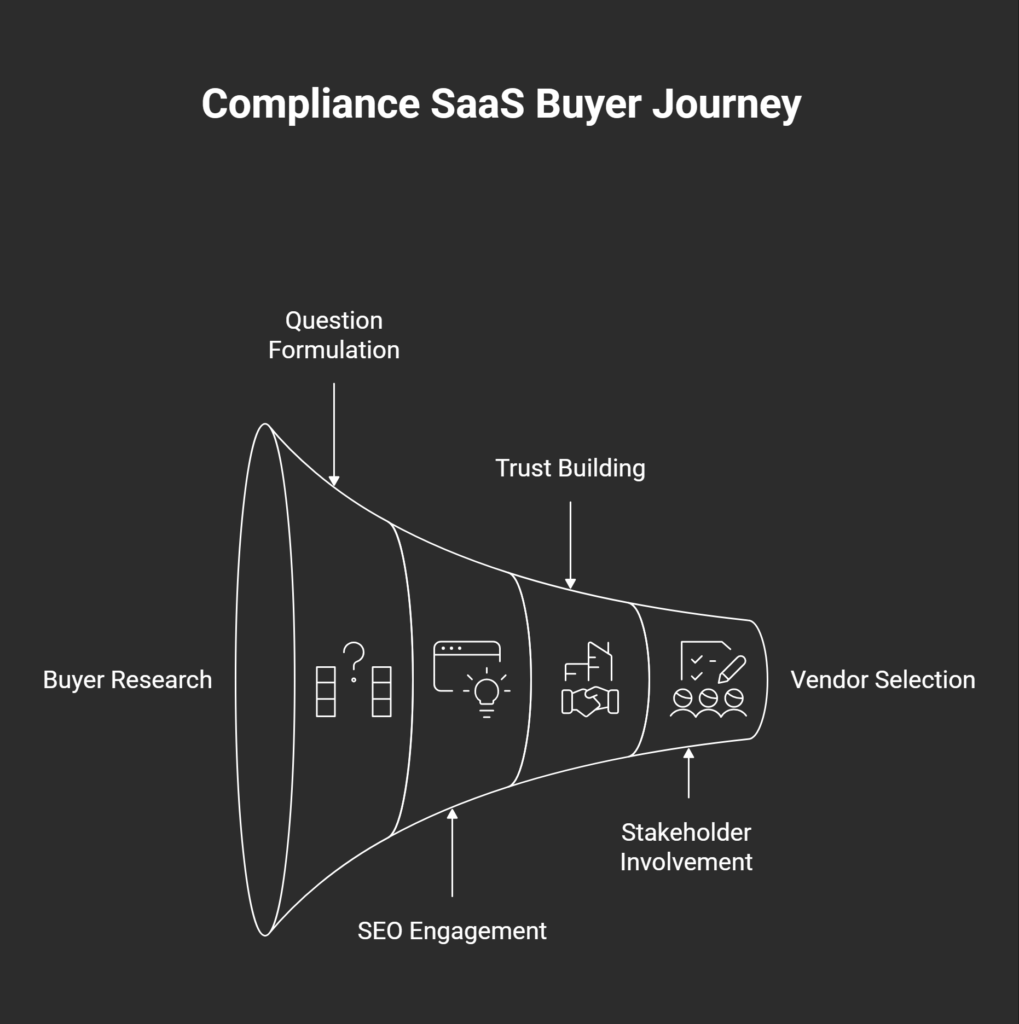
Trust requirements also rise fast in this category. Security, compliance, and leadership are evaluating more than features. They’re assessing credibility, implementation risk, and whether the vendor understands the stakes. Educational content earns attention because it reduces uncertainty. Cold outreach often triggers skepticism because it feels like persuasion without proof.
Then there’s the sales cycle. Compliance automation deals rarely move through one person. Security may own evaluation, legal may influence risk acceptance, and leadership signs off on spend and timing. Inbound content can support each stakeholder at different points, without forcing the conversation too early.
A common pattern looks like this:
- A compliance lead searches “SOC 2 automation vs manual process” during early evaluation
- They read quietly, compare approaches, and shortlist vendors
- SDR outreach arrives later, after preferences have already formed
Lead Quality Comparison: SEO vs Outbound
Once you look past surface metrics, the difference between SEO and outbound shows up in lead quality. Not “how many leads did we get,” but how many turn into real pipeline with a reasonable cost to acquire.
SEO captures active evaluators. In compliance automation, that often means searches like “best SOC 2 automation tools” or “SOC 2 automation pricing comparison.” These buyers are already in decision mode. They’re building a shortlist, validating risk, and looking for proof that a vendor is credible. When your content ranks for those queries, the first interaction is contextual and self-initiated.
Outbound has a different profile. It often reaches people who are either too early, not the right stakeholder, or not actively looking. Even when the targeting is strong, timing is inconsistent. You can create conversations, but you can’t control intent.
SEO also tends to produce cleaner funnel mechanics over time. Rankings create a steady inflow of qualified sessions and repeat exposure across the buying cycle. Outbound performance swings with list quality, deliverability, and cadence. That volatility makes planning harder and often pushes teams toward volume instead of precision.
A practical way to compare them:
| Dimension | SEO | Outbound |
| Intent | Higher (buyer-initiated evaluation) | Mixed (timing varies) |
| Predictability | Compounds as rankings hold | Resets each month |
| Unit economics | Amortizes over time | Ongoing linear cost |
| Qualification | Buyers self-screen before contact | Screening happens after contact |
In high-trust categories, that self-qualification is a major advantage. It reduces unproductive calls and concentrates sales time on deals that are already moving forward.
How SEO Accelerates Pipeline Velocity in Compliance Automation
In compliance automation, SEO doesn’t just create leads. It changes how fast deals move once a buyer enters your orbit.
The main reason is that SEO content works as a multi-touch asset across the entire evaluation path. A buyer might first find you through an early research query, return later through a comparison search, and come back again when they’re validating pricing or implementation risk. Each visit adds context. By the time they raise their hand, they’re not starting from zero.
SEO also improves sales execution because it gives your team usable assets. Strong pages become links you can send with purpose: a comparison page for buyers building a shortlist, an ROI or “what to expect” guide for stakeholders, and a clear implementation overview for technical reviewers. This reduces repetitive explanations and shortens the gap between interest and a qualified next step.
It also scales differently than outbound. Outbound volume usually requires more SDR capacity, more lists, and more ongoing operational effort. SEO requires upfront investment, but the output compounds. The same assets can influence hundreds of evaluations without adding headcount.
A simple SEO-to-pipeline model looks like this:
- Blog clusters (problem + evaluation intent)
→ Comparison pages (shortlist intent)
→ Demo / consultation CTAs (conversion)
→ CRM stages (qualification → evaluation → close)
Attribution is rarely clean in this category. Buyers research privately, share links internally, and re-engage weeks later. In practice, SEO often supports more deals than it “sources” directly, because it becomes part of the decision-making trail.
Common Misconceptions That Hurt Outbound ROI
Outbound can work in compliance automation. The problem is that teams often overestimate what it’s doing for pipeline quality, then build the rest of the growth plan around that assumption.
A few common misconceptions show up repeatedly:
- “Outbound fills the pipeline faster.”
It usually generates conversations faster. It doesn’t always generate qualified opportunities faster. In high-trust categories, early conversations often turn into long follow-ups, stakeholder delays, or deals that never had urgency to begin with. - “Warm outreach outperforms cold SEO.”
“Warm” outreach is real, but it’s often mislabeled. Warm usually means referrals, partner introductions, events, or prospects who already know your category. In many cases, inbound content is what creates that familiarity before outreach happens. - “We can just pour more budget into outbound.”
Outbound has hard ceilings. Lists get exhausted. Response rates drop. Deliverability becomes a constraint. The marginal cost of each additional meeting rises, especially once your message is hitting the same audience repeatedly. - “SEO is slow.”
SEO does take time to build authority and earn rankings. Once it starts working, it reduces friction across the funnel. Buyers arrive with context, internal stakeholders have something to review, and sales cycles become easier to manage.
When Outbound Still Has a Role
Outbound still has a place in compliance automation. It’s just more effective when it’s attached to a system that already creates buyer intent and trust.
The best use of outbound is amplification. It helps you reach accounts that are already in-market, re-engage teams that have shown interest, and accelerate conversations that would otherwise move slowly.
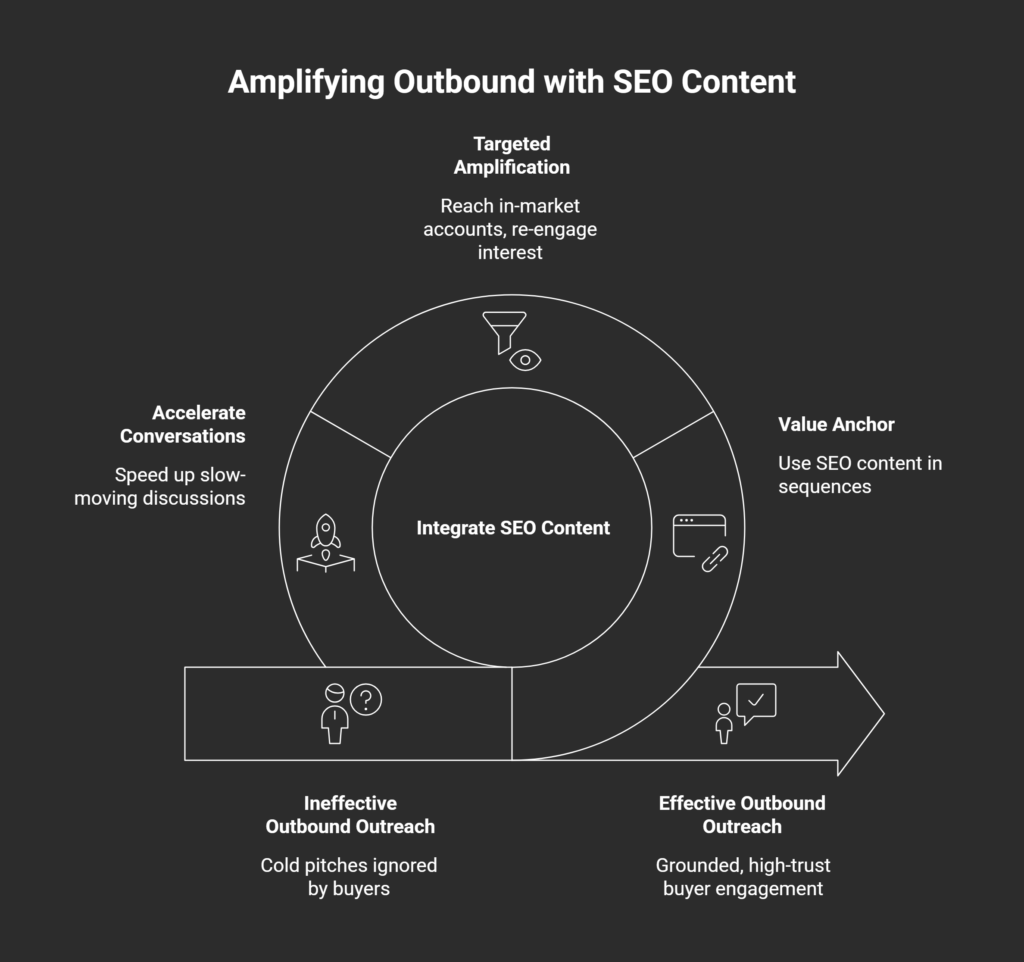
The key is to use SEO content as the value anchor in your sequences. That keeps outreach grounded and reduces the “cold pitch” feeling that high-trust buyers tend to ignore.
A few practical examples:
- Sequence email → comparison guide
“If you’re evaluating SOC 2 automation platforms, this breakdown may help you shortlist options.” - SDR follow-up → specific article engagement
“Saw you spent time on our implementation overview. Happy to answer questions if you’re scoping timelines.” - Account-based outreach → risk-focused content
Send a page that addresses audit readiness, internal workload, or common rollout blockers.
Conclusion + Next Steps
For compliance automation software companies, SEO tends to outperform outbound because it matches how buyers actually evaluate. It captures decision-stage intent, builds credibility before the first call, and improves the quality of opportunities entering the funnel. Over time, it also becomes a more efficient acquisition channel, because the same assets can influence many deals without increasing headcount.
Outbound still has a role. It’s useful for targeted follow-up and account coverage. It just works best when it’s supporting an inbound system that’s already creating context and trust.If you want the strategic foundation for doing this well in SOC 2 automation markets, the next step is to review our deeper guide on building a decision-oriented SEO engine for compliance automation software.