

The Difference Between a Dead Lead and a Delayed Lead
A homeowner requests a roofing estimate.
The quote gets delivered.
A follow-up call goes unanswered.
A week later, the lead gets marked as “dead” in the CRM.
The problem is that nobody actually knows whether the homeowner decided against the project.
They may still be comparing contractors. They may be waiting for financing approval. They may simply be busy.
This happens every day in local service businesses.
Leads are often classified based on how quickly they respond rather than where they are in the buying process. As a result, opportunities get removed from active follow-up long before a real decision has been made.
Understanding the difference between a dead lead and a delayed lead helps businesses avoid abandoning opportunities that still have buying intent while keeping sales teams focused on the right prospects.
Key Takeaways: Difference Between Dead and Delayed Leads
- Delayed leads still have intent but are waiting on timing, budget, or external decisions.
- Dead leads show little or no engagement after structured follow-up over time.
- Many businesses classify leads too early based on silence rather than behavior.
- Delayed leads often convert after the initial contact window closes.
- CRM labels are only useful when they reflect actual lead behavior.
- Tracking intent over time produces better pipeline decisions than relying on first impressions.
What a Dead Lead Actually Looks Like
A dead lead is a prospect who has clearly exited the buying process.
That conclusion should come from behavior over time, not from a single missed call or unanswered message.
In local service businesses, truly dead leads often fall into one of three categories:
- They explicitly chose another provider.
- They clearly stated they are no longer interested.
- They showed no engagement despite multiple follow-up attempts across a reasonable period.
What does not automatically create a dead lead?
- A missed call
- A delayed response
- One unanswered text
- A week of silence
Yet these are often the exact reasons leads get marked as inactive.
When we review CRM pipelines, we frequently find leads labeled as lost after very little outreach. In many cases, the status reflects internal assumptions rather than confirmed customer intent.
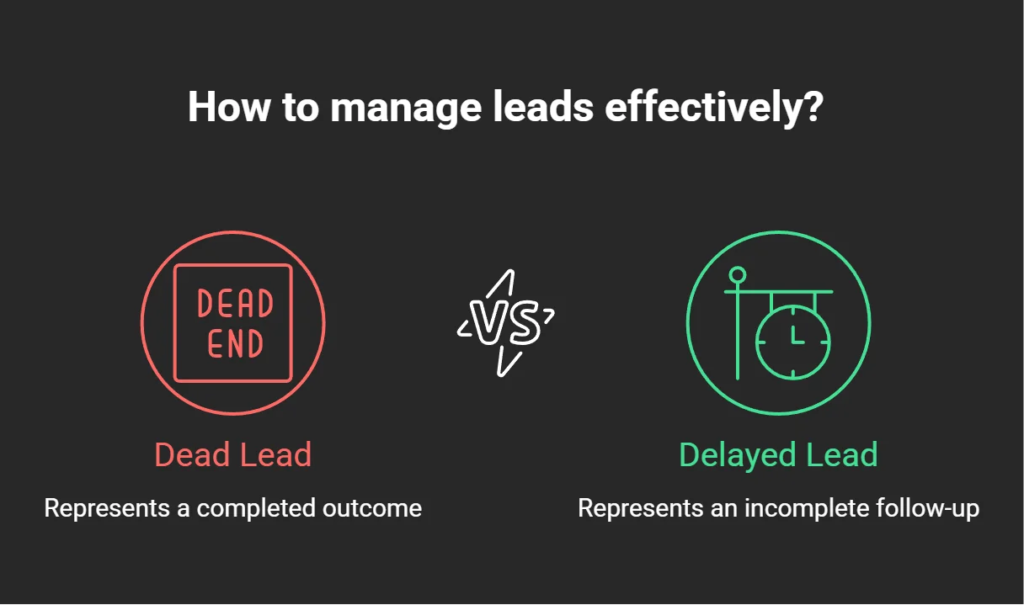
A dead lead should represent a completed outcome, not an incomplete follow-up process.
What a Delayed Lead Actually Looks Like
Delayed leads are still evaluating the purchase.
The need exists.
The timing does not.
These leads commonly appear in industries where purchases involve:
- Higher costs
- Multiple decision-makers
- Scheduling considerations
- Quote comparisons
- Financing discussions
Examples include:
- A homeowner comparing roofing estimates
- A customer waiting until next month’s budget cycle
- A med spa prospect delaying treatment until after an upcoming event
- A legal client gathering information before moving forward
None of these situations indicate a lack of interest.
They indicate that the customer’s timeline differs from the business’s preferred timeline.
This distinction matters because delayed leads often remain qualified opportunities even though they are temporarily inactive.
The challenge is that they rarely behave like ready-to-buy prospects.
Communication slows down.
Responses become inconsistent.
The lead appears less active.
Without a structured process, these opportunities often get categorized alongside genuinely lost leads despite representing a completely different situation.
Why Businesses Confuse the Two
Most businesses do not intentionally discard good leads.
The confusion comes from how sales pipelines operate day to day.
New inquiries feel urgent.
Older opportunities feel uncertain.
As a result, teams naturally prioritize what arrived this morning rather than what stopped responding two weeks ago.
This creates a common pattern:
- New lead enters CRM
- Initial outreach occurs
- Response slows
- Follow-up decreases
- Lead gets labeled inactive
The classification often happens before enough information exists to make that determination.
CRM systems contribute to the problem.
Once a lead receives a label such as “lost” or “dead,” it usually disappears from daily visibility. The status becomes permanent even though the underlying buying decision may still be unresolved.
When businesses lack defined follow-up windows and lead-status criteria, delayed leads frequently get grouped with genuinely dead opportunities.
The Cost of Getting It Wrong
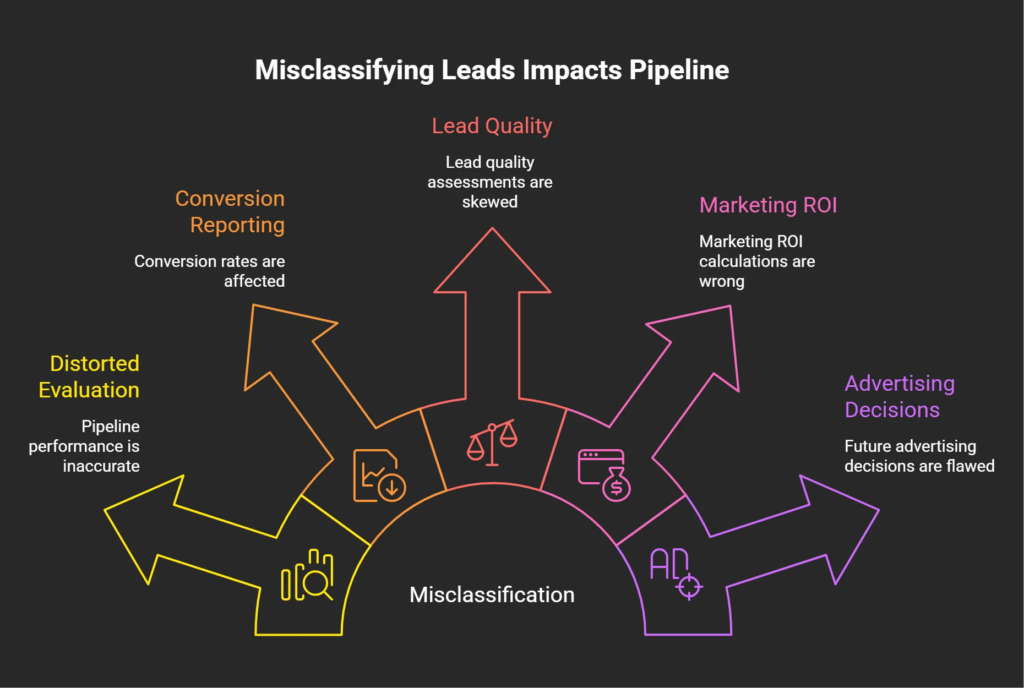
Misclassifying delayed leads creates more than missed follow-up.
It distorts how businesses evaluate pipeline performance.
Every prematurely closed lead affects:
- Conversion reporting
- Lead quality assessments
- Marketing ROI calculations
- Future advertising decisions
For example, a roofing company may conclude that lead quality is declining because fewer inquiries convert.
In reality, many prospects may still be deciding, but they were removed from active follow-up before reaching a conclusion.
This creates hidden revenue leakage.
The business continues paying for new leads while older opportunities remain unresolved.
Over time, acquisition costs appear higher than they actually are because opportunities generated from previous marketing spend never received a complete sales process.
When delayed leads are consistently classified as dead, businesses often solve the wrong problem. They invest in more lead generation when the larger opportunity may already exist inside the pipeline.
How to Tell if a Lead Is Dead or Delayed
The most reliable method is to look for behavioral patterns rather than focusing on response speed.
Signs a Lead Is Delayed
Delayed leads often show some form of engagement, even if it is inconsistent.
Examples include:
- Requesting a quote before going quiet
- Responding after long gaps
- Asking questions without committing
- Re-engaging when contacted later
- Opening messages without immediate replies
These signals indicate continued interest, even if action has not happened yet.
Signs a Lead Is Truly Dead
Dead leads typically show one or more of the following:
- Explicit rejection
- Confirmation they hired someone else
- No engagement across calls, texts, or emails over an extended period
- No response despite consistent follow-up attempts
The key distinction is that dead leads demonstrate sustained absence of intent.
Delayed leads demonstrate intent without immediate action.
That difference is what should drive lead status decisions.
What to Do With Delayed Leads
Delayed leads do not require aggressive sales pressure.
They require visibility.
The most effective approach is maintaining structured contact over time.
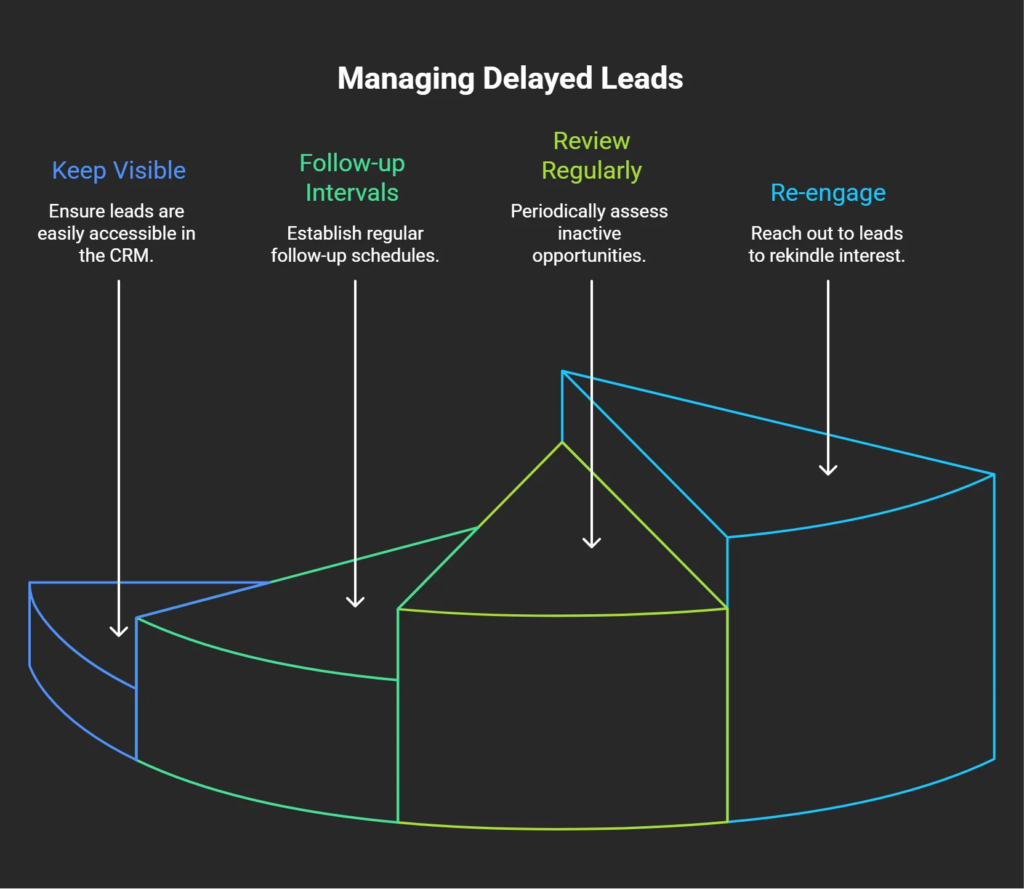
That generally means:
- Keeping leads visible in the CRM
- Using defined follow-up intervals
- Reviewing inactive opportunities regularly
- Re-engaging rather than permanently closing
Many businesses struggle here because delayed leads fall into a gray area.
They are not active enough to demand attention.
They are not inactive enough to justify permanent removal.
Without a system, these opportunities gradually disappear from daily operations.
At TTRAN, we often find that businesses already have qualified opportunities sitting in this middle category. The challenge is creating a process that keeps those conversations alive long enough for timing to align with intent.
The difference between a dead lead and a delayed lead is not response speed.
It is intent.
Dead leads have exited the buying process. Delayed leads are still moving through it, even if progress is slower than expected.
Businesses that treat those two groups the same often remove opportunities from their pipeline before a decision has actually been made. Over time, that creates lower conversion rates, inaccurate reporting, and missed revenue from leads that were still qualified.
If your business has a growing number of inactive quotes, aging CRM records, or prospects that disappear after initial conversations, our AI automation and lead follow-up systems can help create a more structured process for managing opportunities that fall between “active” and “lost.”