

Why Front Desk Staff Become the Bottleneck in Growing Businesses
Growth creates a problem many business owners don’t expect.
The phone rings more often. More estimate requests come in. Appointment calendars fill up faster. Revenue starts moving in the right direction.
Then small issues begin appearing.
Callbacks happen later than they should. Website inquiries wait longer for responses. Unsold estimates stop receiving follow-up. Prospects who seemed interested quietly disappear.
In many local service businesses, these problems start at the front desk.
The same person who answers phones, schedules appointments, handles customer questions, manages paperwork, and responds to new inquiries is now responsible for a growing volume of communication. As demand increases, capacity doesn’t always increase with it.
This is where front desk bottlenecks begin.
The result is often inconsistent lead follow-up, slower response times, and fewer booked opportunities from leads the business already paid to generate.
Key Takeaways: Front Desk Bottlenecks and Lead Follow-Up
- Front desk overload often appears before revenue problems become obvious.
- Lead follow-up is usually the first communication task to become inconsistent.
- Missed callbacks, delayed responses, and untouched estimates reduce conversion rates.
- Hiring additional staff does not automatically create better lead management.
- Communication workflows matter as much as staffing levels.
- Businesses often recover more revenue by improving follow-up consistency than by generating more leads.
What a Front Desk Bottleneck Actually Looks Like
A front desk bottleneck occurs when communication volume grows faster than the business’s ability to manage it consistently.
Many companies don’t recognize the issue immediately because growth initially looks positive. More calls arrive. More quote requests come in. More appointments get booked.
The challenge is that the communication workload grows alongside those opportunities.
In a typical service business, the front desk may handle:
- Incoming calls
- Appointment scheduling
- Customer service questions
- New lead inquiries
- Missed-call callbacks
- Estimate follow-up
- Administrative tasks
Each new lead creates additional communication requirements.
A missed call needs a callback.
A quote request needs a response.
A prospect who doesn’t book immediately requires follow-up.
As volume increases, some tasks inevitably receive less attention.
The front desk employee is not doing less work. They are trying to manage more conversations than the existing process was designed to handle.
One of the first areas affected is lead follow-up because it competes with the constant stream of immediate requests arriving throughout the day.
Why Lead Follow-Up Breaks Before Everything Else
Front desk teams spend most of their day responding to whatever demands attention right now.
A ringing phone takes priority over a lead that submitted a form yesterday.
A customer trying to reschedule an appointment takes priority over a prospect who hasn’t responded yet.
Urgent tasks naturally move to the front of the line.
Follow-up rarely feels urgent even though it has a direct impact on revenue.
As workloads increase, businesses often see the same pattern:
- Callbacks get postponed
- Estimate requests wait longer
- Text conversations stall
- Leads receive fewer follow-up attempts
A prospect who doesn’t answer the first call often gets pushed to tomorrow’s list.
Tomorrow becomes next week.
Eventually, communication stops.
The CRM still shows the lead as active, but the conversation has effectively ended.
When we review lead pipelines, we frequently find opportunities that received one call, one voicemail, and little additional outreach. The lead wasn’t necessarily unqualified. The follow-up process simply ran out of time.
How Front Desk Bottlenecks Turn Into Lost Revenue
The financial impact usually develops gradually.
The business remains busy.
New leads continue arriving.
Appointments continue getting booked.
What changes is how many opportunities make it through the pipeline.
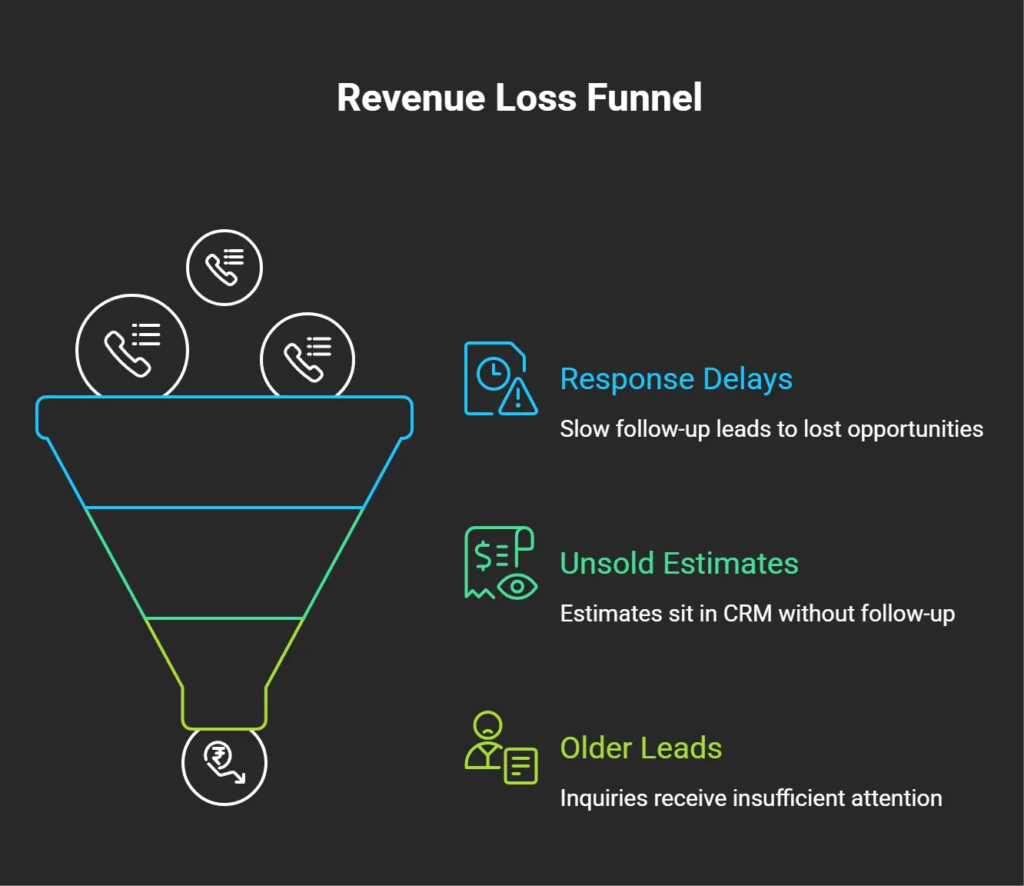
Response delays are one of the most common examples.
A prospect submits a contact form, requests a quote, or leaves a voicemail. Several hours pass before anyone responds. By then, the prospect may already be talking to another company.
Unsold estimates create another source of lost revenue.
A roofing proposal gets delivered.
An HVAC consultation is completed.
A remodeling quote is sent.
Then nothing happens.
The estimate sits in the CRM while the front desk focuses on today’s calls and appointments.
Older leads create a similar problem.
Businesses often accumulate years of inquiries, missed calls, and quote requests that never received enough follow-up to reach a clear outcome.
These opportunities rarely show up in sales reports because they were never formally lost. They simply stopped receiving attention.
Over time, this reduces the return on every lead source the business invests in.
Why Hiring More Staff Doesn’t Always Fix It
Many business owners respond to front desk overload by adding staff.
Sometimes that helps.
Sometimes it simply spreads the same process across more people.
Without a defined workflow, each employee develops their own habits:
- One follows up immediately
- One waits until the afternoon
- One assumes someone else already handled the lead
The business gains capacity but not necessarily consistency.
As inquiry volume grows, manual follow-up becomes harder to coordinate. More staff members create more handoffs, more assumptions, and more opportunities for leads to fall through the cracks.
This is why growing businesses can still experience:
- Missed callbacks
- Inconsistent follow-up
- Delayed responses
- Unworked estimates
even after increasing headcount.
When we evaluate follow-up performance, we often find that communication workflows have not evolved alongside business growth.
The company added people.
The process remained largely the same.
How Businesses Reduce Front Desk Bottlenecks
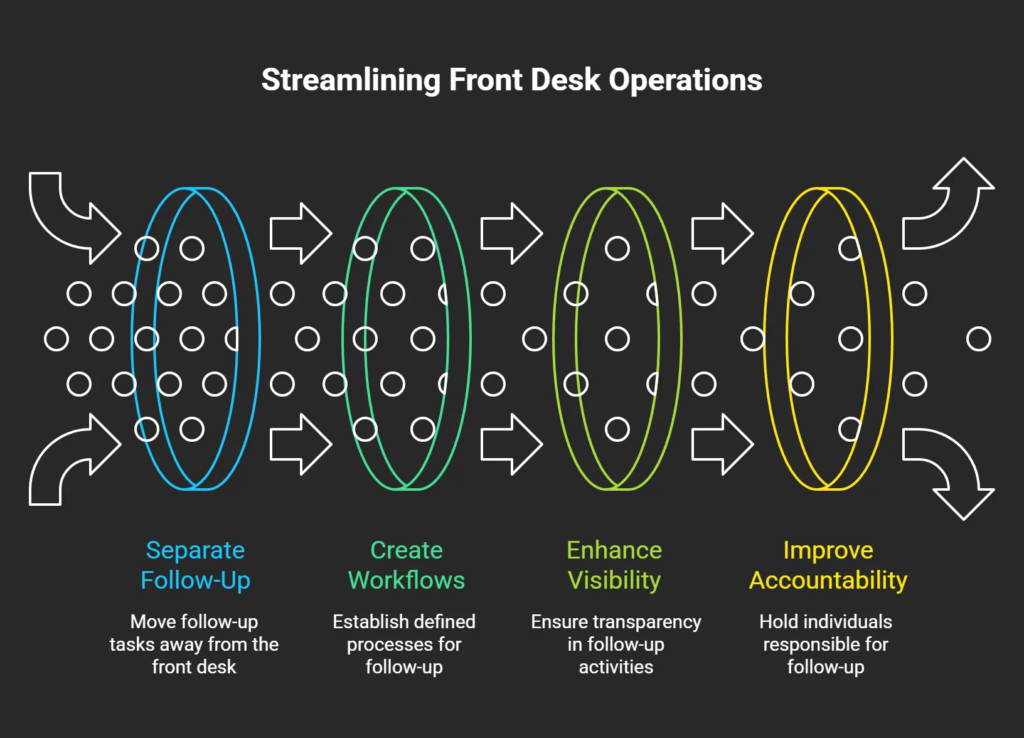
The most effective businesses separate routine follow-up from the daily demands of the front desk.
Tasks such as:
- Missed-call responses
- Estimate follow-up
- Appointment reminders
- Lead check-ins
can quickly consume hours every week.
When those responsibilities compete directly with incoming calls and customer service requests, consistency suffers.
Businesses that scale communication successfully usually create structured follow-up workflows.
Instead of relying on memory or spare time, communication happens according to a defined process.
That process creates visibility and accountability.
Leads receive responses on time.
Callbacks happen consistently.
Older opportunities remain active instead of disappearing into the CRM.
At TTRAN, we often see businesses focus on generating more leads before examining whether their current communication process can fully capture the opportunities they already have. Improving follow-up coverage frequently produces faster gains than increasing lead volume because the demand already exists.
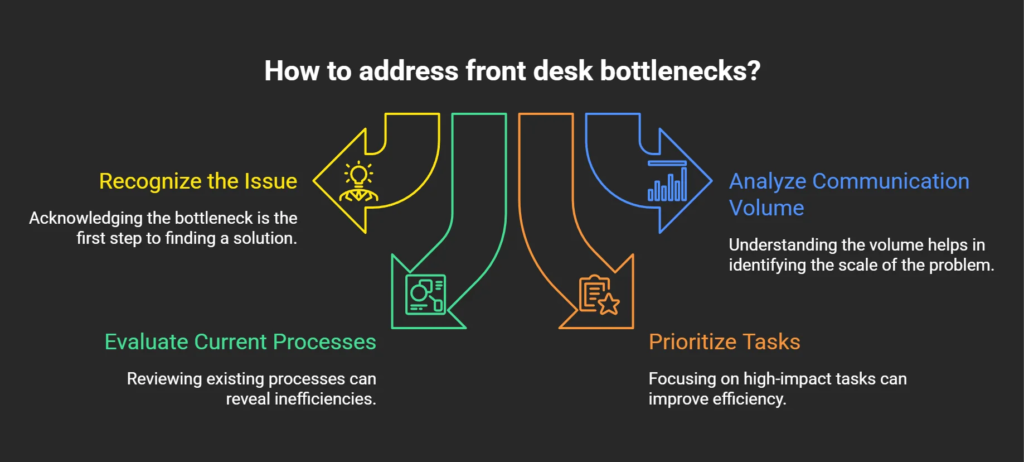
Front desk bottlenecks rarely appear overnight.
They develop as communication volume grows beyond the process used to manage it.
Missed callbacks, delayed responses, aging estimates, and inconsistent follow-up are often early warning signs that growth is outpacing communication capacity.
For many local service businesses, the question is not whether enough leads are being generated. The more important question is whether existing leads are receiving enough attention to reach a decision.
Before investing in additional lead generation, it is worth reviewing whether front desk processes are preventing your business from fully converting the opportunities already entering the pipeline.
If follow-up consistency has become difficult to maintain, our AI automation and lead follow-up systems are designed to help create more reliable communication workflows and recover opportunities that would otherwise be missed.