

How to Estimate the Value of Your Old Lead Database
Open almost any local service CRM and you’ll find the same thing:
- Old quote requests
- Missed calls
- Form submissions
- Consultations that never booked
- Estimates that never received another follow-up
Most businesses stop looking at these records after a few weeks.
Attention shifts to new leads, new advertising campaigns, and the next batch of inquiries coming through the pipeline. Eventually, the older records become background noise.
The question is whether those contacts are actually worthless.
For many roofing companies, HVAC contractors, dentists, plumbers, med spas, and other service businesses, the answer is no. Many of those leads were never fully worked through a consistent follow-up process. They received an initial response, maybe one or two additional touches, and then disappeared from active attention.
This article explains how to estimate the value of an old lead database in practical business terms so you can determine whether there is meaningful revenue still sitting inside your CRM.
Key Takeaways: Estimating the Value of Your Old Lead Database
- Database value depends more on lead quality than contact count.
- Many old leads became inactive because follow-up stopped before a decision was made.
- Even low conversion assumptions can reveal significant revenue potential.
- Follow-up history is one of the strongest indicators of remaining value.
- Clean, usable contact data increases recoverable revenue.
- Many businesses underestimate how much opportunity remains inside old CRM records.
Why Old Lead Databases Often Contain Hidden Revenue
Many business owners view old leads as failed opportunities.
In reality, many simply never reached a final outcome.
A homeowner requests a roofing quote and delays the project for budget reasons. A patient asks about treatment but postpones scheduling. A remodeling prospect compares several contractors and stops responding for a few weeks.
These situations happen every day.
What turns them into “dead leads” is usually not an explicit rejection. It’s the fact that follow-up ends.
When we review CRM records, we frequently find leads that received:
- One phone call
- One text message
- One estimate
- No structured follow-up afterward
The contact remains in the database, but the conversation effectively ended before the customer’s decision process did.
This is why old databases often contain hidden value. Many contacts entered the pipeline with genuine buying intent. They simply never moved far enough through the process to produce a clear outcome.
That does not mean every old lead will convert.
It means the database may contain more recoverable opportunity than the business assumes.
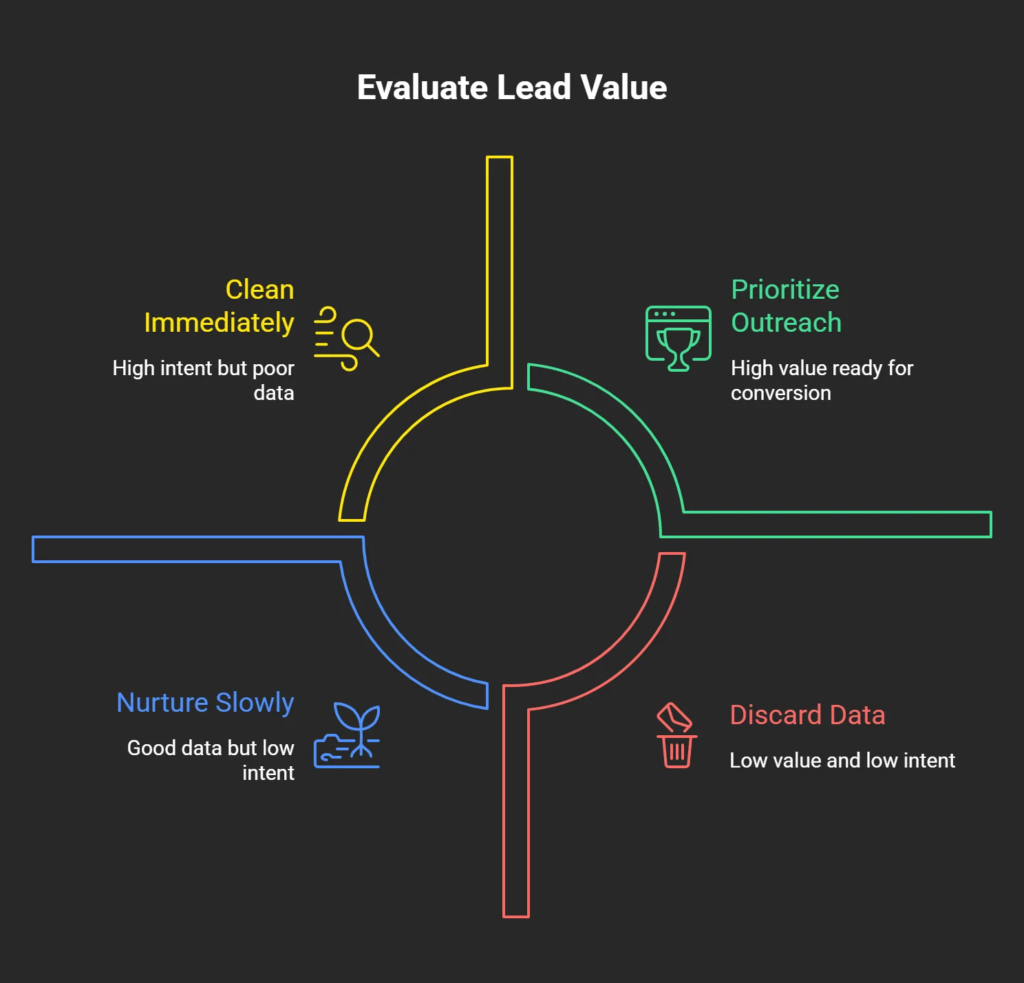
What Actually Determines Database Value?
The size of the database matters far less than what’s inside it.
Four factors usually determine whether an old lead database holds meaningful value.
Lead Quality
A roofing estimate request is typically worth more than a casual pricing inquiry.
A dental consultation request usually carries more intent than someone downloading a coupon.
Databases built from quote requests, consultation requests, missed calls, and service inquiries generally hold more value because those contacts already demonstrated buying intent.
Lead Age
Older leads typically respond at lower rates than newer ones.
However, age affects probability, not possibility.
Many service purchases get delayed for practical reasons, especially when projects are expensive or non-urgent.
Follow-Up History
This is often the most overlooked factor.
A lead that received one call and one email may still hold substantial value because the opportunity was never fully worked.
A lead that received months of consistent follow-up with no engagement generally has lower remaining value.
When evaluating a CRM, we pay close attention to what happened after the first interaction.
Data Quality
Contact information determines whether opportunities can realistically be recovered.
Databases lose value when they contain:
- Invalid phone numbers
- Duplicate records
- Missing contact information
- Poor notes
- No service categorization
A smaller, cleaner database often produces better results than a much larger database filled with unusable records.
A Simple Way to Estimate Revenue Potential
You do not need complicated forecasting to estimate database value.
A simple model works well enough.
Step 1: Estimate Usable Leads
Start with contacts you can realistically reach.
If your CRM contains 1,000 records but 20% have bad contact information, your usable database may be closer to 800 leads.
Step 2: Apply a Conservative Conversion Rate
Use realistic assumptions.
For many local service businesses, a conservative reactivation estimate falls somewhere between 1% and 5%.
For higher-ticket services, it may be somewhat higher.
The goal is not optimism.
The goal is establishing a reasonable baseline.
Step 3: Multiply by Average Job Value
For example:
- 800 usable leads
- 3% conversion rate
- 24 recovered jobs
- $2,500 average job value
Potential revenue:
24 × $2,500 = $60,000
Will the number be exact?
No.
But it quickly changes the conversation from “Do old leads matter?” to “How much revenue could realistically be sitting here?”
That is often the first time business owners see their database as an asset instead of a storage system.
Why Most Businesses Never Unlock This Value
Most businesses do not ignore their CRM intentionally.
They simply prioritize newer opportunities.
New leads feel urgent.
Old leads feel uncertain.
Over time, this creates a predictable pattern:
- New inquiries get immediate attention
- Older quotes receive less follow-up
- CRM records become inactive
- New advertising replaces unfinished opportunities
Sales teams naturally focus on prospects who contacted the business yesterday rather than three months ago.
The result is that large portions of the database stop receiving meaningful attention.
Many businesses also lack any structured process for revisiting old estimates, missed calls, abandoned consultations, or dormant inquiries.
Without a system, the CRM gradually becomes a historical record rather than an active sales asset.
That is why databases often contain more opportunity than their owners realize. The contacts remain, but the process around them disappears.
When an Old Database Truly Has Limited Value
Not every database deserves equal attention.
Some have genuine limitations.
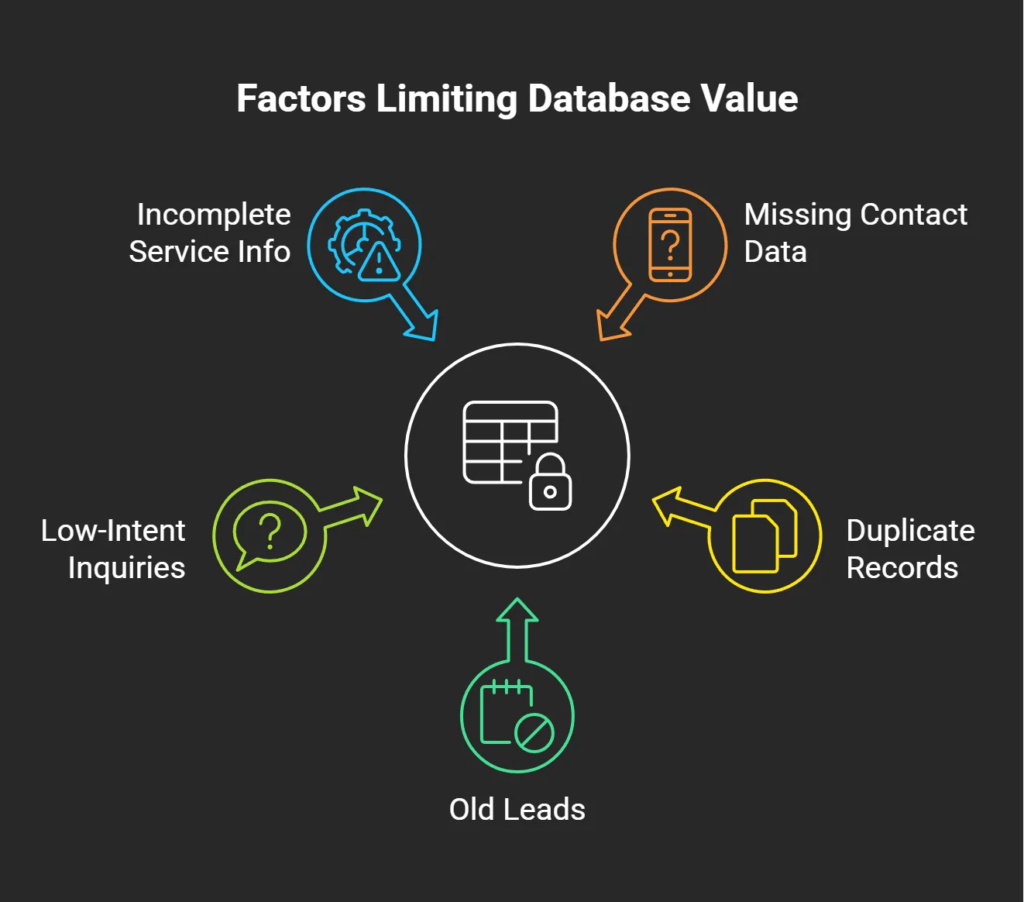
Common warning signs include:
- Large amounts of missing contact data
- Extensive duplicate records
- Extremely old leads with little engagement history
- Large volumes of low-intent inquiries
- Incomplete service information
In these situations, cleanup becomes more important than reactivation.
What we often find, however, is that only part of the database is weak.
The CRM is rarely entirely valuable or entirely worthless.
More commonly, a smaller segment contains most of the recoverable opportunity.
Identifying that segment is usually far more productive than making assumptions about the database as a whole.
The value of an old lead database comes from three things:
- The quality of the original lead
- The amount of follow-up that actually happened
- The ability to contact that lead today
Many local service businesses discover that their CRM contains far more unfinished opportunities than they expected. Old estimates, missed calls, consultation requests, and dormant inquiries often represent potential revenue that never received enough attention to reach a final outcome.
If you’re evaluating whether your database contains meaningful recoverable revenue, our AI automation and lead follow-up systems can help you analyze existing opportunities and create a structured process for working leads that would otherwise remain untouched.