

6 Follow-Up Bottlenecks That Quietly Kill Appointment Rates
A roofing company receives quote requests every day.
A med spa generates consultation inquiries through ads and referrals.
An HVAC company sees missed calls, website forms, and estimate requests arriving throughout the week.
Yet the appointment calendar never seems as full as it should be.
When owners look at the numbers, the first instinct is often to question lead quality or marketing performance. In many cases, the real problem appears after the lead enters the pipeline.
Callbacks happen late. Follow-up stops after the first conversation. Leads get buried in the CRM. Old estimates never receive another touch.
These breakdowns rarely feel dramatic in the moment. They happen one lead at a time. Over weeks and months, however, they quietly reduce appointment volume even when demand remains consistent.
If your business generates leads but struggles to turn them into booked appointments, one of these six follow-up bottlenecks is often responsible.
Key Takeaways: Follow-Up Bottlenecks Hurting Appointments
- Many appointment losses happen after the lead enters the CRM.
- Slow response times reduce conversions before a real conversation begins.
- Follow-up often stops before the customer reaches a decision.
- Lack of structure creates inconsistent communication between leads.
- CRM records frequently contain opportunities that are no longer being actively worked.
- Human-dependent follow-up becomes less reliable as lead volume grows.
1. Slow First Response Time
The first bottleneck happens before follow-up even begins.
A lead submits a form, requests a quote, or leaves a voicemail. The business intends to respond, but hours pass before anyone reaches out.
That delay creates immediate risk.
Many service inquiries are time-sensitive. Homeowners needing plumbing repairs, roofing estimates, HVAC service, or legal consultations often contact multiple providers at once. The first business to engage frequently earns the first opportunity to book the appointment.
Most delays are not caused by negligence.
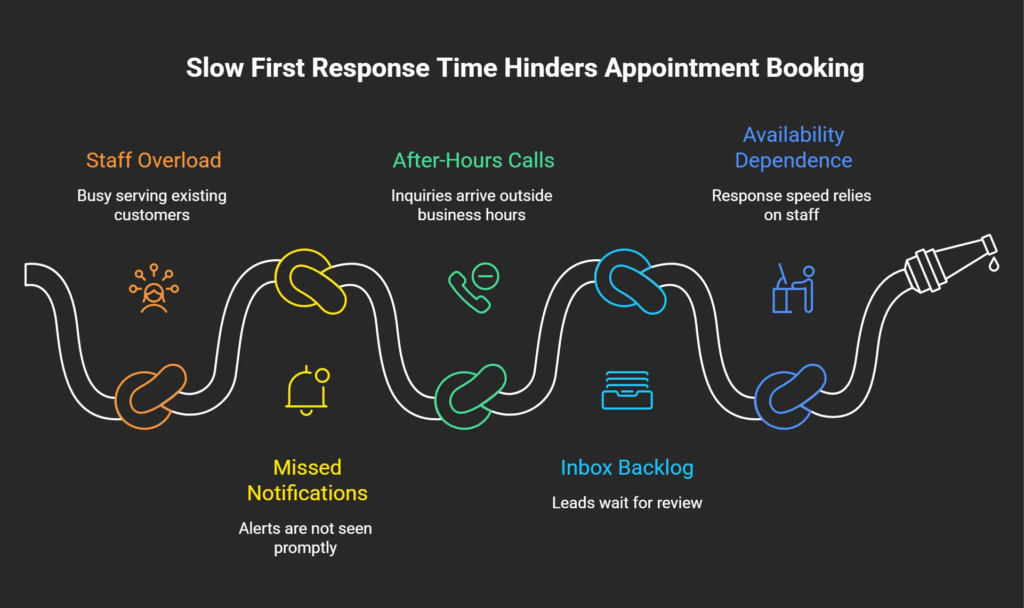
They happen because:
- Staff are busy serving customers
- Notifications are missed
- Calls arrive after hours
- Leads sit in inboxes waiting for review
Even same-day responses can be too slow in competitive markets.
We regularly see businesses generating enough demand but losing appointments before the sales process starts simply because response speed depends on staff availability instead of a repeatable process.
When response times stretch from minutes into hours, appointment rates often decline before anyone has the chance to qualify the lead.
2. Follow-Up Stops After Initial Contact
Many businesses do a reasonable job making first contact.
The breakdown happens afterward.
A lead responds.
Questions get answered.
A quote gets delivered.
Then communication gradually slows down.
Sales teams naturally focus on the newest inquiries entering the pipeline. Older opportunities receive less attention, especially when workloads increase.
This creates a common pattern:
- Initial conversation occurs
- Follow-up becomes less frequent
- The lead goes quiet
- Outreach stops entirely
The customer may still be comparing options, reviewing budgets, or discussing the decision with a spouse or business partner.
The business assumes the opportunity is gone.
In reality, many appointments are lost because communication ended before the customer’s decision process did.
This bottleneck is especially common in higher-ticket services where decisions take days or weeks rather than hours.
3. No Defined Follow-Up Sequence
Even when teams intend to follow up consistently, many lack a structured process.
One employee calls the next day.
Another waits three days.
A third follows up only when they remember.
Without a defined cadence, every lead receives a different experience.
The result is inconsistent timing, uneven communication, and unpredictable appointment outcomes.
This often appears in simple ways:
- A quote receives one follow-up and then nothing
- A missed call gets a callback but no second attempt
- A lead replies and then waits days for a response
The issue is not effort.
The issue is variability.
When follow-up depends on individual habits, some opportunities receive too much attention while others receive almost none.
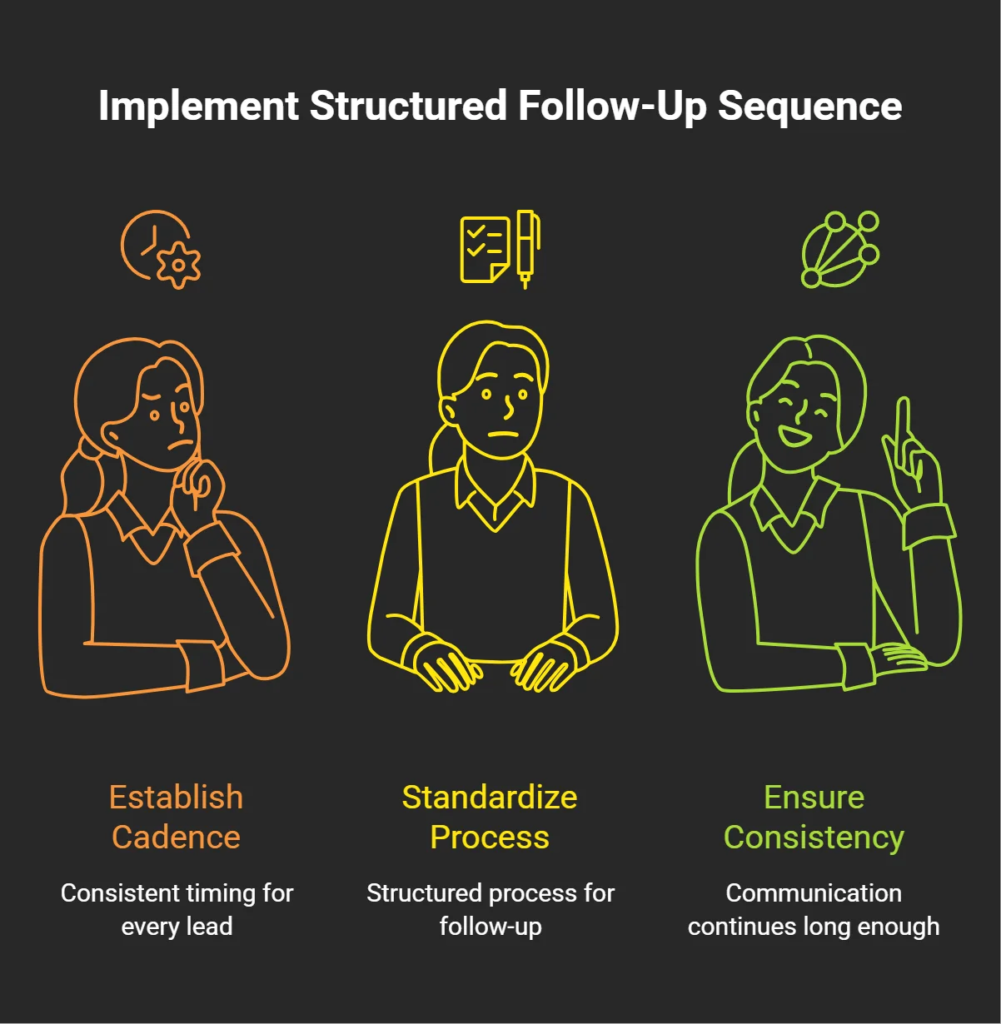
A structured sequence creates consistency across every lead, ensuring communication continues long enough for the prospect to make a decision.
4. Leads Disappear Into CRM Black Holes
Many businesses believe they are actively working their leads because the CRM contains hundreds of records.
The reality is often different.
Leads are marked:
- Contacted
- Open
- In Progress
- Awaiting Response
Then nothing happens.
The record remains in the system, but no additional outreach occurs.
This is one of the most common sources of hidden appointment loss.
We frequently find:
- Unsold estimates from months ago
- Missed-call leads that never received another touch
- Website inquiries without a clear next step
- Opportunities sitting in inactive pipeline stages
The CRM provides storage.
It does not guarantee action.
Without visibility into which leads still require attention, opportunities gradually disappear beneath newer inquiries and day-to-day workload.
Businesses often interpret this as a lead generation problem when the opportunities already exist inside the database.
5. No Strategy for Re-Engaging Cold Leads
Most service businesses have a large group of leads that never converted and never received another contact attempt.
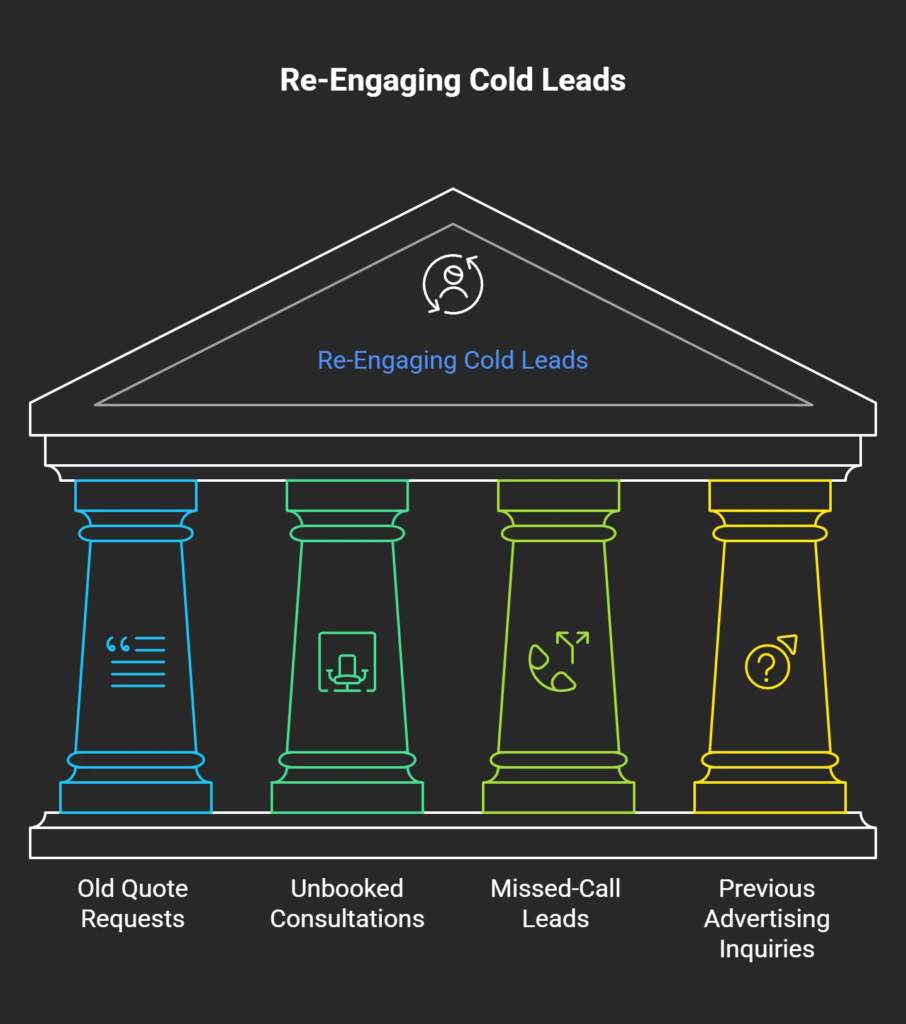
These include:
- Old quote requests
- Unbooked consultations
- Missed-call leads
- Previous advertising inquiries
Once communication slows down, many businesses simply move on.
The assumption is that a non-responsive lead is no longer interested.
That assumption is frequently wrong.
Projects get delayed.
Budgets change.
Priorities shift.
Customers who were not ready last month may be ready today.
Without a process for revisiting these opportunities, businesses continuously invest in new lead generation while existing opportunities remain untouched.
From an appointment-setting perspective, this creates a hidden source of lost revenue because many of these contacts have already demonstrated interest once before.
6. Follow-Up Depends Entirely on People
The final bottleneck sits underneath many of the others.
Follow-up depends on memory.
It depends on available time.
It depends on whether someone remembers to make the next call.
As businesses grow, this becomes increasingly difficult to maintain.
Team members balance:
- Inbound calls
- Customer service requests
- Job-site responsibilities
- Scheduling
- Estimates
- Administrative work
Follow-up competes with everything else.
When workloads increase, older opportunities receive less attention even when nobody intends for that to happen.
This creates predictable gaps:
- Missed callbacks
- Forgotten reminders
- Incomplete follow-up chains
- Leads abandoned without a final outcome
The business already paid to generate the lead and already started the conversation.
The appointment never gets booked because there is no reliable mechanism ensuring communication continues.
When follow-up relies entirely on human consistency, appointment performance often becomes unpredictable.
Appointment rates rarely decline because of a single major failure.
More often, they erode through small operational bottlenecks that occur after a lead enters the pipeline.
Slow responses, incomplete follow-up, inconsistent communication, buried CRM records, unworked leads, and human-dependent execution all reduce the number of conversations that become appointments.
For many local service businesses, improving appointment rates starts with identifying where leads stop moving forward rather than immediately generating more demand.
If your business has strong lead flow but inconsistent appointment conversion, our AI automation services help create structured follow-up systems that keep opportunities active from first inquiry through booking.