

What Happens When Leads Sit Untouched in the CRM for 90 Days
When leads sit untouched in a CRM for 90 days, most businesses assume the opportunity is gone.
The lead didn’t respond. The estimate wasn’t accepted. The conversation stopped. Attention shifted to newer inquiries.
Three months later, the lead is still sitting in the CRM, but nobody is actively working it.
In many local service businesses, this happens constantly. Leads come in through calls, forms, referrals, Google Ads, Facebook Ads, and other channels. They receive a few follow-up attempts, then gradually disappear from the active pipeline without a clear outcome.
The problem is that many of these opportunities were never actually closed.
The customer may have delayed the project, postponed a decision, become busy, or simply stopped responding during the initial follow-up window. Without a process to revisit those conversations later, they remain inactive indefinitely.
This is where the gap between lead generation and revenue often appears. Businesses continue pursuing new inquiries while older opportunities quietly accumulate in the background.
Key Takeaways: Leads Untouched in CRM for 90 Days
- Most 90-day-old leads become inactive because follow-up stops, not because a decision was made.
- New inquiries usually receive attention while older opportunities are forgotten.
- Many dormant leads still represent unresolved buying decisions.
- Manual follow-up systems often struggle to maintain long-term engagement.
- Quote-based businesses frequently have the strongest reactivation opportunities.
- A CRM full of inactive leads often indicates a process problem rather than a lead-generation problem.
Why Leads Go Untouched in the First Place
Most follow-up systems are designed for the first few days after an inquiry arrives.
A lead comes in. Someone calls. A quote gets sent. A reminder follows a few days later.
After that, the process often ends.
The lead may not have said no. The project may not have been canceled. The customer may simply have stopped responding.
Without a defined next step, the opportunity gradually moves into inactivity.
We see this frequently in local service businesses where sales teams and office staff are focused on immediate opportunities. New inquiries require attention today. Existing customers need service. Estimates need to be prepared. Scheduling issues need to be resolved.
As a result, older leads slowly move down the priority list.
Most CRM platforms don’t solve this problem on their own. They record activity, store contact information, and track pipeline stages, but they do not automatically ensure that dormant opportunities are revisited.
Over time, the system becomes a record of past conversations rather than a tool for restarting them.
The result is a growing collection of quote requests, consultations, estimate recipients, and inquiries that never received enough follow-up to reach a clear outcome.
What Actually Happens After 90 Days
After 90 days, most leads haven’t disappeared. They have simply moved further away from the original conversation.
The homeowner who requested a roofing estimate may have delayed the project. The customer comparing HVAC companies may have postponed the decision. The prospect who requested pricing may have become distracted by other priorities.
The original need often still exists.
What changes is context.
The customer may no longer remember the details of the conversation. They may not remember which companies they contacted. They may not recognize your business name immediately without a reminder.
This is where many businesses make an incorrect assumption.
Silence gets interpreted as rejection.
In reality, many dormant leads never reached a final decision. The conversation simply lost momentum and was never restarted.
From a revenue perspective, this creates a hidden category of opportunities inside the CRM. They are no longer active, but they were never fully resolved either.
At TTRAN, we typically view these leads as dormant opportunities rather than expired records. The conversation needs to be reopened differently than it would with a new lead, but the opportunity may still exist.
A 90-day-old lead is often less about recovering a sale and more about reconnecting with a decision that was never completed.
Why Businesses Stop Revisiting Old Leads
Most businesses don’t intentionally ignore old leads.
They simply lack a practical system for revisiting them.
The sales process is usually built around immediate activity. New inquiries arrive every day, estimates need to be sent, appointments need to be scheduled, and current customers require attention.
Older opportunities struggle to compete with those priorities.
This creates a predictable pattern.
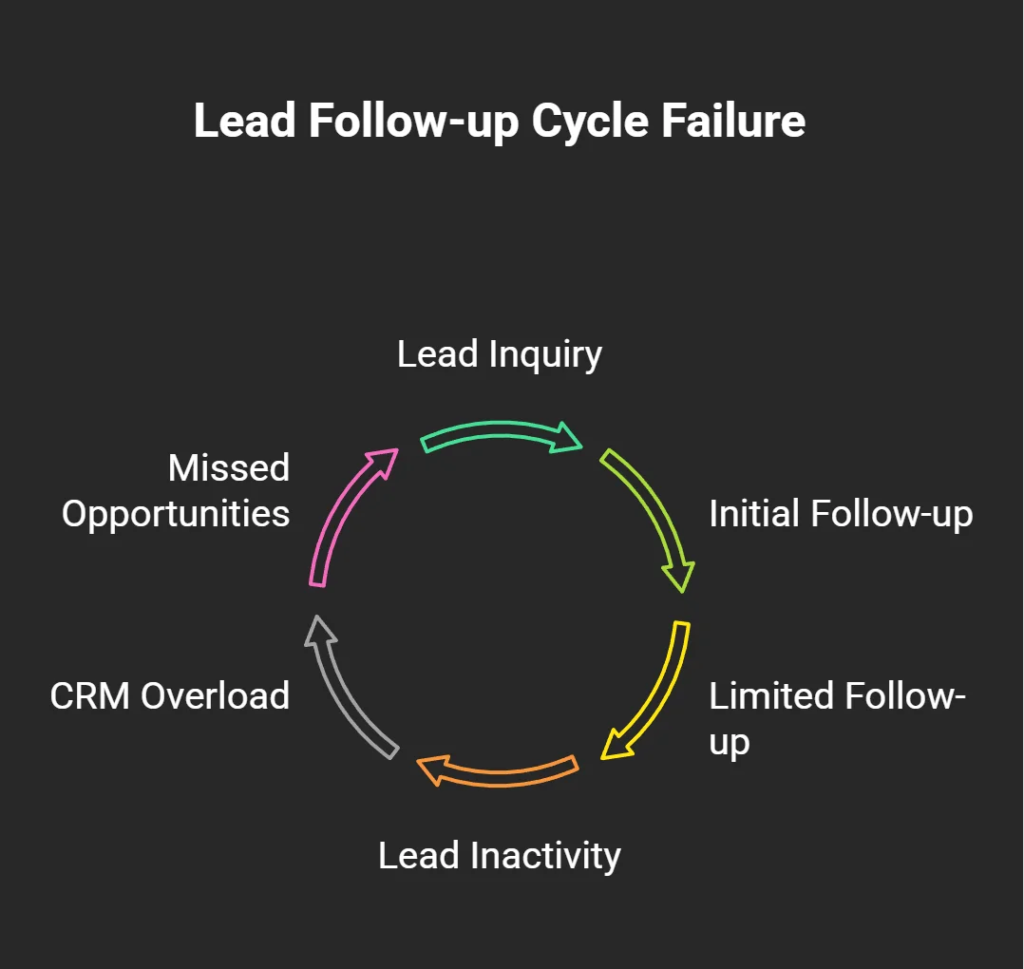
The first follow-up attempts happen quickly. Activity slows after a few days. The lead becomes inactive. Eventually it blends into hundreds of other records sitting inside the CRM.
Manual reactivation is difficult to maintain consistently.
Reviewing months of old leads, deciding who to contact, sending messages, making calls, and tracking responses takes time. When teams are already busy handling current opportunities, reactivation projects often get postponed indefinitely.
The issue is usually operational rather than motivational.
Most owners understand that old leads could still have value. The challenge is maintaining a process that makes re-engagement easy enough to happen consistently.
Without that structure, dormant opportunities remain dormant.
Are 90-Day-Old Leads Still Worth Reactivating?
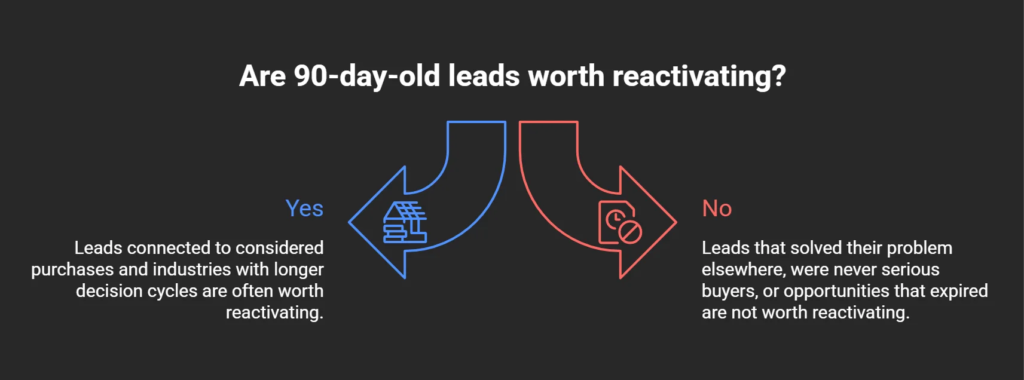
In many businesses, yes.
The best reactivation candidates are usually leads connected to considered purchases rather than impulse decisions.
Industries such as:
- roofing
- HVAC
- plumbing
- remodeling
- dental services
- med spas
- legal services
often have longer decision cycles and higher transaction values.
Customers in these industries frequently delay projects because of budget, timing, financing, scheduling, or competing priorities.
That makes older inquiries more likely to remain relevant.
Not every lead is worth revisiting. Some customers solved their problem elsewhere. Some were never serious buyers. Some opportunities genuinely expired.
The goal is not to assume every dormant lead will convert.
The goal is to identify whether there is enough remaining opportunity to justify re-engagement.
We typically evaluate old leads based on factors such as:
- original intent
- quote history
- service value
- consultation requests
- previous engagement level
Age alone is rarely the deciding factor.
A lead that requested a significant estimate 90 days ago may still be more valuable than a brand-new low-intent inquiry.
Many businesses discover that some of their most overlooked opportunities are already sitting inside their CRM waiting for another conversation to begin.
A lead sitting untouched in a CRM for 90 days usually represents an unfinished sales process rather than a completed one.
The customer may have delayed the project. The conversation may have stalled. Follow-up may have stopped before a clear decision was reached.
Meanwhile, newer inquiries receive attention and older opportunities fade into the background.
Over time, this creates a hidden layer of missed revenue that many businesses never revisit.
At TTRAN, we often find that the CRM contains more than historical records. It contains estimate requests, consultations, and sales conversations that were never fully resolved. Before investing heavily in additional lead generation, it can be worth examining whether those dormant opportunities still represent realistic paths to future appointments and revenue.