

Why Missed Calls Cost Plumbing Companies So Much Revenue
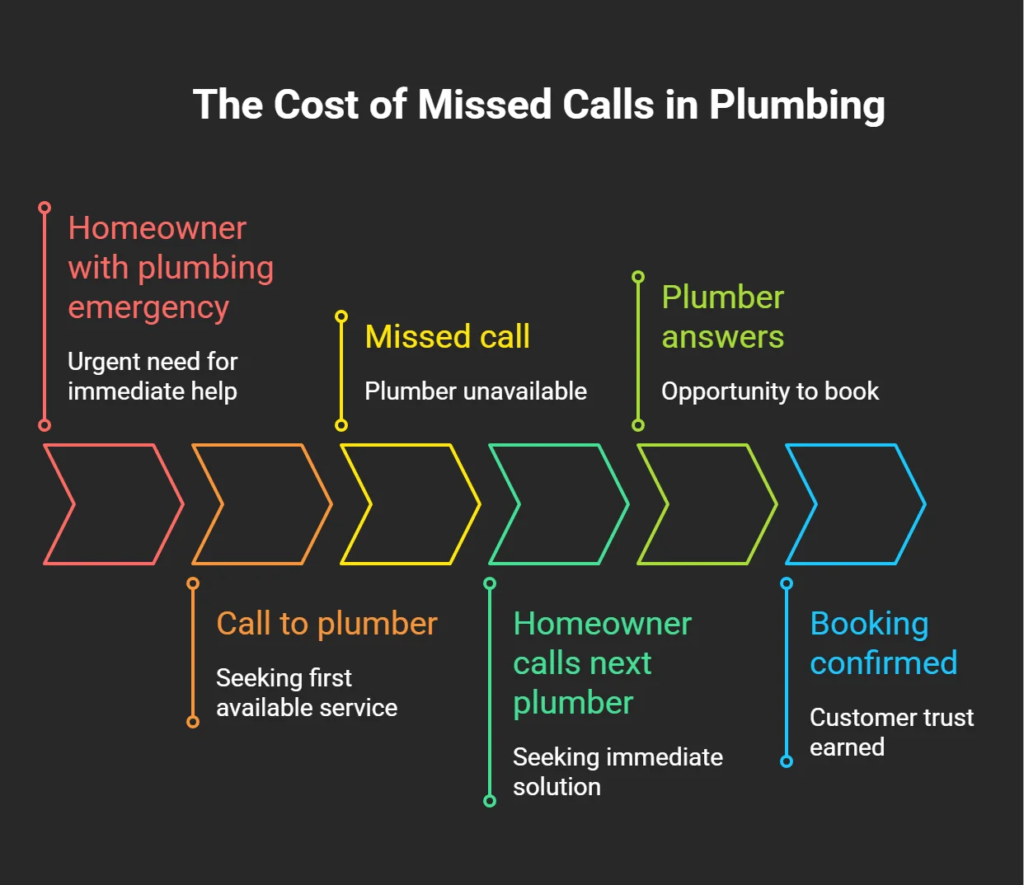
A homeowner calls three plumbers about a leaking water heater.
The first call goes to voicemail.
The second rings unanswered.
The third company picks up, schedules a visit, and books the job.
The two plumbers who missed the call often never know what they lost.
That is what makes missed calls so expensive.
Most plumbing businesses track completed jobs, invoices, and booked appointments. Very few track the opportunities that disappear before anyone has a chance to speak with the customer. The result is a hidden form of revenue loss that rarely shows up in reports.
For plumbing companies, missed calls are not simply a customer service issue. They are lost opportunities from people actively looking for help.
Understanding how those opportunities disappear is the first step toward recovering more of the revenue your business is already generating.
Key Takeaways: Are Missed Calls Costing Your Plumbing Business Revenue?
- Most plumbing callers need help immediately and rarely wait long for a response.
- A missed call can mean losing future repairs, replacements, and referral business.
- Field schedules and office bottlenecks create missed-call gaps even in well-run companies.
- Returning calls later often fails because the customer has already booked elsewhere.
- Many plumbing companies have a response-management problem rather than a lead-generation problem.
- Simple follow-up systems can recover opportunities that would otherwise disappear.
Why Missed Calls Are So Expensive in Plumbing
Plumbing calls tend to be different from many other service inquiries.
A homeowner dealing with a leaking pipe, failed water heater, overflowing toilet, or sewer backup usually wants help now. They are not spending days researching providers or building a shortlist. They are trying to solve a problem.
Because urgency is high, callers often move quickly from one plumber to the next.
If nobody answers, they continue calling.
If someone answers, they often book.
That makes every inbound call unusually valuable.
A missed call is not just an inquiry. It is frequently a homeowner who has already decided they need plumbing service and is looking for the first company that can help.
Responsiveness becomes part of the sales process.
Homeowners often interpret fast responses as a sign that the company is reliable, organized, and available. Even if another plumber has stronger reviews or more experience, the company that answers first usually gets the first opportunity to earn the customer’s trust.
For plumbing businesses, call handling has a direct influence on booked work because many buying decisions happen immediately after the initial contact attempt.
How Missed Calls Turn Into Lost Revenue
The financial impact of a missed call usually extends beyond a single service appointment.
A homeowner who hires your company for one repair may later call for:
- Water heater replacement
- Fixture installation
- Drain issues
- Emergency repairs
- Future maintenance
They may also recommend your business to neighbors, family members, or friends.
When the initial call goes unanswered, all of those opportunities often disappear with it.
The challenge is that this loss rarely gets measured.
Most plumbing companies track the jobs they win.
Very few track the jobs that never entered the pipeline because nobody answered the phone.
Over time, missed-call losses become invisible. The business sees completed work, active schedules, and incoming leads but never sees the revenue attached to the customers who called and moved on.
Because those opportunities never become appointments, many owners underestimate how much revenue is tied to consistent response coverage.
Why Plumbing Companies Miss Calls in the First Place
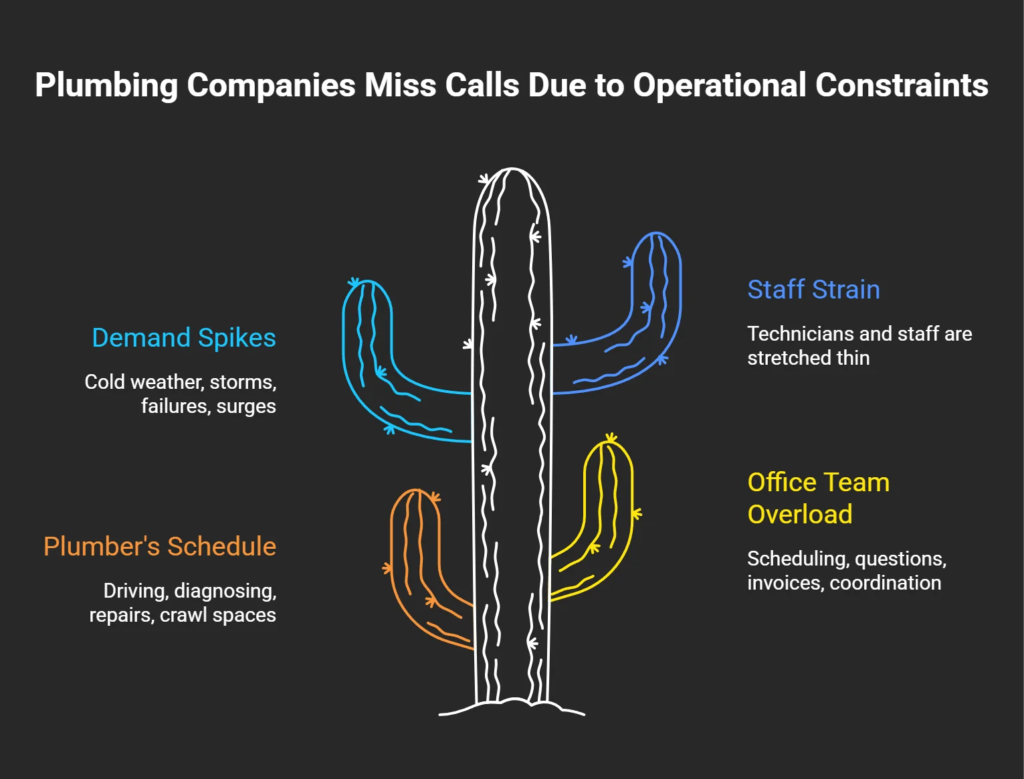
Most missed calls happen because of operational constraints rather than poor customer service.
Plumbers spend much of their day:
- Driving between jobs
- Diagnosing problems
- Working in crawl spaces
- Completing repairs inside homes
Answering every incoming call is often unrealistic.
Office teams face a different challenge.
A single dispatcher or office manager may be handling scheduling, customer questions, invoices, technician coordination, and incoming calls simultaneously. During busy periods, some calls inevitably reach voicemail.
Demand spikes create another layer of difficulty.
Cold weather, storms, water heater failures, and seasonal surges can generate more calls than a business can comfortably manage. Ironically, these are often the periods when the most revenue is available.
We frequently see plumbing businesses that generate plenty of demand but struggle to maintain response consistency once call volume increases.
The issue is rarely a lack of opportunity.
It is maintaining reliable coverage when technicians and office staff are already stretched thin.
Why Calling Back Later Often Isn’t Enough
Many plumbing companies assume a missed call can simply be returned later.
Sometimes that works.
Often it doesn’t.
By the time a callback happens, the homeowner may have already reached another plumber, scheduled service, and moved on.
Urgent plumbing problems accelerate decision-making.
A homeowner dealing with a leak or backup rarely waits several hours to continue searching for help. They keep calling until someone answers.
Response delays also influence perception.
Customers often view responsiveness as an early indicator of how the rest of the service experience will go. A quick answer creates confidence. A delayed callback can create uncertainty, even if the company ultimately provides excellent work.
This is why callback speed affects more than contact rates.
It affects whether the customer is still available to talk and whether they are still interested in considering your company when the conversation finally happens.
Reducing Revenue Loss From Missed Calls
No plumbing company answers every call.
The goal is reducing how many missed calls become lost opportunities.
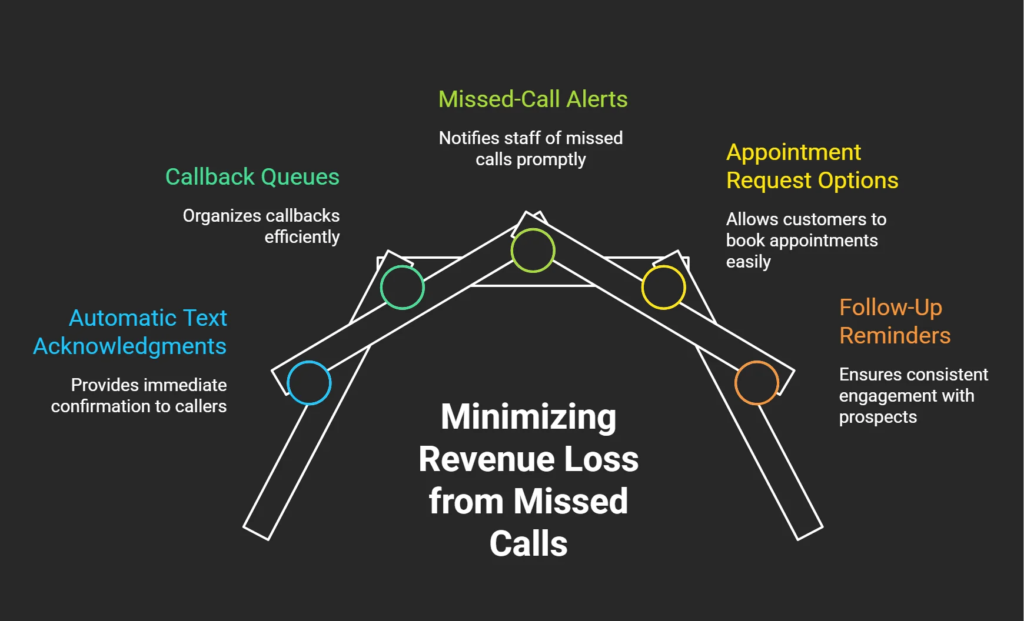
The most effective approach is creating a response process that starts immediately after a missed call occurs.
For example:
- Automatic text acknowledgments
- Callback queues
- Missed-call alerts
- Appointment request options
- Follow-up reminders
These systems keep the conversation alive while technicians finish existing work.
At TTRAN, we often find that businesses focus heavily on generating new leads while unanswered calls receive inconsistent follow-up. Improving response coverage frequently produces faster gains than increasing advertising spend because the opportunities already exist.
A missed call should trigger a process.
When there is no process, revenue depends entirely on whether someone remembers to call back before the prospect moves on.
Missed plumbing calls create revenue loss long before anyone sees it on a report.
The opportunity disappears before it becomes an appointment, estimate, or scheduled job. Because that loss is invisible, many businesses underestimate how much revenue is tied to response coverage.
Plumbing companies do not need perfect call handling to improve results. They need a reliable process for responding when calls are missed and keeping opportunities active until contact is made.
If unanswered calls, delayed callbacks, or inconsistent response coverage are recurring issues, our AI automation and lead follow-up systems are designed to help local service businesses recover more value from inbound opportunities that would otherwise be lost.